
Table of Contents
- Why Fragrance Free Matters for Reactive Skin
- How We Evaluated Fragrance Free Moisturizers
- Fragrance-Free vs Unscented Skincare: Know the Difference
- Key Ingredients for Barrier Repair and Hydration
- How to Repair a Damaged Skin Barrier
- The Benefits of Copper Peptides for Sensitive Skin
- Our Top Pick: Pepcare Lab Barrier Cream Review
- Final Verdict: Choosing Your Fragrance Free Moisturizer
- Frequently Asked Questions
Last Updated: September 7, 2026
Why Fragrance Free Matters for Reactive Skin
For anyone with reactive skin, a fragrance free moisturizer review for sensitive skin isn't about preference; it's about necessity. Synthetic fragrance is one of the most common triggers for contact dermatitis and inflammation.
At Pepcare Lab, we formulate exclusively with sensitive skin in mind, which is why we exclude fragrance entirely from our range. Fragrance serves no functional purpose in skincare, and for reactive skin types, it introduces unnecessary risk. A fragrance free moisturizer allows your skin to focus on repair rather than defence, reducing the chance of redness, stinging, and transepidermal water loss.
How We Evaluated Fragrance Free Moisturizers
Our evaluation framework prioritises clinical efficacy over marketing claims. We assessed each formula across four criteria: ingredient transparency, barrier repair potential, texture suitability, and value.
- Ingredient transparency: Full disclosure of active concentrations, not hidden behind proprietary blends
- Barrier repair potential: Presence of ceramides, niacinamide, squalane, and other lipid-replenishing agents
- Texture suitability: How the formulation performs across dry, oily, and combination skin types
- Cost-per-ounce analysis: What you actually pay for functional ingredients versus water and fillers
Many prestige brands charge a premium for fragrance-free positioning while delivering minimal concentrations of active ingredients. We looked for formulas where the peptide and ceramide content justified the price point.
Fragrance-Free vs Unscented Skincare: Know the Difference
Fragrance-free means no fragrance ingredients have been added to the formula at any concentration. Unscented is a weaker claim: it only indicates the product has no discernible scent, but masking agents or low-level fragrance may still be present.
This distinction matters enormously for reactive skin. A product labelled "unscented" can still contain synthetic fragrance to neutralise the odour of raw ingredients. According to dermatological guidance on fragrance labelling, consumers with dermatitis should seek products explicitly labelled "fragrance-free" rather than relying on "unscented" claims.
For those managing conditions like eczema or general skin sensitivity, the difference between these two labels can determine whether a product soothes or flares. Fragrance-free formulations also tend to avoid essential oils, which deliver scent naturally but remain common allergens.
Key Ingredients for Barrier Repair and Hydration
A truly effective fragrance free moisturizer combines three classes of ingredients: humectants, emollients, and occlusives. Humectants like glycerin and hyaluronic acid draw water into the stratum corneum. Emollients such as squalane and shea butter smooth the skin surface. Occlusives, including ceramides, seal moisture in and prevent transepidermal water loss.
The stratum corneum is a brick-and-mortar structure: corneocytes (the bricks) are held together by a lipid matrix (the mortar) composed primarily of ceramides, cholesterol, and free fatty acids. When this matrix is depleted, through over-cleansing, harsh actives, or low-humidity environments, the barrier becomes leaky, and water escapes while irritants penetrate more easily.
Here is how the key ingredients actually work at a mechanistic level:
-
Ceramides (especially Ceramide NP, AP, and EOP): These are the most abundant lipid in the stratum corneum, accounting for roughly 50% of its composition. Topical ceramides mimic the skin's own structure and fill gaps in the lipid matrix. A common pattern in dermatology is that ceramide-dominant moisturisers reduce transepidermal water loss more effectively than simple occlusives like petrolatum alone, because they restore the barrier's architecture rather than just coating it.
-
Niacinamide (Vitamin B3): At concentrations between 2% and 5%, niacinamide increases ceramide and free fatty acid synthesis in the epidermis. It also has anti-inflammatory properties, which is why it is frequently recommended for rosacea-prone and reactive skin. It does not cause the purging that some actives do, making it a safe addition for compromised barriers.
-
Squalane: A hydrogenated version of squalene, a natural component of human sebum. Squalane is a lightweight emollient that mimics the skin's own oils without being comedogenic. It helps restore flexibility to a tight, cracked barrier and is well tolerated even by acne-prone skin.
-
Glycerin: The most effective humectant in skincare. At concentrations of 10% or higher, glycerin has been shown to accelerate barrier recovery by drawing water into the lower layers of the stratum corneum. It is inexpensive, which is why budget-friendly formulas often outperform luxury ones on this metric.
-
Copper Peptides (GHK-Cu): This is where the science gets interesting. GHK-Cu is a naturally occurring tripeptide that signals fibroblasts to produce collagen and glycosaminoglycans. It also has documented anti-inflammatory and antioxidant activity. Research into copper peptide mechanisms in skin regeneration highlights its role in wound healing and tissue remodelling. Unlike retinol, which accelerates cell turnover and can initially irritate, copper peptides support structural repair without a purging phase. This makes them particularly valuable for sensitive skin that cannot tolerate retinoids.
-
Panthenol (Pro-Vitamin B5): Acts as a humectant and soothing agent. It is often included in post-procedure skincare because it reduces erythema and supports epidermal regeneration.
Avoid a formula that relies solely on one ingredient class. A moisturiser with only humectants will draw water into the skin but fail to seal it in, leading to increased transepidermal water loss in dry environments. A formula with only occlusives will trap existing moisture but do nothing to replenish the lipid matrix. The most effective fragrance-free moisturisers for sensitive skin balance all three classes, with ceramides and niacinamide doing the heavy lifting for barrier repair.
For those managing conditions like eczema or general skin sensitivity, the difference between these two labels can determine whether a product soothes or flares. Fragrance-free formulations also tend to avoid essential oils, which deliver scent naturally but remain common allergens.
How to Repair a Damaged Skin Barrier
A damaged skin barrier presents as persistent dryness, tightness, redness, and heightened sensitivity to products that previously caused no issues. Repair requires removing irritants and supplying the lipids your skin cannot manufacture fast enough on its own.
Start by simplifying your routine. Strip back to a gentle cleanser, a barrier-focused moisturiser, and sunscreen. Every additional active ingredient, whether retinol or vitamin C, adds potential irritation while your barrier is compromised.
Patch testing remains the gold standard before introducing any new product. Apply a small amount behind your ear or on your inner forearm daily for five to seven days. If no reaction occurs, introduce the product to your face gradually.
Barrier repair is not a static process. It is influenced by your environment, your other skincare products, and even the season. Adjusting your moisturiser choice based on these factors can make the difference between a barrier that heals in two weeks and one that stays reactive for months.
How Your Fragrance-Free Moisturiser Interacts with Actives
If you are using prescription retinoids (like tretinoin) or over-the-counter acids (like salicylic or glycolic acid), your barrier is already under stress. Retinoids accelerate cell turnover, which thins the stratum corneum temporarily and increases transepidermal water loss. A fragrance-free moisturiser applied immediately after an active can buffer that irritation, but only if it contains the right ingredients.
- After retinoids: Look for a moisturiser with ceramides and panthenol. These ingredients calm the retinoid-induced inflammation and support the lipid matrix that retinoids disrupt. Avoid formulas with additional exfoliating acids or vitamin C, which can compound irritation.
- After acids: Acids lower the skin's pH temporarily. A moisturiser with niacinamide helps restore pH balance and reduces post-acid redness. Squalane is also beneficial because it replenishes the oils that acids strip away.
- The layering order matters: Apply your fragrance-free moisturiser to damp skin within 60 seconds of cleansing or applying actives. This traps water in the stratum corneum and maximises humectant efficacy. Waiting until your skin is fully dry reduces the moisturiser's ability to bind water.
A common mistake is using a heavier moisturiser at night and a lighter one during the day, but the reverse is often more effective. During the day, your skin faces UV exposure and pollution, which generate free radicals that damage the barrier. A moisturiser with antioxidants (like niacinamide or copper peptides) provides daytime protection. At night, your skin enters repair mode, and a richer occlusive layer helps lock in the ingredients that support overnight regeneration.
Adjusting for Environmental Triggers
Humidity and temperature dramatically affect how your barrier behaves. In Australia's climate, this variation is significant, from the tropical humidity of the north to the dry, arid conditions of the interior and the cooler, drier winters in the south.
- High humidity (summer, tropical regions): Your skin loses less water to the environment, so a lightweight gel-cream or lotion with humectants (glycerin, hyaluronic acid) is sufficient. Heavy occlusives like shea butter or petrolatum can trap sweat and lead to clogged pores, especially for acne-prone skin.
- Low humidity (winter, air-conditioned or heated indoor environments): The air pulls moisture from your skin, accelerating transepidermal water loss. Switch to a richer formula with both humectants and occlusives. Ceramide-heavy creams are particularly effective here because they replenish the lipids that dry air depletes.
- Wind exposure: Wind strips the outer lipid layer. If you spend time outdoors in windy conditions, a moisturiser with a higher occlusive content (like squalane or dimethicone) provides a protective film that reduces wind-induced water loss.
- Indoor heating and air conditioning: Both create artificially dry environments. If you spend most of your day in air-conditioned offices, consider a midday reapplication of a lightweight fragrance-free moisturiser, even if your morning routine felt sufficient.
Patch testing remains the gold standard before introducing any new product. Apply a small amount behind your ear or on your inner forearm daily for five to seven days. If no reaction occurs, introduce the product to your face gradually. But remember that patch testing only tells you whether a product is safe, not whether it is the right weight for your environment. Pay attention to how your skin feels two hours after application; if it feels tight or looks shiny, adjust the amount or switch textures.
The Benefits of Copper Peptides for Sensitive Skin
Copper peptides offer a distinct advantage for sensitive skin: they support repair without the irritation profile of stronger actives like retinol. GHK-Cu signals skin cells to produce collagen and elastin while exhibiting anti-inflammatory properties.
For those asking how to repair damaged skin barrier effectively, copper peptides address the structural weakness directly. They help thicken the skin over time, reducing reactivity at the source rather than merely calming symptoms.
Our Top Pick: Pepcare Lab Barrier Cream Review
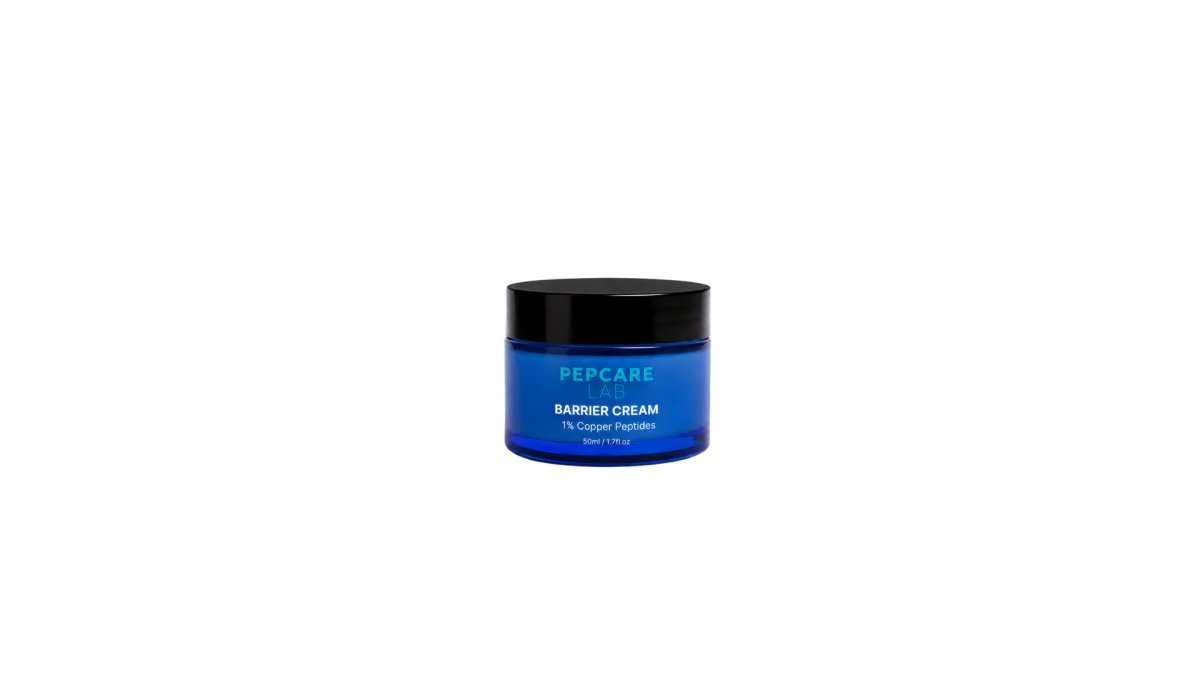
For most people with reactive skin, our Barrier Cream combines 1% Copper Peptides with niacinamide and squalane in a rich yet lightweight formula designed to strengthen, restore, and protect the skin barrier.
The texture sits between a lotion and a balm, absorbing without leaving a greasy residue. At $49.00 for 50 mL, the cost-per-ounce sits above drugstore options, but the peptide concentration justifies the premium for those serious about barrier repair.
What distinguishes this formula is its simplicity: no essential oils, no synthetic fragrance, no unnecessary botanical extracts. The ingredient list is transparent, and the formulation is pH balanced to support your skin's natural acid mantle.
Final Verdict: Choosing Your Fragrance Free Moisturizer
The search for a reliable fragrance free moisturizer review for sensitive skin ultimately comes down to ingredient integrity and formulation science.
For most people, the choice should prioritise ceramides, niacinamide, and peptides over trendy botanical extracts. These ingredients have the strongest evidence base for supporting the skin barrier, reducing transepidermal water loss, and calming reactive skin over time. As documented in Australian dermatological standards for sensitive skin products, consistent use of barrier-supporting moisturisers is central to managing chronic sensitivity.
Pepcare Lab's Barrier Cream delivers on all these fronts: fragrance-free, peptide-powered, and formulated specifically for sensitive skin.

Choosing the right moisturiser for reactive skin requires looking past marketing language and examining what the formula actually delivers. Fragrance-free is non-negotiable, but it is only the starting point; the real work happens in the ingredient concentrations and lipid balance. Pepcare Lab's Barrier Cream combines 1% Copper Peptides, niacinamide, and squalane in a fragrance-free base that supports barrier repair and long-term skin health.
Frequently Asked Questions
What is the best fragrance-free moisturizer for sensitive skin?
The best fragrance-free moisturizer for sensitive skin supports your skin barrier without triggering reactions. Look for formulas built around ceramides, glycerin, squalane, and copper peptides, which help with hydration and barrier repair while avoiding synthetic fragrance, essential oils, and other common irritants. A rich yet lightweight texture that absorbs without residue suits most reactive skin types. Patch testing a new product on your jawline for a few days remains the most reliable way to confirm it works for you.
Are copper peptides safe for sensitive skin?
Yes, copper peptides like GHK-Cu are generally well-tolerated by sensitive skin when formulated at appropriate concentrations. They support collagen production and skin renewal without the irritation often associated with stronger actives like retinol. In a fragrance-free moisturizer, copper peptides work alongside humectants and occlusives to reinforce the skin barrier and calm redness. Start by using the product every second day to let your skin adjust, then increase to daily use if no stinging or redness appears.
Why is fragrance-free skincare better for sensitive skin?
Fragrance is one of the most common causes of contact dermatitis and skin irritation, even in products labelled as gentle. Synthetic fragrance and natural essential oils can trigger inflammation, redness, and increased transepidermal water loss, which weakens the skin barrier over time. Fragrance-free skincare eliminates this risk entirely, letting the moisturising ingredients do their job without interference. For anyone with reactive skin, choosing fragrance-free products is the simplest step toward reducing sensitivity and supporting long-term barrier health.
How do I know if a product is truly fragrance-free?
Check the ingredient list for terms like parfum, fragrance, aroma, or linalool and limonene. These last two are often listed separately even when they come from essential oils. Be aware that unscented does not mean fragrance-free: a product can contain masking fragrances to hide the smell of other ingredients. Look for the words fragrance-free on the label and cross-check the full ingredient list. When in doubt, contact the brand directly and ask whether any hidden fragrance components are used in the formulation.