
Table of Contents
- What Are Copper Peptides and How Do They Work?
- Key Benefits of Copper Peptides for Skin Health
- Copper Peptides vs Vitamin C: Which Should You Choose?
- How to Layer Copper Peptides Into Your Routine
- Copper Peptides Side Effects and How to Troubleshoot Them
- Realistic Timelines: Short-Term vs Long-Term Results
- Conclusion
Last Updated: August 21, 2026
What Are Copper Peptides and How Do They Work?
Copper peptides have moved from niche dermatology into mainstream skincare for good reason. The short answer: copper peptides are one of the more evidence-supported actives in modern skincare, particularly for long-term skin resilience.
Copper peptides are small protein fragments naturally present in human plasma, saliva, and urine that bind to copper ions to form biologically active complexes. When applied topically, these complexes interact with skin cells to support collagen production, accelerate wound healing, and regulate the extracellular matrix, the structural scaffold that keeps skin firm and resilient.
Copper is an essential cofactor for lysyl oxidase, an enzyme responsible for cross-linking collagen and elastin fibres. Topical copper peptide formulations restore that signalling at the dermal level, supporting skin firmness from within rather than sitting on the surface. According to research published through PubMed, National Library of Medicine, copper peptides stimulate both angiogenesis and dermal remodelling, making them relevant for anti-aging and skin barrier repair after environmental damage.
GHK-Cu: The Active Form Behind the Results
GHK-Cu is the specific tripeptide-copper complex responsible for most documented skin benefits associated with copper peptides. Its full chemical name is glycyl-L-histidyl-L-lysine copper, and it is the form most commonly found in clinically studied formulations.
GHK-Cu's molecular weight of approximately 340 daltons sits within the range considered viable for topical absorption, addressing the common criticism that peptide molecules are too large to penetrate meaningfully. Its bioavailability through topical application is better supported by literature than most other peptide actives.
GHK-Cu concentrations in well-formulated products typically range from 0.5% to 2%. The Pepcare Lab Face Serum uses a 1% concentration, which sits within the range associated with measurable effects on collagen synthesis and skin texture without the irritation risk that higher concentrations can introduce in sensitive skin types.

Key Benefits of Copper Peptides for Skin Health
The benefits of copper peptides fall into three distinct categories: structural support, barrier function, and antioxidant activity. Each operates through a different mechanism and has a different timeline for visible results.
Collagen Production and Skin Firmness
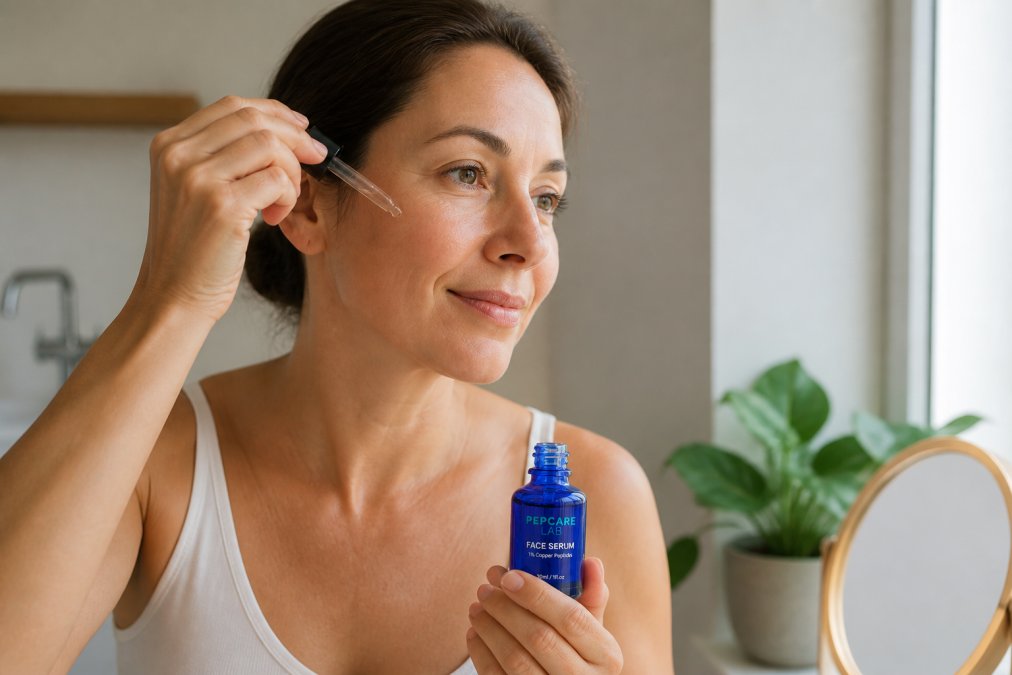
GHK-Cu activates fibroblasts, the cells responsible for producing collagen and elastin, while simultaneously regulating matrix metalloproteinases, the enzymes that break collagen down. The result is a net positive shift in collagen density over time.
For adults over 35, this matters considerably. Collagen synthesis declines with age, and the loss of skin elasticity that follows is one of the primary drivers of fine lines and wrinkles. Copper peptides support the biological conditions for collagen-boosting activity at the cellular level. Equally important is elastin synthesis: GHK-Cu supports both, which is why consistent users often notice not just firmer skin but skin that bounces back more readily from expression lines.
Skin Barrier Repair and Hydration
The skin barrier, technically the stratum corneum, is the outermost layer responsible for keeping moisture in and irritants out. When compromised, you get sensitivity, redness, transepidermal water loss, and an inability to tolerate other actives. Copper peptides support barrier repair by promoting the production of structural proteins and lipids that reinforce this layer.
This is particularly relevant for anyone with reactive or sensitive skin. Many actives that deliver visible results, such as retinoids, work in ways that temporarily compromise barrier integrity. Copper peptides work differently: they support the repair process rather than accelerating turnover in ways that strip the barrier. Skin hydration improves as a downstream effect of a healthier barrier.
Antioxidant Properties and Oxidative Stress Reduction
Copper peptides carry meaningful antioxidant properties often underplayed in product marketing. GHK-Cu upregulates antioxidant enzymes including superoxide dismutase and catalase, which neutralise reactive oxygen species before they can cause oxidative stress to skin cells.
Oxidative stress is a significant driver of premature skin ageing. UV exposure, pollution, and lifestyle factors generate free radicals that degrade collagen, trigger inflammation, and accelerate cellular turnover in damaging ways. By supporting the skin's own antioxidant defence system, copper peptides address one of the root causes of photoageing. This also explains why copper peptides pair well with sun protection: the antioxidant activity provides a secondary layer of defence against UV-induced oxidative damage.
Copper Peptides vs Vitamin C: Which Should You Choose?
Copper peptides and vitamin C aren't really competing for the same role.
Vitamin C is primarily an antioxidant and tyrosinase inhibitor, with strengths in brightening, hyperpigmentation reduction, and immediate free radical neutralisation. It works at the surface level and delivers visible results within four to six weeks.
Copper peptides work deeper and more slowly. Their primary actions, collagen synthesis, elastin support, barrier repair, and dermal remodelling, operate at the cellular level and require longer timelines. They are less effective for hyperpigmentation than vitamin C, but considerably more effective for structural skin firmness and barrier integrity.
| Feature | Copper Peptides (GHK-Cu) | Vitamin C (L-Ascorbic Acid) |
|---|---|---|
| Primary action | Collagen & elastin synthesis | Antioxidant, brightening |
| Skin barrier support | Strong | Moderate |
| Hyperpigmentation | Limited effect | Well-documented |
| Timeline for results | 8-12 weeks minimum | 4-6 weeks |
| Sensitivity risk | Low (suitable for sensitive skin) | Moderate (pH-dependent) |
| Stability in formulation | High | Low (oxidises readily) |
| Best for | Long-term structural ageing | Tone, brightness, early ageing |
If you're dealing with dullness and uneven tone, vitamin C is the more targeted choice. If your concern is skin firmness, barrier repair, and structural changes that accumulate over years, copper peptides are more appropriate. They are not always compatible in the same application step.
How to Layer Copper Peptides Into Your Routine
Correct layering makes the difference between an active that works and one that sits on your skin doing very little.
A practical three-step approach:
- Cleanse with a gentle, pH-balanced cleanser. Avoid anything that strips the skin, as a compromised barrier reduces absorption of subsequent actives.
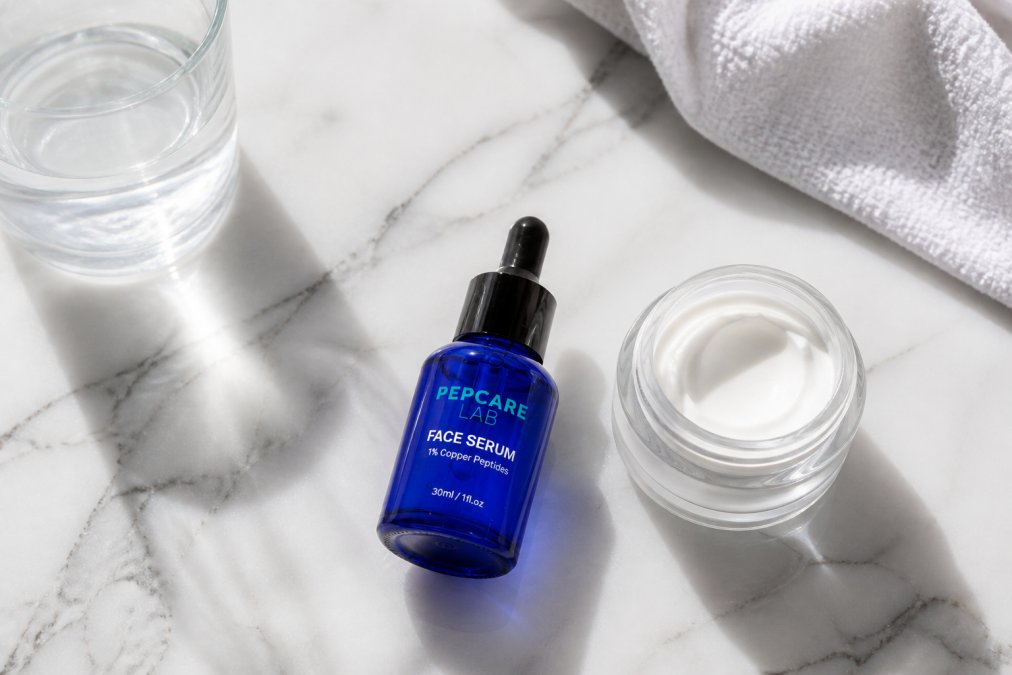
- Apply your copper peptide serum to slightly damp skin. Use roughly three to four drops for the face and neck. Pat gently rather than rubbing.
- Follow with a barrier-supporting moisturiser. The Pepcare Lab Barrier Cream is formulated specifically to work alongside the Face Serum, reinforcing the skin barrier while the peptides support deeper dermal renewal.
For most people, once daily in the evening is the right starting point. Morning use is fine, but always follow with broad-spectrum SPF.

Ingredient Incompatibility: What Not to Mix
Avoid combining copper peptides with:
- Strong acids (AHA/BHA at low pH): Glycolic, lactic, and salicylic acids can destabilise the copper-peptide complex at low pH levels. If you use both, alternate them on different evenings.
- High-concentration vitamin C (L-ascorbic acid): L-ascorbic acid is formulated at low pH (typically 2.5 to 3.5) to remain stable, and this acidic environment interferes with GHK-Cu's activity. Use vitamin C in the morning and copper peptides in the evening.
- Retinoids at high concentrations: Retinol and tretinoin increase cellular turnover significantly. For sensitive skin, introduce one at a time.
- Benzoyl peroxide: Oxidises peptide bonds and degrades the active complex.
The Pepcare Lab Face Duo (Face Serum and Barrier Cream) is designed as a self-contained routine that sidesteps most compatibility concerns.
Copper Peptides Side Effects and How to Troubleshoot Them
Copper peptides are among the better-tolerated actives for sensitive skin, but side effects do occur, particularly in the first few weeks of use.
Common initial responses:
- Mild redness or warmth on first application, typically resolving within one to two weeks.
- Slight tingling, usually transient and not a sign of irritation.
- Purging-like breakouts in some users, though less common with copper peptides than with retinoids or acids. If breakouts persist beyond three weeks, reassess whether another product is the culprit.
Genuine adverse reactions to watch for:
- Persistent redness that doesn't settle after two weeks
- Swelling, hives, or contact dermatitis patterns
- Worsening of existing skin conditions
If any of these occur, discontinue use and consult a dermatologist. According to Australasian College of Dermatologists, contact dermatitis from topical skincare is more commonly caused by preservatives and fragrance than by active peptide complexes.
Reduce frequency to every second night, ensure no incompatible actives are being layered, and confirm the skin barrier is adequately supported with a moisturiser. Most people who reintroduce copper peptides slowly after a brief pause find they tolerate them well.
Realistic Timelines: Short-Term vs Long-Term Results
Copper peptides operate through biological processes, specifically collagen synthesis and extracellular matrix remodelling, that have their own timelines regardless of what you apply. You cannot accelerate fibroblast activity beyond its physiological limits.
Short-term (weeks 1-4): Skin hydration often improves within the first two to three weeks as barrier repair begins. Some users notice reduced sensitivity to other products. Visible changes to fine lines or firmness are unlikely at this stage.
Medium-term (weeks 6-12): Skin texture typically shows measurable improvement. The surface feels smoother and more even. Some improvement in fine lines around the eyes and mouth is possible, particularly for users who experienced significant barrier compromise.
Long-term (3-6 months and beyond): Structural benefits become apparent. Skin firmness, elastin synthesis, and cumulative collagen production support become visible. Consistent users report that skin looks and behaves younger in ways that reflect copper peptides' cumulative action.
As the British Journal of Dermatology has documented, dermal remodelling is a slow process. Any ingredient claiming to restructure collagen in days misrepresents the biology.
| Timeline | What to Expect | Key Indicator |
|---|---|---|
| Weeks 1-4 | Improved hydration, reduced sensitivity | Skin feels less reactive |
| Weeks 6-12 | Smoother texture, early fine line softening | Visible surface improvement |
| Months 3-6 | Firmer skin, elasticity improvement | Structural change, not just surface |
| 6+ months | Cumulative dermal remodelling | Long-term resilience and renewal |
Copper peptides reward patience. For adults over 35 thinking about skin health as a long-term investment rather than a quick fix, that's exactly the right trade-off.
For further reading on evidence-based skincare timelines, the Therapeutic Goods Administration's consumer resources provide useful guidance on evaluating cosmetic ingredient claims in the context of Australian regulatory standards.
Most anti-aging skincare products promise more than biology can deliver. Copper peptides are different because the mechanisms behind them are genuinely supported by dermatological research. Pepcare Lab's peptide-focused formulations are built around this science: the Face Serum and Barrier Cream work together to support collagen production, skin barrier repair, and long-term skin renewal without unnecessary complexity. Shop our Bestsellers and start with a routine designed to work with your skin's own biology, not against it.

Frequently Asked Questions
Q: Can I use copper peptides every day?
A: Yes, copper peptides are well-suited to daily use. GHK-Cu is generally considered gentle enough for morning and evening application, including on sensitive skin. Start with once daily to assess tolerance, then build to twice daily if your skin responds well. Because copper peptides support skin barrier repair and collagen production over time, consistent daily use is what drives long-term improvements in skin elasticity and texture.
Q: What should I avoid mixing with copper peptides?
A: Avoid combining copper peptides with high-dose vitamin C (ascorbic acid), strong acids like AHAs or BHAs at low pH, and retinoids in the same application step. These actives can destabilise the peptide complex or cause irritation. If you use retinol or vitamin C, apply them at a different time of day, for example, vitamin C in the morning and copper peptides in the evening. This keeps each ingredient at its most effective without compromising pH stability.
Q: Which is better for anti-ageing, vitamin C or copper peptides?
A: They work differently, so the better choice depends on your primary concern. Vitamin C is a strong antioxidant that targets hyperpigmentation and protects against oxidative stress. Copper peptides focus on dermal remodeling: stimulating collagen production, supporting elastin synthesis, and repairing the extracellular matrix. For skin firmness and barrier repair, copper peptides are generally more targeted. Many people see the best results using both strategically, vitamin C in the morning, copper peptides at night.
Q: How long does it take to see results from copper peptides?
A: Most people notice initial improvements in skin hydration and texture within two to four weeks. Meaningful changes to skin firmness, fine lines, and barrier function typically take eight to twelve weeks of consistent use, because collagen production and dermal remodeling are gradual biological processes. Long-term benefits, including improved skin resilience and reduced appearance of wrinkles, continue to develop beyond three months. Patience and consistency matter more than product-switching.
This article was written using GrandRanker