
Table of Contents
- What Is the Skin Barrier and Why Does It Break Down?
- Signs of a Damaged Skin Barrier
- Best Ingredients for Skin Barrier Repair
- How to Repair a Damaged Skin Barrier: Step-by-Step
- How Long to Heal Your Skin Barrier
- Post-Repair: Reintroducing Actives Without Setbacks
- Conclusion
Last Updated: August 21, 2026
What Is the Skin Barrier and Why Does It Break Down?
The skin barrier is the outermost layer of your skin, known scientifically as the stratum corneum, and it functions as your body's first line of defence against the outside world. At Pepcare Lab, we think of it as a brick wall: skin cells are the bricks, and a mixture of lipids, ceramides, fatty acids, and cholesterol act as the mortar holding everything together. This lipid-rich matrix controls transepidermal water loss, keeps irritants out, and maintains skin homeostasis.

When this structure is intact, skin feels soft, supple, and resilient. When it breaks down, the consequences compound quickly.
The breakdown happens for more reasons than most people realise. Over-cleansing strips the lipid barrier faster than it can replenish. Harsh actives like high-concentration retinoids and exfoliating acids accelerate cell turnover faster than the barrier can keep pace. Environmental stressors, including UV exposure, pollution, and low-humidity climates, degrade the stratum corneum steadily over time. Age is another factor: as skin matures, its natural ceramide production slows, making the moisture barrier thinner and more vulnerable.
The result is a skin microbiome that falls out of balance, inflammation that becomes chronic, and a cycle of irritation that ordinary moisturisers struggle to break.
Understanding why the barrier breaks down is the first step. Knowing how to identify the damage is what allows you to act.
Signs of a Damaged Skin Barrier
A damaged skin barrier announces itself in several ways, though the signals are easy to misread as separate problems rather than one underlying cause.
Physical Signs to Watch For
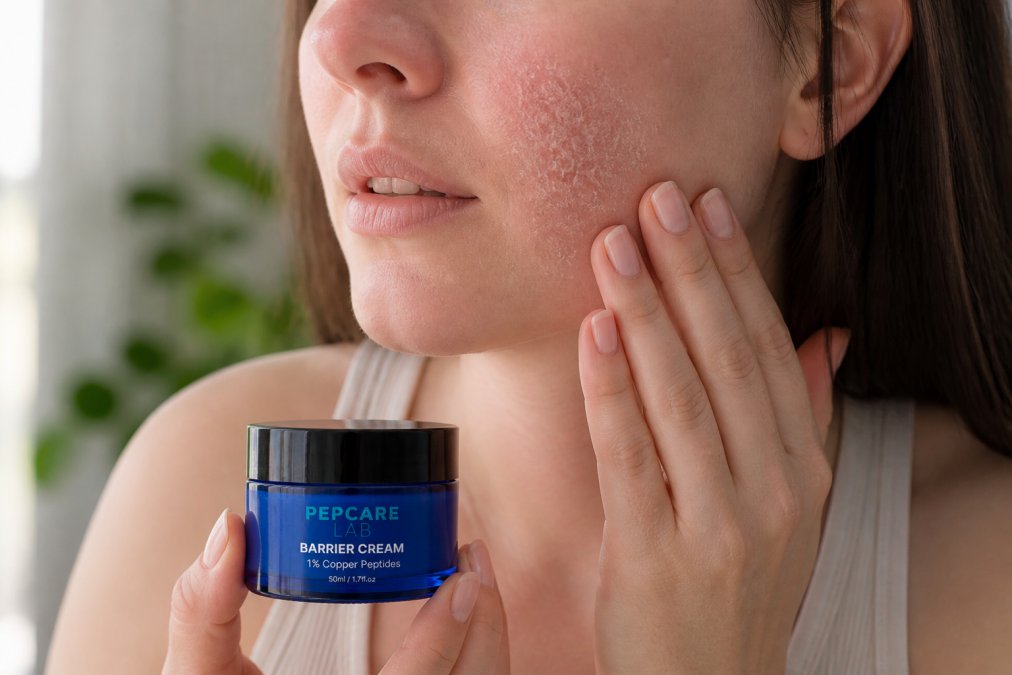
The most common physical signs of a compromised moisture barrier include:
- Persistent tightness, skin that feels stretched or uncomfortable after cleansing, even after applying moisturiser
- Redness and inflammation, a reactive flush that appears without an obvious trigger
- Flaking and rough texture, dry, uneven skin texture that doesn't resolve with standard hydration
- Stinging or burning, products that previously felt neutral suddenly cause discomfort
- Breakouts in unusual areas, when the barrier is compromised, bacteria and irritants penetrate more easily
- Dullness, a loss of the natural radiance that comes from well-hydrated, intact skin
Skin sensitivity that seems to worsen over time is a particularly telling sign. If your skin is reacting to products it once tolerated, the barrier is likely the issue, not the products themselves.
According to the Australasian College of Dermatologists, barrier dysfunction is a core feature of conditions like eczema and contact dermatitis, both of which share the same underlying mechanism: a compromised stratum corneum that allows irritants and allergens to penetrate more deeply than they should.
Dietary and Lifestyle Triggers That Worsen Damage
This is the angle most skincare guides skip entirely. The skin barrier is not just a topical problem.
Chronic sleep deprivation reduces the skin's ability to repair overnight, when most cellular renewal occurs. High-sugar diets promote systemic inflammation that manifests in skin sensitivity and reduced skin elasticity. Dehydration, even mild and persistent, impairs transepidermal water loss regulation, leaving skin drier and more reactive.
Stress is a significant but underappreciated trigger. Elevated cortisol disrupts the skin microbiome and slows the production of the lipids that form the moisture barrier. Alcohol and smoking accelerate oxidative damage to skin cells, compounding barrier thinning over time.
The practical implication: repairing a damaged skin barrier through topical products alone will only take you so far if the internal environment is working against you. Sleep, hydration, and a diet rich in essential fatty acids all support the repair process from the inside out.
Best Ingredients for Skin Barrier Repair
Not all moisturising ingredients work the same way. The most effective formulations for barrier repair target the structure of the stratum corneum directly, rather than just sitting on the surface.
Ceramides, Fatty Acids, and Cholesterol
Ceramides are the single most important ingredient category for skin barrier repair. They are the lipids that naturally form the mortar between skin cells, and they are the first to deplete when the barrier is stressed. Topical ceramides, when formulated at the right particle size, can integrate into the skin's existing lipid matrix and help restore its structure.
Fatty acids, particularly linoleic acid, work alongside ceramides to reinforce the lipid barrier. Cholesterol completes the trio. Research cited by the National Eczema Association consistently shows that barrier repair formulations containing all three lipids, in a ratio that mirrors the skin's natural composition, outperform single-ingredient moisturisers for restoring skin hydration and reducing transepidermal water loss.
A common mistake is reaching for the heaviest cream available and assuming it will fix the problem. Weight and barrier repair are not the same thing. Look for formulations that list ceramides, fatty acids, and cholesterol explicitly on the label.
Humectants and Occlusives
Humectants draw water into the skin from the environment and from deeper skin layers. Hyaluronic acid is the most well-known, capable of holding many times its weight in water. Glycerin is another effective and often underrated humectant that also supports the skin microbiome.
Occlusives sit on top of the skin and physically prevent water from evaporating. Ingredients like squalane, shea butter, and plant-based waxes fall into this category. For a damaged skin barrier, the most effective approach layers a humectant underneath an occlusive to both attract and seal in moisture.
Copper Peptides (GHK-Cu) for Barrier Repair
Copper peptides represent a more advanced approach to barrier repair, and one that most guides overlook. GHK-Cu is a naturally occurring peptide complex that has been studied for its role in supporting collagen production, encouraging skin renewal, and modulating inflammation.
For the skin barrier specifically, GHK-Cu supports the repair process at a cellular level. As documented in published research on GHK-Cu in the National Library of Medicine, this peptide has demonstrated the ability to promote the synthesis of extracellular matrix components, including the structural proteins that underpin skin elasticity and barrier integrity.
The Pepcare Lab Barrier Cream and Face Serum both use 1% GHK-Cu, formulated specifically for sensitive skin. This concentration is designed to support barrier function without the irritation risk that comes with higher-strength actives like retinoids during the recovery phase.

| Ingredient | Role | Best For |
|---|---|---|
| Ceramides | Replenish lipid barrier | All barrier damage types |
| Hyaluronic acid | Humectant, attracts water | Dehydrated, tight skin |
| Fatty acids | Reinforce lipid matrix | Flaking, rough texture |
| Cholesterol | Structural lipid support | Mature or thinning skin |
| GHK-Cu (Copper Peptides) | Cellular repair, collagen support | Long-term barrier restoration |
| Occlusives (squalane, shea) | Seal in moisture | Severely dry, reactive skin |
How to Repair a Damaged Skin Barrier: Step-by-Step
Repairing a damaged skin barrier is not about adding more products. It is about removing the wrong ones and replacing them with a minimal, targeted routine that gives your skin the conditions it needs to heal.
Step 1: Strip Back Your Routine
The most counterintuitive step is also the most important. If your skin barrier is compromised, a ten-step routine is almost certainly making things worse. Multiple actives, multiple cleansing steps, and frequent exfoliation all slow the repair process.
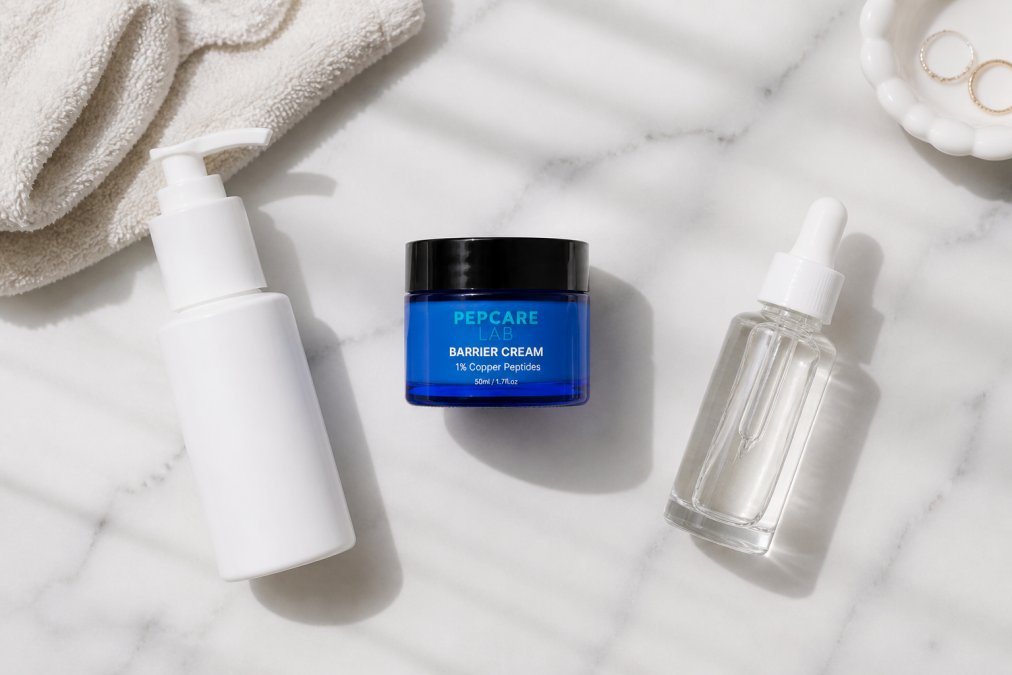
Reduce your routine to three steps: cleanse, treat, protect. Remove exfoliating acids, retinoids, vitamin C serums, and any product that causes stinging or redness. You are not abandoning your skincare goals; you are creating the conditions for your skin to heal so those actives can work properly later.
Step 2: Switch to a pH-Balanced Gentle Cleanser
Over-cleansing is one of the most common causes of barrier damage, and the type of cleanser matters as much as frequency. The skin's natural pH sits between 4.5 and 5.5. Many conventional cleansers are too alkaline, disrupting the skin microbiome and stripping the lipid barrier with every wash.
A pH-balanced gentle cleanser cleans without disrupting the acid mantle. Look for formulations free of sulphates, fragrance, and alcohol. Cleanse once daily during recovery, or twice only if you are wearing SPF or makeup.
Step 3: Apply a Barrier Repair Cream Twice Daily
This is the core of your repair protocol. A barrier repair cream formulated with ceramides, fatty acids, and soothing agents should be applied morning and night to damp skin. Consistency here matters more than any other variable.
The Pepcare Lab Barrier Cream contains 1% Copper Peptides alongside a ceramide-rich base, designed to support barrier repair while remaining gentle enough for reactive skin. At $49 AUD for 50 mL, it is formulated for twice-daily use as part of a simplified routine.
Step 4: Avoid Irritants and Actives During Recovery
Retinoids, AHAs, BHAs, benzoyl peroxide, and high-concentration vitamin C all have a place in a healthy skincare routine. During barrier repair, they do not.
These ingredients work by accelerating cell turnover or by chemical exfoliation, both of which place additional demand on a barrier that is already struggling to keep up. The same applies to physical exfoliation: no scrubs, no cleansing brushes, no muslin cloths during recovery.
Fragrance is another common irritant to eliminate. Even natural fragrance compounds can trigger inflammation in compromised skin.
Step 5: Protect Against Environmental Stressors
The skin barrier faces constant environmental pressure: UV radiation, pollution, wind, and low humidity all accelerate transepidermal water loss and delay repair. Protection is not optional during recovery.
Apply a broad-spectrum SPF 30 or higher every morning, even on overcast days. Indoors, consider a humidifier if your environment is dry, particularly during winter months. Wearing a physical barrier like a scarf or hat in harsh wind or cold also reduces the environmental load on healing skin.
How Long to Heal Your Skin Barrier
How long it takes to heal a damaged skin barrier depends on the severity of the damage and the consistency of the repair routine.
For mild barrier disruption, such as temporary sensitivity after introducing a new active, many people notice improvement within one to two weeks of simplifying their routine and applying a barrier repair cream consistently. Moderate damage, including persistent redness, flaking, and stinging, typically takes four to six weeks of dedicated repair before skin texture and tolerance normalise.
Severe or chronic barrier dysfunction, often associated with conditions like eczema or long-term over-exfoliation, can take three months or longer. This timeline aligns with the natural skin cell turnover cycle: it takes roughly four to six weeks for new skin cells to migrate from the lower layers of the epidermis to the surface.
The honest answer is that there is no shortcut. Healing the skin barrier is a process of removing the obstacles and consistently supplying the right building blocks. Checking your skin daily for improvement can actually slow progress, because it leads to product-switching before any single approach has had time to work.
Post-Repair: Reintroducing Actives Without Setbacks
This is where most people undo months of progress in a single week.
Once your skin barrier feels stable, redness has resolved, and your skin is tolerating your basic routine without reaction, you can begin reintroducing actives. The key word is "begin," not "resume everything at once."
Start with one active at a time. Give each new product at least two to three weeks before adding another. This slow reintroduction allows you to identify which ingredient, if any, triggers a reaction, rather than guessing after a simultaneous reintroduction of five products.
Retinoids deserve particular caution. Begin with the lowest available concentration, apply every third night, and use your barrier repair cream immediately after. This "sandwich" technique, applying moisturiser before and after retinoids, reduces the irritation risk significantly while preserving the active's benefits.
Exfoliating acids should be reintroduced at low concentrations and low frequency, once weekly at most. If skin sensitivity returns at any point, step back to your repair routine for another two weeks before trying again.
The Pepcare Lab Face Serum, formulated with 1% GHK-Cu, is designed to support the transition phase. Copper peptides work differently from retinoids and acids: they encourage skin renewal through a cellular signalling pathway rather than by forcing accelerated turnover, making them suitable for use throughout both the repair and maintenance phases.
For a complete approach that covers your face, skin, and scalp health simultaneously, the Pepcare Lab Complete Collection bundles four full-size products, including the Barrier Cream and Face Serum, at $129 AUD with free shipping.

Post-repair maintenance is not a return to your old routine. It is building a better one, with the barrier repair products as the permanent foundation and actives layered in gradually and intentionally.
Frequently Asked Questions
How do I tell if my skin barrier is broken?
The clearest signs of a damaged skin barrier are persistent redness, tightness after cleansing, flaking, stinging when applying products that previously caused no reaction, and a rough or uneven skin texture. You may also notice your skin feels dry even after moisturising. If your skin suddenly becomes reactive to products it tolerated before, that shift is a strong indicator the barrier is compromised and needs targeted repair rather than more actives.
How long does it take for the skin barrier to repair?
Mild barrier damage often settles within one to two weeks once irritants are removed and a simple, nourishing routine is in place. More significant damage, such as that caused by prolonged over-exfoliation or harsh cleansers, can take four to eight weeks to fully resolve. Consistency matters more than speed: stripping the routine back, using a barrier repair cream twice daily, and avoiding retinoids or exfoliating acids during recovery gives the stratum corneum the conditions it needs to rebuild.
Can peptides help repair the skin barrier?
Yes. Copper peptides, particularly GHK-Cu, support barrier repair by signalling the skin to produce collagen and promote cellular renewal. Research shows GHK-Cu also has soothing properties that help calm inflammation associated with a compromised barrier. Unlike retinoids, copper peptides are generally well tolerated by sensitive skin, making them suitable to use during the repair phase rather than after. A serum or barrier cream containing 1% GHK-Cu can be a practical addition to a recovery routine.
What destroys the skin barrier?
The most common culprits are over-cleansing with harsh, high-pH cleansers, excessive exfoliation with acids or physical scrubs, and overusing retinoids without adequate moisturisation. Environmental factors, including UV exposure, low humidity, and cold air, also accelerate transepidermal water loss. Internally, a diet low in essential fatty acids, chronic stress, and poor sleep can all impair skin homeostasis and make the barrier more vulnerable to breakdown over time.
Repairing a damaged skin barrier takes patience, simplicity, and the right ingredients applied consistently. The biggest obstacle for most people is not finding the right products; it is resisting the urge to do too much too soon. Pepcare Lab's barrier-focused formulations, built around 1% GHK-Cu and designed for sensitive skin, are made specifically for this recovery process. Shop our Bestsellers and start with the Barrier Cream as your foundation.
This article was written using GrandRanker