
Table of Contents
- Understanding Sensitive vs. Reactive Skin
- Signs of a Compromised Skin Barrier
- Best Ingredients for Reactive Skin
- Ingredients to Avoid With Reactive Skin
- How to Repair Damaged Skin Barrier
- Your Daily Skincare Routine for Reactive Skin
- Patch Testing and Environmental Triggers
- Managing Redness, Inflammation and Flare-ups
Understanding Sensitive vs. Reactive Skin
Reactive skin responds unpredictably to environmental triggers, products, or irritants with visible inflammation, redness, or discomfort, typically temporary and triggered by specific exposures. Sensitive skin is a chronic condition where the skin barrier is inherently compromised, making it prone to irritation from a wider range of stimuli including fragrances, certain ingredients, and temperature changes.
The distinction matters because reactive skin can often be managed and improved through barrier repair, whilst sensitive skin requires ongoing, careful ingredient selection and barrier maintenance. When your skin is reactive, it's signalling that your skin barrier, the outermost layer that protects against water loss and external irritants, is compromised. At Pepcare Lab, the approach focuses on barrier restoration rather than treating symptoms alone.
Signs of a Compromised Skin Barrier
A damaged skin barrier shows itself through persistent redness that doesn't fade with basic moisturising, a tight or uncomfortable feeling even after hydrating, and a tendency to sting or burn when applying products that shouldn't cause irritation. Flaking or rough patches often appear, sometimes accompanied by a shiny appearance in some areas and dryness in others.
Itching is another hallmark sign, particularly when it intensifies in the evening or after exposure to temperature changes or wind. Your skin may also feel hot to the touch, show increased sensitivity to fragrances or actives like retinol that you previously tolerated, and develop a pattern of flare-ups triggered by products, weather, or stress.
The most telling sign is when your skin reacts to products marketed as "gentle" or "hypoallergenic." If your skin barrier is severely compromised, even minimal ingredients can trigger irritation. The Australasian Society of Dermatologists' guidance on barrier function emphasises that barrier damage is cumulative; each irritant exposure weakens the barrier further until even water-based products cause stinging.
Best Ingredients for Reactive Skin
The most effective ingredients for reactive skin work in two ways: they actively repair the barrier and they calm inflammation without triggering further irritation.
Ceramides are foundational for barrier repair. These lipid molecules directly replace what's been lost through damage or harsh products, preventing transepidermal water loss and allowing your barrier to heal underneath. Products containing ceramide NP, ceramide AP, or ceramide EOP are most effective.
Hyaluronic acid functions as a humectant, drawing water into the outer layers of skin and maintaining hydration without the irritation that heavier occlusives sometimes trigger.
Niacinamide (vitamin B3) reduces inflammation and supports barrier function by increasing ceramide and fatty acid production within the skin. Concentrations of 4-5% are most effective.
Panthenol (provitamin B5) is a gentle humectant that supports skin healing and reduces irritation, particularly useful in serums and moisturisers for reactive skin.
Glycerin is a simple humectant that's been used safely for decades. It draws moisture into the skin and supports barrier function without irritation risk, even for severely reactive skin.
Oat extract and aloe vera provide soothing, anti-inflammatory benefits. Colloidal oatmeal is particularly effective for calming redness and itching without introducing new irritants.
Copper peptides like GHK-Cu support collagen production and skin renewal at a deeper level. Unlike actives that irritate to create change, copper peptides work by signalling your skin to strengthen itself, making them ideal for reactive skin. The Pepcare Lab Face Serum harnesses 1% copper peptides alongside hyaluronic acid and niacinamide specifically to support barrier repair whilst maintaining hydration.
Ingredients to Avoid With Reactive Skin
Fragrance (including essential oils and fragrance blends) is the leading trigger for reactive skin flare-ups. Even "natural" fragrances cause reactions. Look for "fragrance-free" products, not "unscented" (which may contain masking fragrances).
Alcohol denat and other volatile alcohols strip the skin barrier and increase transepidermal water loss. Fatty alcohols like cetyl alcohol are fine; volatile alcohols are not.
Exfoliating acids (AHAs and BHAs), retinol and retinoids, and benzoyl peroxide should be avoided entirely during active barrier compromise. They increase irritation and inflammation when your barrier is damaged.
Sulfates (sodium lauryl sulfate, sodium laureth sulfate) strip natural oils and damage the barrier. Avoid them in cleansers entirely.
Preservative systems with high concentrations of methylisothiazolinone (MIT) or other irritating preservatives trigger reactions in sensitive individuals.
Silicones can trap bacteria and irritants against the skin, worsening flare-ups in some individuals. If your reactive skin worsens after introducing silicone-heavy products, elimination often helps.
The safest approach is minimalist: use only products with transparent ingredient lists and patch test anything new, even if it's marketed as gentle.
How to Repair Damaged Skin Barrier
Barrier repair isn't quick, but it's straightforward if you follow a consistent protocol. Most people see meaningful improvement within 4-6 weeks of dedicated barrier support, though full restoration may take 8-12 weeks depending on severity (peer-reviewed research).
Step 1: Simplify your routine immediately. Remove everything except a gentle cleanser, a hydrating serum, and a barrier-supporting moisturiser. Complexity introduces irritation risk; simplicity allows healing.
Step 2: Cleanse gently. Use lukewarm water (not hot) and a fragrance-free, sulfate-free cleanser. Avoid physical exfoliation entirely. Pat skin dry gently rather than rubbing.
Step 3: Apply hydration while skin is still slightly damp. A hydrating serum applied to damp skin locks in moisture more effectively than applying to dry skin. The Pepcare Lab Face Serum, formulated with 1% copper peptides and hyaluronic acid, is designed for this purpose.

Step 4: Follow with a barrier-supporting moisturiser. Your moisturiser should contain ceramides, fatty acids, and cholesterol, the three lipid components your barrier needs. The Pepcare Lab Barrier Cream combines these with niacinamide and copper peptides to actively restore barrier function.
Step 5: Avoid actives entirely during repair phase. This includes vitamin C, retinol, AHAs, BHAs, and benzoyl peroxide. These delay barrier healing and trigger flare-ups. Once your barrier is restored (typically 6-8 weeks), you can carefully reintroduce one active at a time.
Step 6: Protect from environmental triggers. Use a broad-spectrum SPF 30+ daily; sun damage weakens the barrier further. Avoid extreme temperatures, wind, and dry environments when possible. Use a humidifier in winter if your climate is dry.
Step 7: Support from within. Hydration, sleep, and stress management all influence barrier function. These aren't optional extras; they're foundational to barrier repair.
Your Daily Skincare Routine for Reactive Skin
A consistent, minimal routine is your most powerful tool for managing reactive skin.
Morning Routine (2 minutes):
- Rinse your face with lukewarm water only (no cleanser needed unless you have oily skin)
- Apply your hydrating serum to damp skin, using gentle pressing motions
- Apply your barrier cream whilst skin is still slightly damp
- Apply broad-spectrum SPF 30+ and wait 15 minutes before sun exposure
Evening Routine (3-4 minutes):
- Cleanse with a gentle, fragrance-free cleanser using lukewarm water
- Pat skin dry gently
- Apply your hydrating serum to damp skin
- Apply your barrier cream whilst skin is still slightly damp
- Allow products to set for 5-10 minutes before bed
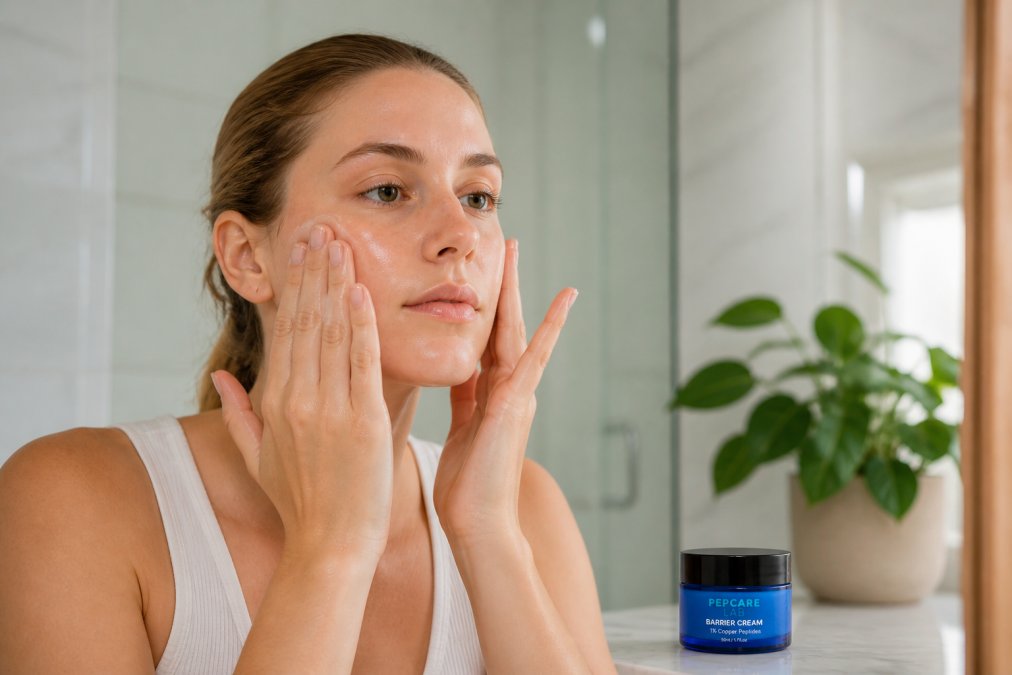
The Pepcare Lab Face Duo combines the Face Serum and Barrier Cream specifically for this two-step routine, providing both hydration and barrier repair without unnecessary complexity.

The key to success is consistency. Your skin barrier repairs through repeated exposure to supportive ingredients, not through occasional intensive treatments. A simple routine you'll actually follow beats a complex one you abandon after two weeks.
Common routine mistakes to avoid:
- Applying moisturiser to completely dry skin (it won't penetrate as effectively)
- Skipping sunscreen because you're indoors (UV damage still penetrates windows)
- Switching products frequently based on minor variations in how your skin feels
- Using hot water to cleanse (it strips natural oils and increases irritation)
Patch Testing and Environmental Triggers
Patch testing is non-negotiable when you have reactive skin. Apply a small amount of the new product to a discreet area like the inner arm or behind the ear and wait 24-48 hours. If no redness, itching, or irritation develops, apply it to a small area of your face for another 24-48 hours before full-face application.
Environmental triggers beyond weather:
Air pollution increases inflammation and irritation. Chlorine in swimming pools strips the barrier and triggers reactions; shower immediately after swimming and apply your barrier cream whilst skin is damp. Hard water irritates reactive skin; consider a shower filter. Stress triggers inflammatory responses in the skin, worsening redness and flare-ups. Managing stress through sleep, exercise, or meditation directly improves skin reactivity.
Identifying your specific triggers:
Keep a simple log for two weeks: note the date, what products you used, environmental conditions, stress levels, and any skin reactions. Patterns emerge. This personalised information is more valuable than generic advice because it tells you exactly what your skin responds to.
Managing Redness, Inflammation and Flare-ups
Active redness and inflammation require immediate, targeted support. A flare-up doesn't mean your barrier repair has failed; it means your skin needs extra support right now.
During an active flare-up:
Reduce your routine to absolute essentials: a gentle rinse with cool (not cold) water, your hydrating serum, and your barrier cream. Skip all other products, including sunscreen if possible (or use a mineral sunscreen only). Cool compresses with plain water can reduce inflammation quickly. Avoid touching your face and don't pick at flaking skin, which damages the barrier further and prolongs the flare-up.
Calming ingredients during flare-ups:
Niacinamide is your most powerful tool; it reduces inflammation and supports barrier function simultaneously. Colloidal oatmeal soothes itching and redness. Aloe vera reduces inflammation, though patch test first if you've never used it. Avoid anything with fragrance, essential oils, or actives during a flare-up.
Recovery timeline:
Most flare-ups resolve within 3-7 days with proper support. If redness and irritation persist beyond a week, or if flare-ups occur weekly, this signals that your barrier is still significantly compromised and needs more intensive support. Return to your simplified routine and extend your barrier repair phase to 8-12 weeks.
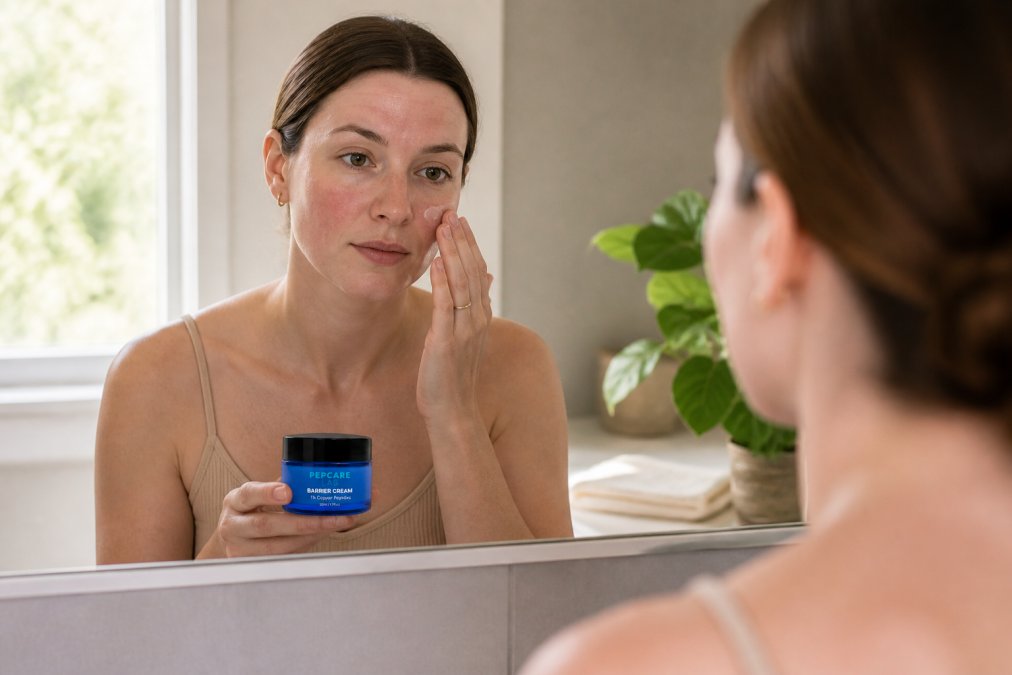
The Pepcare Lab Barrier Cream is specifically formulated to support this recovery phase, its combination of ceramides, niacinamide, and copper peptides addresses both immediate calming and long-term barrier strengthening.
Managing reactive skin requires patience and consistency, but the payoff is significant. A repaired barrier means fewer flare-ups, reduced sensitivity to products, and skin that's genuinely resilient rather than perpetually reactive.
Pepcare Lab's approach to reactive skin focuses on barrier repair through science-led formulations rather than quick fixes. The Face Serum and Barrier Cream work together to support your skin's natural renewal whilst maintaining the hydration and lipid support your barrier needs. Both are formulated without fragrance, without unnecessary actives, and with transparent ingredient lists. The Australasian Society of Dermatologists' resources on sensitive skin management recommend this minimalist, barrier-focused approach as the foundation of reactive skin care, and that's exactly what we've built.
Start with the [Pepcare Lab Face Duo(/products/pepcare-lab-copper-peptides-face-bundle) | pepcarelab.com.au/products/pepcare-lab-copper-peptides-face-bundle] if you're new to barrier repair. It combines hydration and barrier support in two products, removing the guesswork. Most people see meaningful improvement in redness and reactivity within 4-6 weeks. If you're ready to expand beyond basics, the Complete Collection adds scalp and hair support alongside your skin routine.
Your reactive skin doesn't define your skincare future. Repair your barrier, and you'll discover that your skin is far more resilient than it feels right now.
Frequently Asked Questions
Q: What's the difference between sensitive skin and reactive skin?
A: Sensitive skin is a skin type you're born with, characterised by a naturally lower tolerance to irritants. Reactive skin develops over time, often due to a compromised skin barrier from overuse of harsh products, environmental stress, or inflammation. Reactive skin can be managed and improved with the right gentle skincare routine and barrier repair techniques, whereas sensitive skin requires lifelong care. Both benefit from fragrance-free, pH-balanced products and avoiding common irritants.
Q: How do I know if my skin barrier is damaged?
A: A compromised skin barrier shows visible signs: persistent redness, stinging or burning sensations when applying products, increased transepidermal water loss (leading to dehydration despite moisturising), flaking or rough texture, and heightened sensitivity to normally tolerated ingredients. Your skin may feel tight, look dull, or experience frequent flare-ups. If these symptoms persist for more than two weeks despite using gentle products, your barrier likely needs repair. A dermatologist can confirm barrier damage through assessment of your skin's pH and moisture levels.
Q: What ingredients should I avoid if I have reactive skin?
A: Avoid fragrance (even 'natural' fragrance), essential oils, high-strength acids (vitamin C above 10%, glycolic acid above 5%), retinoids at high concentrations, and alcohol denat. Skip products with sulfates, parabens in excess, and strong preservatives if your skin is severely compromised. Steer clear of physical scrubs and opt for gentle chemical exfoliants only after your barrier heals. Test any new product on a small patch first. Focus instead on soothing, hydrating ingredients like hyaluronic acid, glycerin, ceramides, niacinamide, and copper peptides that support barrier recovery.
Q: How long does it take to repair a damaged skin barrier?
A: Barrier repair typically takes 2 to 4 weeks of consistent, gentle skincare before you notice visible improvement in redness and sensitivity. Full restoration can take 6 to 8 weeks, depending on the severity of damage and your skin's natural renewal cycle. Consistency is critical: use the same gentle routine twice daily, avoid new products during repair, and protect your skin from environmental triggers. Copper peptides and ceramides support barrier healing by supporting the lipid barrier and collagen production.
Q: Can I use multiple active ingredients on reactive skin?
A: No. Reactive skin needs a minimalist approach during barrier repair. Stick to one or two core products: a gentle cleanser, a hydrating serum with soothing ingredients like hyaluronic acid or niacinamide, and a barrier cream with ceramides and copper peptides. Once your skin stabilises (after 4 to 6 weeks), introduce one new ingredient at a time, waiting a full week between additions. Avoid combining acids, retinoids, vitamin C, and peptides simultaneously. A simple three-step routine is far more effective than a complex regimen for reactive skin.
Q: What is skin fasting and does it help reactive skin?
A: Skin fasting means using minimal products for a set period, typically 2 to 4 weeks, to allow your skin to reset. For reactive skin, this can be beneficial: use only a gentle cleanser and a barrier cream with ceramides and copper peptides, nothing else. This reduces irritation triggers and lets your skin barrier repair without competing active ingredients. However, skin fasting isn't appropriate if your skin is severely compromised; in that case, maintain hydration with targeted soothing ingredients. Once your barrier strengthens, you can gradually reintroduce products one at a time.
Q: How do environmental triggers affect reactive skin?
A: Environmental triggers include extreme temperatures (hot showers, cold wind), low humidity, pollution, chlorine, and hard water, all of which increase transepidermal water loss and weaken the skin barrier. UV exposure intensifies inflammation and redness. Stress and lack of sleep also trigger flare-ups by elevating cortisol levels. Beyond weather, indoor heating, air conditioning, and allergens (pollen, dust mites) can provoke reactivity. Protect your skin by using a hydrating barrier cream daily, avoiding very hot water, using a humidifier in dry environments, and wearing broad-spectrum SPF 30+ daily to shield against UV-induced inflammation.
Q: Why does gentle skincare for reactive skin sometimes feel ineffective at first?
A: Gentle products often feel less 'active' than harsh treatments because they don't strip or irritate. Your skin may initially feel unchanged because the barrier is still healing. This is normal: true barrier repair works quietly over weeks, not days. Some people experience a brief adjustment period where their skin feels slightly drier before hydration improves. Patience and consistency matter more than dramatic immediate results. If you're using products with copper peptides, niacinamide, and ceramides, trust the process. Most people report noticeably calmer, more resilient skin after 4 to 6 weeks of consistent gentle skincare.
This article was written using GrandRanker