
Table of Contents
- What Are Copper Peptides and Why They Matter for Sensitive Skin
- How to Patch Test Skincare Before Full Application
- Understanding Copper Peptide Contraindications and Safety
- Copper Peptides and Vitamin C Interaction: What You Need to Know
- Building Your Copper Peptide Routine for Sensitive Skin
- Managing the Copper Sting and Common Irritation Patterns
- Timeline: When to Expect Results on Sensitive Skin
- Conclusion
Last Updated: August 27, 2026
What Are Copper Peptides and Why They Matter for Sensitive Skin
Copper peptides are naturally occurring compounds that support collagen synthesis and skin barrier repair, making them particularly valuable for reactive skin types. The most researched form is GHK-Cu, a tripeptide complex that signals your skin to strengthen its natural defences without triggering the irritation that accompanies retinol or vitamin C (peer-reviewed research).
For sensitive skin, this distinction matters enormously. Your skin barrier is already compromised, losing moisture faster than it should, with a thinner protective lipid layer and heightened inflammatory response. Most anti-aging ingredients work by creating controlled stress. Copper peptides work differently, they signal repair and renewal without that initial irritation phase.
The science is straightforward: copper activates enzymes involved in cross-linking collagen and elastin fibres, improving skin firmness and texture while reducing trans-epidermal water loss. For reactive skin, this is the rare combination of efficacy without the typical irritation trade-off.
Pepcare Lab formulates copper peptides specifically for sensitive skin, combining 1% copper peptides with niacinamide and hyaluronic acid that reinforce barrier function rather than compromise it. This approach recognises that sensitive skin needs smarter actives that work with your skin's vulnerabilities rather than against them.

How to Patch Test Skincare Before Full Application
Patch testing is non-negotiable when introducing any new active to sensitive skin, even though copper peptides are gentler than most alternatives. A proper patch test takes 5-7 days and tells you whether your specific skin will tolerate the ingredient (the American Academy of Dermatology).
Choose a small, discreet area with thin skin: the inner forearm, behind the ear, or along the jawline. Apply a small amount of serum (roughly rice-grain sized) once daily in the evening. Leave it on for at least 20 minutes, then rinse gently.
Watch for these signs over the next week:
- Immediate stinging or burning that doesn't subside within 5 minutes
- Redness that persists beyond a few hours
- Swelling, hives, or welts
- Itching or discomfort that worsens over subsequent applications
Minor tingling in the first 1-2 minutes is common and often resolves as your skin acclimates. This differs from sustained irritation. If you experience genuine discomfort, stop immediately and allow your skin to settle for 48 hours before trying again at lower frequency (every other day instead of daily).
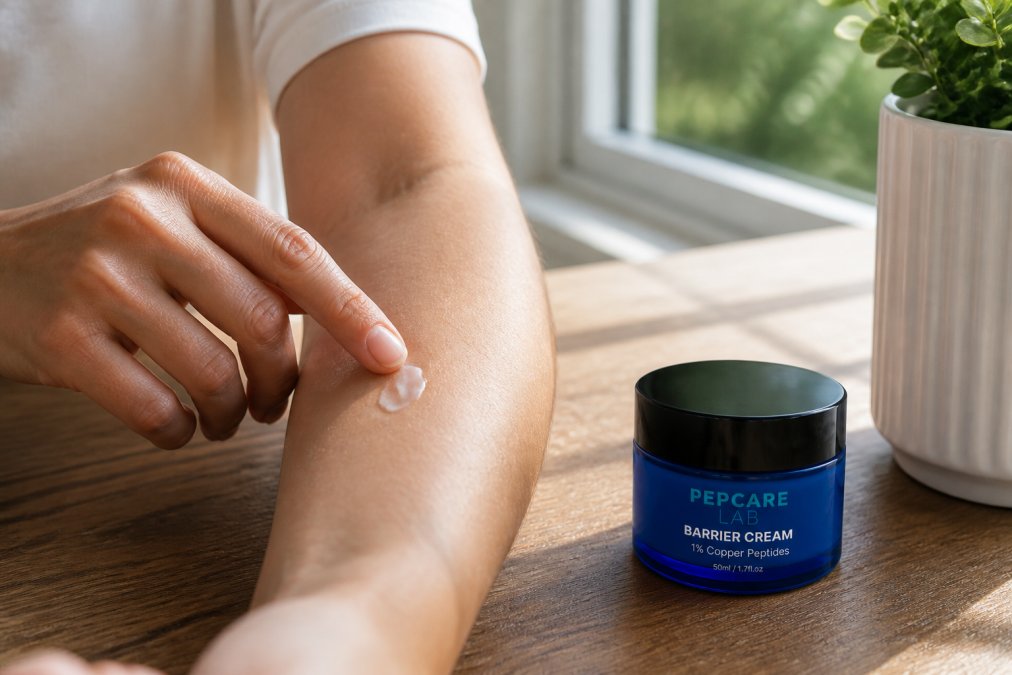
The 5-7 day investment pays for itself in avoided downtime.
Understanding Copper Peptide Contraindications and Safety
Copper peptides are remarkably safe for most skin types, including sensitive skin, but specific situations warrant caution or avoidance.
Wilson's disease and copper metabolism disorders: This is the primary medical contraindication. If you have Wilson's disease or any diagnosed copper metabolism disorder, consult your doctor before using copper peptide skincare (the NIH).
Recent chemical peels, laser treatments, or microneedling: Your skin barrier is already compromised. Wait 2-3 weeks before introducing copper peptides. Your skin needs time to rebuild its protective lipid layer first.
Active dermatitis or eczema flares: If your skin is currently flaring, red, weeping, or severely compromised, hold off on copper peptides until the acute phase passes. These ingredients work best on stable skin.
Concurrent use with certain medications: If you're taking oral copper supplements or medications that affect copper absorption, mention copper peptide skincare to your doctor. The risk of systemic accumulation from topical application is extremely low, but transparency with your healthcare provider is sensible.
Pregnancy and breastfeeding: There's no evidence that topical copper peptides pose risks during pregnancy or breastfeeding, but data is limited. Many practitioners recommend waiting until after breastfeeding to introduce new actives as a precaution. This is a personal decision worth discussing with your obstetrician.
Copper peptides have an excellent safety profile, but they're not universally appropriate for every skin state or medical situation. Knowing these boundaries prevents you from using the right ingredient at the wrong time.
Copper Peptides and Vitamin C Interaction: What You Need to Know
Copper peptides and vitamin C, two popular anti-aging ingredients, can interact in ways that either amplify irritation or reduce efficacy. Understanding this relationship is critical for building a routine that works.
The chemistry is straightforward: vitamin C (ascorbic acid) is a reducing agent, and copper is a transition metal. In solution, they can interact, potentially reducing the stability of both ingredients and generating oxidative stress that irritates sensitive skin.
If you're using both, separate them by time of day. Apply vitamin C in the morning (it's photostable and offers antioxidant protection), and reserve copper peptides for your evening routine. This eliminates the chemical conflict entirely.
If you're new to actives, choose one first. Sensitive skin benefits more from mastering one ingredient before layering a second. Start with copper peptides for 4-6 weeks. Once your skin is stable and showing visible improvements, then consider adding vitamin C if you want additional antioxidant support.
Avoid mixing them in the same formulation. Some brands attempt to combine these ingredients in a single serum. For sensitive skin, this is a mistake. The interaction happens in the bottle, degrading both actives and increasing irritation potential. Separate products applied at different times are always safer.
The "Copper Sting" phenomenon is often worse when copper peptides are layered over vitamin C residue. Cleanse properly between applications.
Building Your Copper Peptide Routine for Sensitive Skin
A copper peptide routine for sensitive skin is deliberately simple. Complexity is the enemy of barrier health. The goal is to introduce the active, support it with barrier-strengthening ingredients, and avoid unnecessary layering that multiplies irritation risk.
Step 1: Cleanse Gently
Start with a cleanser that removes makeup and environmental debris without stripping your skin. For sensitive skin, this means a non-foaming, pH-balanced formula. Avoid anything with sodium lauryl sulphate or high concentrations of essential oils.
Cleanse once daily in the evening. Morning cleansing should be a quick rinse with lukewarm water only, unless you've sweated overnight. Over-cleansing is a hidden driver of sensitivity. Each cleanse disrupts your skin's natural pH and lipid balance.
Pat your skin dry gently. Rubbing creates micro-trauma and inflammation. Damp skin is ideal for applying actives, the moisture helps distribute the serum evenly and reduces the concentration on any single spot, minimising irritation.
Step 2: Apply the Serum
Wait 2-3 minutes after cleansing before applying your copper peptide serum. Your skin should still feel slightly damp. This hydration layer buffers the active and improves absorption.
Dispense one pump of serum (roughly pea-sized) onto your fingertip. Gently press it into your skin rather than rubbing or massaging. Massage can trigger inflammation and spread the serum unevenly, creating hot spots of irritation.
Apply to your entire face, neck, and décolletage. Don't skip the neck, it ages faster and has thinner skin, so it benefits enormously from barrier-supporting ingredients.
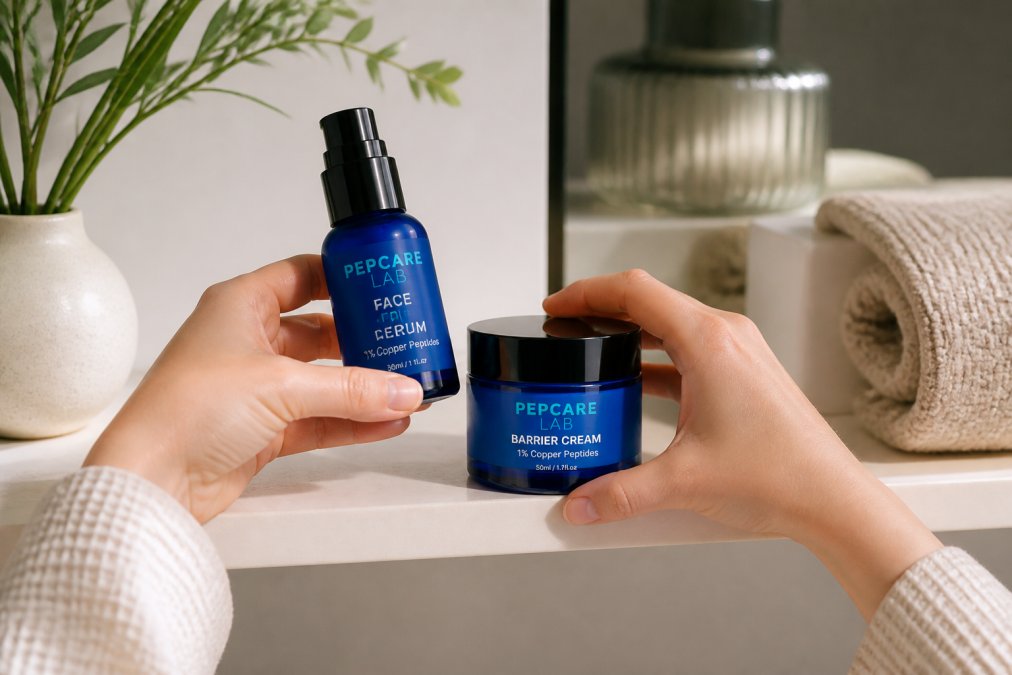
Wait 5-10 minutes for the serum to fully absorb before moving to the next step. This patience prevents pilling and ensures the peptides have time to interact with your skin.
Step 3: Seal with Barrier Cream
Follow with a barrier cream formulated to reinforce your skin's protective lipid layer. The Pepcare Lab Barrier Cream combines 1% copper peptides with niacinamide, squalane, and skin-conditioning ingredients that lock in hydration and support long-term barrier repair.
Apply a small amount, roughly hazelnut-sized, to your face and neck. Press gently into the skin, allowing the cream to melt into your complexion rather than sitting on top.
This three-step routine takes roughly 10-15 minutes and gives your skin everything it needs: active support for collagen synthesis and barrier repair, hydration, and lipid reinforcement. Use this routine consistently for 6-8 weeks before assessing results.
Managing the Copper Sting and Common Irritation Patterns
The "Copper Sting" is a real phenomenon, a sharp, immediate tingling some people experience when applying copper peptides. Understanding what it means helps you decide whether to continue or adjust.
Mild tingling in the first 1-2 minutes is often just your skin responding to the pH or osmolarity of the serum. It typically resolves as the product absorbs. This is tolerable and doesn't indicate a problem.
Sustained burning that doesn't improve after 5 minutes suggests your skin barrier is too compromised right now. Rinse the serum off, apply your barrier cream, and wait 1-2 weeks. Then try again, this time applying the serum only 2-3 times per week instead of daily.
Redness that develops over hours or days often indicates you're using the serum too frequently, applying too much product, or layering it over an incompatible ingredient (usually vitamin C residue). Adjust one variable at a time. If you're using it daily, drop to every other day for a week.
Itching or flaking can mean your barrier is repairing itself (often a good sign) or that the serum is too concentrated for your current skin state. If itching appears in weeks 2-3 and gradually improves, you're likely seeing barrier recovery. If it appears immediately and worsens, your skin needs a lower frequency.
Many people abandon copper peptides after experiencing mild irritation in the first week, not realising that a simple frequency adjustment would have resolved it. Sensitive skin often needs 1-2 weeks to acclimate to new actives.
Timeline: When to Expect Results on Sensitive Skin
Sensitive skin requires patience. The timeline for visible improvements with copper peptides is longer than for people with strong skin barriers, simply because your skin needs time to rebuild its foundational health.
Weeks 1-2: Acclimation phase. Your skin is adjusting to the active. You might experience mild tingling, slight redness, or temporary dryness. Improvements are happening at a cellular level, but you won't see them yet.
Weeks 3-4: Barrier stabilisation. Your skin should feel calmer. Redness should be diminishing. Your skin barrier is strengthening, and you're losing less trans-epidermal water. You might notice your skin feels less tight or reactive to other products.
Weeks 5-8: Visible texture improvements. Fine lines begin to soften slightly. Your skin's overall radiance improves because your barrier is functioning better and holding onto moisture. Skin tone becomes more even.
Weeks 9-12: Collagen synthesis shows. You'll see more pronounced improvements in skin firmness and the appearance of fine lines. Elasticity improves noticeably. Your skin looks fresher and more youthful.
Beyond 12 weeks: Sustained improvement. Collagen remodelling continues. Skin texture becomes increasingly refined. Results plateau after about 16 weeks. Maintenance becomes the focus.
Sensitive skin shows results more slowly than resilient skin, but the improvements are often more stable and longer-lasting because they're built on genuine barrier repair. If you haven't seen any improvement by week 8, reassess your routine. Are you using the serum consistently? Is your cleansing routine too harsh? Are you layering incompatible ingredients?
Sensitive skin and anti-aging don't have to be mutually exclusive. Copper peptides offer genuine efficacy in supporting collagen production and skin barrier repair without the irritation that typically accompanies stronger actives. The key is patience, proper patch testing, and understanding your skin's specific needs.
Pepcare Lab's copper peptide formulations are specifically designed for sensitive skin, combining 1% copper peptides with barrier-supporting ingredients like niacinamide and squalane. Start with the Face Duo, the Face Serum and Barrier Cream together, to establish a foundation that works. If you're ready to expand your routine, the Complete Collection includes scalp support as well. Build your routine thoughtfully, and you'll see sustainable improvements in skin firmness, texture, and barrier health.


Frequently Asked Questions
Q: Are copper peptides safe for sensitive skin?
A: Yes, when used correctly. Copper peptides support the skin barrier rather than compromise it, making them suitable for reactive skin types. However, safety depends on patch testing first, avoiding incompatible ingredients, and starting with lower concentrations. Pepcare Lab's 1% copper peptide formulations are specifically designed for sensitive skin. Always introduce them gradually and monitor for the 'copper sting', a mild tingling that usually subsides as your barrier adapts.
Q: What should you not use copper peptides with?
A: Avoid combining copper peptides with vitamin C serums, as they can reduce each other's efficacy. Space them 12 hours apart if you use both. Also limit use with strong actives like retinol or acids during the initial adaptation phase, as this increases irritation risk on sensitive skin. Once your barrier is strengthened, layering becomes safer. Avoid products with high pH or alcohol content alongside copper peptides.
Q: How long does it take to see results with copper peptides on sensitive skin?
A: Most people notice improved skin texture and reduced sensitivity within 4-6 weeks of consistent use. Collagen production and visible firmness changes typically appear after 8-12 weeks. Because sensitive skin requires a slower introduction, results may take slightly longer than on resilient skin types. Consistency matters more than speed, daily application of Pepcare Lab's Face Serum and Barrier Cream yields reliable outcomes.
Q: Can copper peptides cause purging or irritation?
A: Copper peptides do not cause traditional purging like retinol. However, the 'copper sting', mild tingling or slight redness, can occur in the first 1-2 weeks as your skin barrier recognises and responds to the peptide complex. This is normal and typically fades as your barrier strengthens. True irritation (persistent redness, burning, or rash) signals you need to reduce frequency or concentration. Patch test for 3-5 days before full-face application to distinguish between normal adaptation and genuine sensitivity.
This article was written using GrandRanker