
Table of Contents
- Copper Peptides vs Retinol for Aging: How Each Ingredient Works
- Head-to-Head Comparison: Copper Peptides and Retinol
- Benefits of Copper Peptides for Skin: What the Science Shows
- Retinol Side Effects and Skin Sensitivity: What to Expect
- Molecular Stability, pH Compatibility, and Long-Term Results
- How to Layer Copper Peptides with Retinol Safely
- Which Ingredient Suits Your Skin Type and Goals?
- Conclusion
Last Updated: August 23, 2026
The debate around copper peptides vs retinol for aging has dominated skincare conversations for good reason: both ingredients work through completely different mechanisms, at different speeds, and with very different tolerability profiles. This guide cuts through the noise and gives you a technically grounded comparison, including how to use both together safely.
Copper Peptides vs Retinol for Aging: How Each Ingredient Works
Copper peptides vs retinol for aging represents a fundamental fork in anti-aging strategy: one ingredient rebuilds the dermal matrix from below, the other accelerates cell turnover from above.
How GHK-Cu Supports the Dermal Matrix
GHK-Cu is a naturally occurring copper-binding tripeptide found in human plasma, saliva, and urine. Its concentration declines with age, correlating with reduced fibroblast activity and collagen synthesis. When applied topically, GHK-Cu signals fibroblasts to produce collagen, elastin, and glycosaminoglycans, the structural proteins responsible for skin firmness and resilience.
GHK-Cu is particularly well-suited to sensitive skin because it works through biological signalling rather than forced epidermal exfoliation. Research documented in the National Library of Medicine's peer-reviewed database indicates that GHK-Cu exhibits anti-inflammatory properties, which explains why it rarely triggers the irritation cascade that retinoids cause. Its low molecular weight supports meaningful skin penetration, and it's pH-stable across a broad range, critical when layering with other actives. Results are cumulative and gradual: expect improvements in skin texture, resilience, and transepidermal water loss over weeks to months, not days.
How Retinol Drives Cell Turnover and Collagen Synthesis
Retinol is a vitamin A derivative that converts in the skin to retinoic acid, the biologically active form that binds to nuclear receptors and directly regulates gene expression. This is why retinol effectively drives cell turnover, reduces hyperpigmentation, and stimulates collagen synthesis. The process is genuinely corrective: retinol accelerates epidermal exfoliation, clears dead cells, unclogs pores, and forces the skin to produce fresh, organised tissue.
The trade-off is significant. The conversion pathway generates reactive intermediates that can compromise the skin barrier, increase transepidermal water loss, and trigger sensitivity, particularly during the initial "retinization" period of four to eight weeks, which involves redness, flaking, and tightness. For those with compromised barriers or reactive skin, this can be genuinely disruptive.
Retinol is pH-dependent: it degrades rapidly above pH 6 and is most stable below pH 5.5. This has direct implications for layering.
Head-to-Head Comparison: Copper Peptides and Retinol
| Attribute | Copper Peptides (GHK-Cu) | Retinol |
|---|---|---|
| Primary mechanism | Fibroblast signalling, dermal remodelling | Cell turnover, retinoic acid conversion |
| Collagen synthesis | Indirect via fibroblast activation | Direct via gene expression regulation |
| Skin barrier effect | Supports and strengthens | Can temporarily compromise |
| Irritation potential | Low; anti-inflammatory | Moderate to high, especially initially |
| pH stability | Broad range; pH-stable | pH-dependent; degrades above pH 6 |
| Onset of visible results | Gradual (4-12 weeks) | Faster but with adaptation period |
| Best for | Sensitive skin, barrier repair, preventative aging | Corrective skincare, photoaging, hyperpigmentation |
| Suitable for daily use | Yes, AM and PM | PM recommended; avoid sun exposure |
Retinol is the more aggressive corrective tool. Copper peptides are the more sustainable choice for long-term dermal remodelling. Neither is universally superior; the right answer depends on your skin's current condition and your goals.
Benefits of Copper Peptides for Skin: What the Science Shows
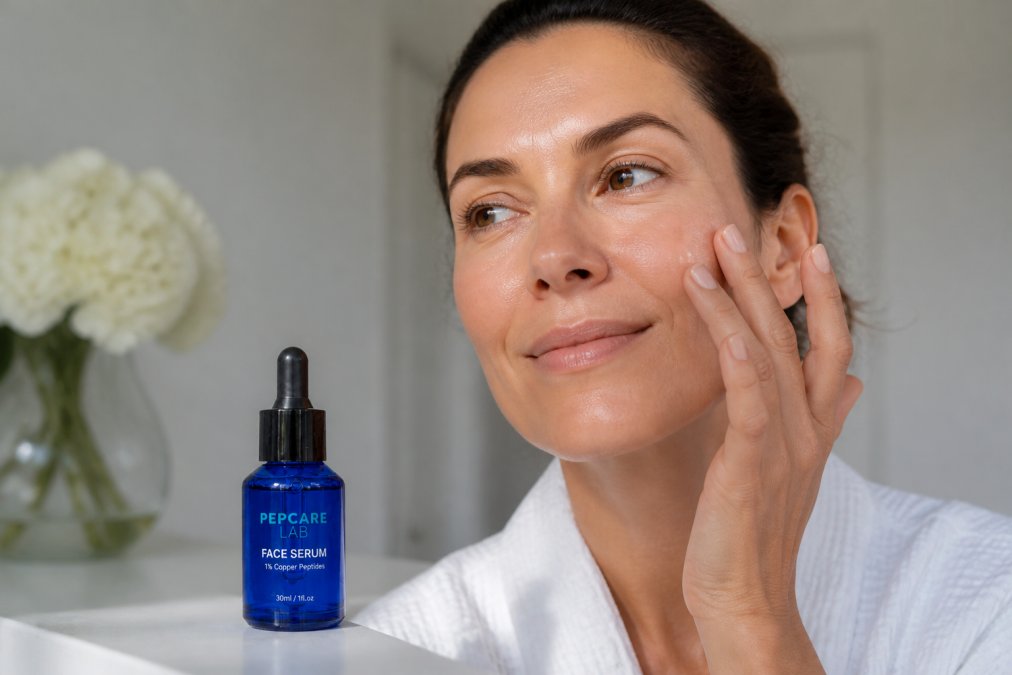
GHK-Cu stimulates production of collagen types I and III, elastin, and proteoglycans, translating to measurable improvements in skin texture, firmness, and fine line appearance. Unlike retinol, which achieves similar outcomes through forced cell turnover, GHK-Cu restores the skin's own production capacity.
Beyond structural support, GHK-Cu's anti-inflammatory and antioxidant properties address photoaging and oxidative stress. Sun-damaged skin shows elevated matrix metalloproteinases (enzymes that drive collagen degradation), and GHK-Cu modulates this activity, according to peer-reviewed research indexed on PubMed.
Additional documented benefits include:
- Reduction in transepidermal water loss, supporting skin barrier function
- Improved wound healing and skin resilience following barrier disruption
- Reduction in hyperpigmentation appearance with consistent use
- Support for dermal matrix remodelling without inflammatory responses
- Compatibility with sensitive and reactive skin types
The Pepcare Lab Face Serum ($49.00) delivers 1% GHK-Cu alongside niacinamide and hyaluronic acid. The Pepcare Lab Barrier Cream ($49.00) pairs 1% copper peptides with squalane and niacinamide to reinforce the skin's natural defences.

Retinol Side Effects and Skin Sensitivity: What to Expect
Most guides understate how disruptive retinol can be, particularly for first-time users. The retinization period is real, and understanding it prevents the most common mistake: abandoning retinol too early or persisting through irritation that's causing net harm.
During retinization, accelerated epidermal exfoliation produces visible flaking, tightness, and sometimes redness in the first two to six weeks. Skin sensitivity spikes because the barrier is temporarily compromised and transepidermal water loss increases. For most people with normal or oily skin, this resolves as the skin adapts. For those with pre-existing barrier dysfunction, rosacea, or eczema, retinol can trigger prolonged inflammation that does more harm than good.
Common retinol side effects:
- Dryness and flaking in the first two to four weeks
- Increased sun sensitivity (daily SPF is non-negotiable)
- Temporary redness, particularly around the nose and cheeks
- Stinging or tingling on application
- Potential purging, a temporary increase in breakouts
Starting at 0.025% to 0.05% retinol and increasing slowly is the standard clinical approach. As documented by the Australasian College of Dermatologists, gradual introduction and consistent moisturisation are the most effective strategies for managing retinol-related irritation.
Molecular Stability, pH Compatibility, and Long-Term Results
Retinol is inherently unstable. Exposure to light, air, and alkaline pH degrades it rapidly. Most retinol formulations are buffered to pH 4.5-5.5 to preserve integrity. Copper peptides are stable across a broader pH range and don't degrade under the same conditions. This asymmetry has a practical consequence: layering a high-pH copper peptide product directly over a low-pH retinol formulation can neutralise the retinol before it converts to retinoic acid.
If you're using a copper peptide product formulated above pH 6 and applying it immediately after a retinol serum, you're likely reducing the retinol's efficacy before it absorbs. The fix is straightforward: allow adequate absorption time between application steps, or separate the two ingredients into different routines.
Retinol delivers faster visible improvements in early months, particularly for fine lines, skin texture, and hyperpigmentation. Copper peptides work more slowly but support structural changes at the dermal level that accumulate over time. Many practitioners find that a combination approach yields better long-term outcomes, because retinol addresses surface-level concerns while GHK-Cu supports deeper dermal remodelling that sustains results.
How to Layer Copper Peptides with Retinol Safely
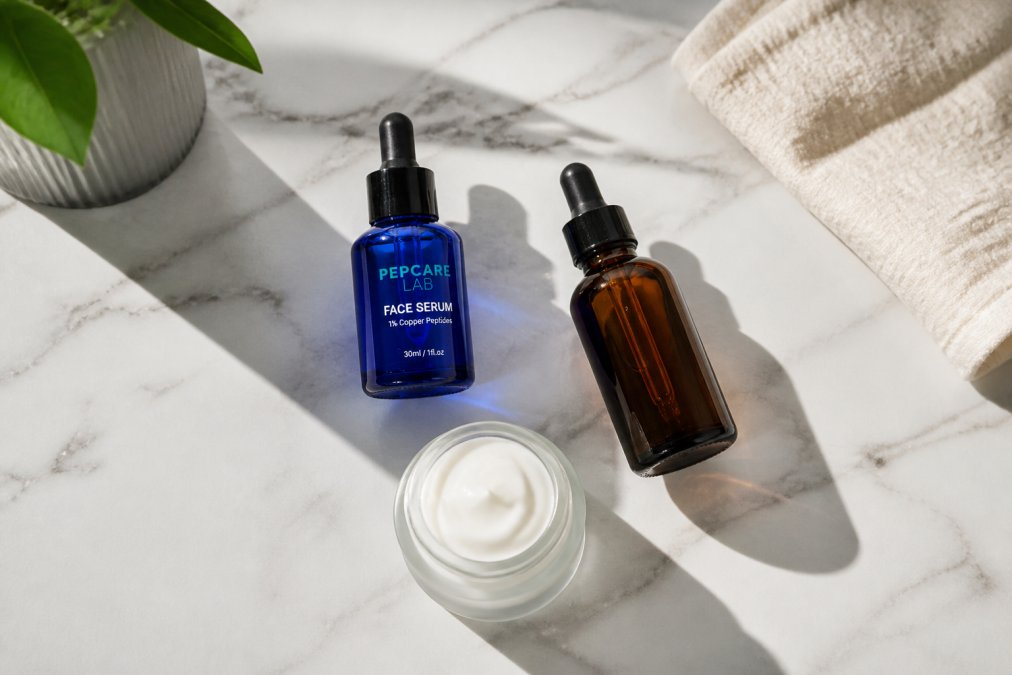
Never apply a high-pH copper peptide product immediately before or after retinol. The pH incompatibility can degrade the retinol and increase irritation risk.
Recommended layering sequence for combined use:
- Cleanse with a gentle, non-stripping cleanser (pH 5.0-5.5)
- Apply retinol serum to dry skin; allow 15-20 minutes for absorption
- Follow with copper peptide serum once the retinol has fully absorbed
- Seal with a barrier-supportive moisturiser containing ceramides or squalane
- Apply SPF 30+ every morning
Alternative approach, split routine:
- AM routine: Copper peptide serum + barrier cream + SPF
- PM routine: Retinol serum + barrier moisturiser (no copper peptides)
The split routine eliminates pH compatibility concerns and is the more conservative option for sensitive skin or those new to retinol.
Skin Barrier Repair Protocol for Sensitive Skin
For anyone with a compromised barrier, characterised by persistent redness, tightness, stinging from water, or reactive responses to previously tolerated products, a dedicated repair phase before introducing retinol is advisable.
Four-week barrier repair protocol:
- Week 1-2: Copper peptide serum morning and evening, paired with a ceramide-rich barrier cream. No actives other than niacinamide.
- Week 3: Introduce retinol at the lowest available concentration (0.025%) once per week, PM only.
- Week 4: Increase retinol to twice weekly if no significant irritation occurred.
- Ongoing: Maintain copper peptides daily; increase retinol frequency gradually over 8-12 weeks.
The Pepcare Lab Face Duo ($79.00) combines the Face Serum and Barrier Cream, designed for this protocol. Both are formulated with sensitive skin in mind, addressing hydration, anti-inflammatory support, and structural reinforcement.

Which Ingredient Suits Your Skin Type and Goals?
Choose copper peptides as your primary active if:
- Your skin is sensitive, reactive, or has a compromised barrier
- You're focused on preventative aging and long-term skin resilience
- You want an ingredient suitable for both morning and evening use
- You're new to active skincare and want to build a stable foundation first
Choose retinol as your primary active if:
- Your skin barrier is intact and you can tolerate an adaptation period
- Your primary concerns are established fine lines, photoaging, or hyperpigmentation
- You're comfortable with a PM-only active and consistent SPF use
Use both if:
- Your skin has adapted to retinol and you want to support deeper dermal remodelling
- You're addressing both corrective concerns and preventative aging
- You're willing to follow a disciplined layering protocol or split routine
For most people with sensitive or reactive skin, starting with copper peptides, building barrier resilience over four to eight weeks, then introducing retinol cautiously produces better long-term outcomes than forcing retinol onto a compromised barrier.
The Pepcare Lab Complete Collection ($129.00 with free shipping) provides GHK-Cu formulations for face, skin, and scalp in a coordinated four-step routine.

| Skin Type | Recommended Starting Point | Long-Term Strategy |
|---|---|---|
| Sensitive / reactive | Copper peptides only | Add retinol after 4-8 weeks barrier repair |
| Normal / combination | Either; copper peptides preferred | Combine using split routine |
| Oily / resilient | Retinol first | Add copper peptides for dermal support |
| Compromised barrier | Copper peptides + barrier cream only | Introduce retinol only after full repair |
| Mature skin (50+) | Both; copper peptides AM, retinol PM | Maintain both long-term |
As outlined in dermatological guidance from the Australasian Society for Dermatology Research, ingredient sequencing is increasingly recognised as central to achieving predictable outcomes from active skincare.
The real challenge with copper peptides vs retinol for aging isn't choosing between them, it's building a routine that uses both intelligently. Pepcare Lab's GHK-Cu formulations are designed specifically for this: the Face Serum and Barrier Cream deliver 1% copper peptides alongside niacinamide and squalane to support barrier function, reduce irritation risk, and create the stable skin environment that allows retinol to work safely. Shop our Bestsellers and start with the foundation your skin actually needs.
Frequently Asked Questions
Do copper peptides work better than retinol for fine lines?
Neither ingredient is universally superior. Retinol accelerates cell turnover and epidermal exfoliation, which can visibly reduce fine lines faster in the short term. Copper peptides, particularly GHK-Cu, support collagen synthesis and dermal remodelling more gradually, making them better suited to long-term skin resilience. For sensitive skin that cannot tolerate retinol's irritation threshold, copper peptides often deliver comparable anti-aging results without the retinization period.
Can copper peptides replace retinol in a skincare routine?
For many people, yes. GHK-Cu supports fibroblast activity, collagen synthesis, and skin barrier function through a different mechanism than retinoic acid, so it addresses photoaging and collagen degradation without the dryness or peeling retinol causes. Those with sensitive skin, rosacea, or compromised skin barriers often find copper peptides a complete alternative. If your main goal is corrective skincare for deep wrinkles or hyperpigmentation, retinol may still add value alongside copper peptides.
Is it safe to layer copper peptides and retinol?
Yes, but timing and formulation matter. The two ingredients should be applied at different times: retinol at night, copper peptides in the morning or on alternating evenings. Applying them simultaneously raises the risk of molecular instability and increased skin sensitivity. Always use a barrier-supporting moisturiser after retinol to reduce transepidermal water loss. If your skin is already reactive, introduce each ingredient separately over several weeks before combining them.
Which ingredient is better for sensitive skin: copper peptides or retinol?
Copper peptides are consistently better tolerated by sensitive skin. GHK-Cu carries anti-inflammatory properties and actively supports skin barrier function, which reduces the risk of oxidative stress and irritation. Retinol, even at lower concentrations, commonly causes dryness, redness, and peeling during the retinization phase. For anyone who has found retinol too harsh, a copper peptide serum formulation is the more practical starting point for preventative aging.
What is the difference between copper peptides and retinol for aging skin?
The core difference is mechanism. Retinol converts to retinoic acid in the skin and speeds up cell turnover, exfoliating the epidermis and stimulating collagen synthesis through vitamin A receptors. Copper peptides work by binding copper ions to the tripeptide GHK, which signals fibroblasts to produce collagen and elastin, repairs the dermal matrix, and reduces collagen degradation. Retinol produces faster visible changes; copper peptides build slower, more durable skin resilience with fewer side effects.
This article was written using GrandRanker