
Table of Contents
- What Are Copper Peptides and How Do They Work for Hair?
- GHK-Cu Benefits for Hair Thinning and Scalp Health
- How to Use Copper Peptide Serum for Hair: Application Guide
- Copper Peptides vs Minoxidil for Hair Growth
- Collagen Production and Hair Shaft Strength
- Safety, Side Effects, and Long-Term Use
- Conclusion
- Frequently Asked Questions
Last Updated: September 4, 2026
Copper peptides for hair have moved from dermatological research into everyday scalp care, yet most guides gloss over the science or overstate the results. GHK-Cu, the copper peptide complex at the centre of this interest, is a naturally occurring compound that signals the scalp to support collagen production and follicle stimulation. At Pepcare Lab, we formulate with copper peptides for hair because the evidence points to genuine scalp health support, not marketing hype. This guide breaks down what the research actually says, how to apply these serums correctly, and where they fit alongside treatments like minoxidil.

The most important insight up front: copper peptides for hair work differently from conventional growth stimulants. Rather than forcing rapid growth, GHK-Cu supports the scalp environment so follicles can function properly over successive growth cycles. For anyone experiencing early thinning, this distinction matters more than any single ingredient percentage.
What Are Copper Peptides and How Do They Work for Hair?
Copper peptides, specifically the tripeptide GHK-Cu, are protein fragments bound to a copper ion. This binding is essential. The copper ion gives the peptide its stability and bioactivity, allowing it to signal skin and scalp cells to behave in ways that support healthy tissue.
GHK-Cu is a signalling peptide. It does not plug into hair follicles like a mechanical part; instead, it communicates with cells. Research into GHK-Cu demonstrates its role in supporting collagen synthesis and connective tissue remodelling, processes that underpin a healthy scalp foundation (peer-reviewed research). When the scalp environment is compromised through inflammation or oxidative stress, hair follicles struggle. Copper peptides help address the underlying scalp condition rather than simply masking the symptom of thinning.
Understanding GHK-Cu and its role in hair growth
The mechanism connecting GHK-Cu to hair growth centres on the dermal papilla, the structure at the base of the follicle that regulates the hair growth cycle. Copper peptides support the dermal papilla's function by encouraging the production of collagen and other structural proteins that anchor the follicle.
Copper peptides also act as antioxidants. They help neutralise the oxidative stress that accumulates in scalp tissue, which is one factor implicated in premature follicle miniaturisation. By supporting microcirculation and nutrient delivery to the follicle, GHK-Cu helps create the conditions where the anagen phase, the active growth phase, can be sustained for longer (peer-reviewed research).
GHK-Cu Benefits for Hair Thinning and Scalp Health
The primary benefit of GHK-Cu for hair thinning is its capacity to support the scalp environment rather than override it. Hair thinning often involves follicle miniaturisation, where the follicle shrinks and produces finer, shorter hairs over successive cycles. Copper peptides are studied for their role in supporting the cellular processes that maintain follicle health and potentially slow that miniaturisation.
Beyond the follicle itself, copper peptides benefit the surrounding scalp tissue. A healthy scalp supports healthy hair, and GHK-Cu contributes to the structural integrity of the skin through collagen synthesis and tissue remodelling. This makes copper peptides for hair a dual-action approach: supporting both the follicle and the connective tissue around it.
Supporting the anagen phase and follicle stimulation
The anagen phase determines how long a hair grows before shedding. A shorter anagen phase means shorter hair and more frequent shedding. Copper peptides support the signalling pathways involved in prolonging this active growth period.
Follicle stimulation from GHK-Cu is indirect but meaningful. Rather than chemically forcing growth, copper peptides help the follicle respond to the body's own growth signals. This distinction explains why results develop gradually and why consistency matters more than intensive short-term use.
Reducing scalp inflammation and improving scalp environment
Scalp inflammation disrupts the hair growth cycle and is a recognised contributor to hair shedding conditions (peer-reviewed research). Copper peptides exhibit properties that help calm this inflammatory response, supporting a more balanced scalp environment.
A less inflamed scalp supports better nutrient delivery and healthier follicle function. For individuals with sensitive skin, this anti-inflammatory action is particularly relevant, as many hair treatments aggravate the scalp rather than soothe it. GHK-Cu offers a gentler pathway for supporting scalp health.
How to Use Copper Peptide Serum for Hair: Application Guide
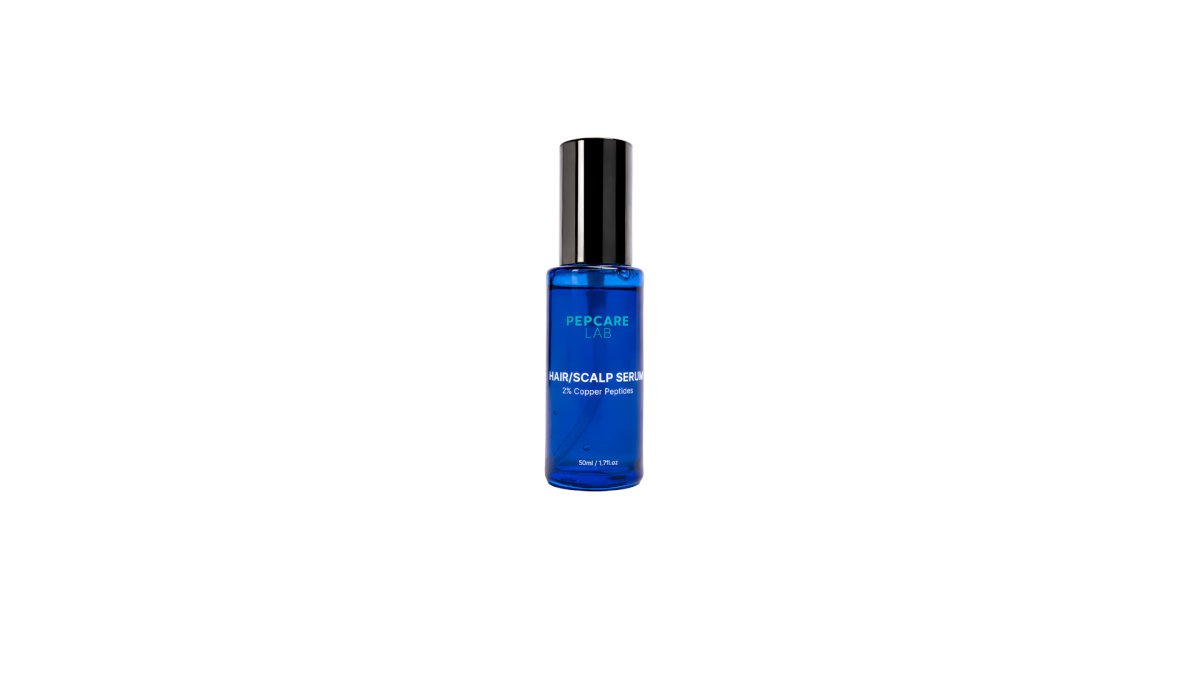
A copper peptide serum is a topical application designed to deliver GHK-Cu directly to the scalp. The serum concentration matters, as does the delivery method. For most users, a daily application routine is the most effective approach, though consistency over months matters more than daily perfection.
The process is straightforward: apply the serum directly to the scalp, not the hair shaft. Part the hair in sections to expose the scalp, apply a few drops, and massage gently. Massage supports microcirculation and helps distribute the serum evenly across the scalp.
Daily application routine for best results
A simple daily routine produces the best outcomes. Apply the serum to a clean, dry scalp, ideally in the evening so it can work overnight without interference from styling products or environmental exposure.
Consistency is the single most important factor. Copper peptides support gradual, cumulative improvements in scalp health. Missing the occasional application is not a problem, but abandoning the routine after three weeks guarantees no visible result. Most dermatological research suggests committing to at least three months of consistent use before evaluating efficacy.
Ingredient compatibility and what not to mix
Ingredient compatibility is a critical consideration that many guides overlook. Copper peptides interact with other active ingredients, and some combinations reduce their effectiveness or cause irritation.
Avoid applying copper peptides in the same routine as strong acids, such as alpha hydroxy acids or high-concentration vitamin C. These ingredients can oxidise the copper peptide, reducing its bioavailability. If you use both, separate them by time: copper peptides in the evening, acids in the morning. Retinol can be used alongside copper peptides, but start slowly to monitor tolerance.
Copper Peptides vs Minoxidil for Hair Growth
Copper peptides and minoxidil approach hair growth from fundamentally different angles. Minoxidil is a vasodilator that increases blood flow to the scalp, encouraging follicles to enter the growth phase more readily. Copper peptides support the structural and environmental conditions that allow follicles to function optimally.
The mechanisms differ in a practical sense. Minoxidil produces faster visible results, typically within three to six months, but requires ongoing use to maintain effects. Copper peptides work more gradually, supporting sustained scalp health and the quality of hair produced.
How the mechanisms differ
Minoxidil works through vasodilation, widening blood vessels to increase blood flow and nutrient delivery to the follicle. This action can push follicles into the anagen phase, resulting in visible regrowth, particularly in cases of androgenetic alopecia.
Copper peptides for hair do not rely on vasodilation. Instead, GHK-Cu supports collagen synthesis, reduces oxidative stress, and helps maintain the scalp's structural integrity. This supports the follicle's ability to produce healthy hair over time rather than forcing immediate growth.
Which option suits different hair loss types
The choice depends on the type of hair loss. For androgenetic alopecia, the most common form of hereditary thinning, minoxidil has a stronger evidence base for stimulating regrowth. For diffuse thinning related to scalp inflammation, poor scalp health, or telogen effluvium, copper peptides offer a gentler, supportive approach.
Many individuals use both. Copper peptides support scalp health while minoxidil stimulates growth. If you are considering this combination, introduce one at a time to monitor how your scalp responds.
| Treatment | Primary Mechanism | Onset of Results | Best Suited To |
|---|---|---|---|
| Copper Peptides | Collagen support, antioxidant action | 3-6 months | Scalp health, diffuse thinning, sensitive skin |
| Minoxidil | Vasodilation, follicle stimulation | 2-4 months | Androgenetic alopecia, hereditary thinning |
Collagen Production and Hair Shaft Strength
Collagen is a structural protein that forms the connective tissue framework of the scalp. Copper peptides for hair are uniquely positioned because GHK-Cu is one of the most studied compounds for supporting collagen synthesis in the body.
The connection to hair shaft strength is indirect but significant. A healthy scalp produces follicles that are better anchored and better nourished. The hair shaft itself is composed primarily of keratin, a protein that depends on adequate amino acids and minerals. Copper plays a role in the enzyme reactions that strengthen the hair shaft and reduce hair breakage.
Copper peptides support the scalp's connective tissue, which helps anchor the follicle and maintain healthy hair density. This structural support is what distinguishes copper peptides from treatments that focus solely on stimulating growth without addressing the underlying tissue health.
Safety, Side Effects, and Long-Term Use
Copper peptides have a strong safety profile in topical application when used at appropriate concentrations. Most users tolerate them well, including those with sensitive skin. However, side effects are possible, particularly when the serum is overused or combined with incompatible ingredients.
The most common side effect is mild irritation, which typically resolves as the skin adjusts. Starting with a lower frequency, such as every other day, can help sensitive scalps build tolerance. If irritation persists, discontinue use and consult a healthcare professional.
Suitability for sensitive scalps
Copper peptides are generally well tolerated by sensitive scalps because they work with the skin's natural processes rather than against them. The anti-inflammatory properties of GHK-Cu can actually benefit reactive skin.
That said, not all formulations are equal. The carrier ingredients, preservatives, and fragrances in a serum can cause reactions independent of the copper peptides. Transparent formulations with minimal ingredients are preferable for sensitive skin.
Timeline for visible results
Patience is essential. Copper peptides support gradual, cumulative improvements in scalp health, and visible changes in hair density and quality typically take time.
Most users notice improvements in scalp comfort and reduced shedding within the first six to eight weeks. Visible changes in hair density, thickness, and hair shaft strength typically require three to six months of consistent daily use. Hair grows slowly, roughly one centimetre per month, so the timeline for visible results reflects the biology of the hair growth cycle, not the efficacy of the ingredient.
Long-term maintenance and discontinuation protocols
One of the most common questions users ask, and one that competitors rarely address, is whether copper peptide use must continue indefinitely. The answer depends on your hair loss type and goals.
For scalp health maintenance: Once you have achieved your desired scalp condition and hair density (typically after 6-12 months of consistent use), you can transition to a maintenance phase. This involves reducing application frequency from daily to 3-4 times weekly. Many users find that this reduced schedule maintains the improvements without requiring the same commitment. The scalp's collagen production and anti-inflammatory benefits do not immediately reverse when you reduce frequency; they decline gradually.
For androgenetic alopecia: If you are using copper peptides to address hereditary thinning, discontinuation will eventually result in a return to baseline hair loss patterns. Unlike minoxidil, which produces a more dramatic rebound effect upon stopping, copper peptides create a gentler decline. Users who stop report that improvements persist for 4-8 weeks before gradual thinning resumes. This suggests that the scalp environment benefits accumulate and do not vanish immediately.
Tapering strategy: Rather than stopping abruptly, consider a gradual reduction: move from daily to every other day for two weeks, then to twice weekly for another two weeks, then to once weekly for maintenance. This approach allows you to identify the minimum frequency needed to sustain your results, which varies by individual.
Combining with other treatments: If you are using copper peptides alongside minoxidil, discontinuing copper peptides alone will not affect minoxidil's efficacy. However, discontinuing minoxidil while maintaining copper peptides will result in a loss of the vasodilatory benefits, though the scalp health support from the peptides remains.
Conclusion
Copper peptides for hair offer a science-backed approach to supporting scalp health and addressing early thinning, but they demand realistic expectations. GHK-Cu works gradually, supporting the scalp environment, collagen production, and follicle function over successive growth cycles. For individuals with sensitive skin or those who have reacted poorly to aggressive treatments, copper peptides provide a gentler, evidence-aligned pathway to healthier-looking hair.
Building a consistent routine is the hardest part. The Pepcare Lab Hair/Scalp Serum, formulated with 2% copper peptides alongside niacinamide and biotin, delivers this science in a lightweight daily formula designed for sensitive scalps. Pair it with the Hair and Scalp Brush to support gentle stimulation and even distribution, and you have a complete daily scalp care ritual. Shop our Bestsellers and start supporting your scalp health from the ground up.

Frequently Asked Questions
How long does it take to see results from copper peptide hair products?
Most users notice improvements in scalp health and hair shedding within 6-8 weeks of consistent use. Visible changes in hair density and strength typically appear after 12-16 weeks. Results depend on your hair loss type, consistency with application, and overall scalp health. Copper peptides work by supporting the anagen phase of the hair growth cycle, which is gradual. Patience and daily application are essential for best outcomes.
Can copper peptides be used with other hair growth treatments?
Copper peptides can generally be combined with some treatments, but compatibility varies. They work well alongside niacinamide and biotin, both of which support nutrient delivery and hair strength. However, avoid mixing copper peptides with vitamin C or retinol in the same serum, as these can reduce bioavailability. If you're using minoxidil or other prescription treatments, consult a dermatologist before combining.
Are copper peptides suitable for sensitive scalps?
Yes. Copper peptides are well-tolerated by sensitive scalps because they support the skin barrier and reduce scalp inflammation rather than irritate. Unlike some hair treatments that cause dryness or itching, GHK-Cu works by improving scalp environment and microcirculation. If you have a history of sensitivity, start with the recommended dose and apply 2-3 times weekly for the first 2 weeks, then increase to daily use. The Pepcare Lab Hair/Scalp Serum is formulated with sensitive skin in mind, combining copper peptides with soothing botanical extracts.
Do copper peptides actually regrow hair or just prevent shedding?
Copper peptides support both. GHK-Cu stimulates the dermal papilla and extends the anagen (growth) phase, which can help fine hairs thicken and weak follicles produce stronger hair. They also reduce telogen effluvium (excessive shedding) by improving scalp health and reducing oxidative stress. The result is less hair loss and improved hair density over time. They're not a cure for advanced hair loss, but they create conditions for healthier, stronger-looking hair growth and can slow progression of thinning.
Struggling with early thinning or a reactive scalp? Many hair treatments promise fast results but deliver irritation. Pepcare Lab offers a simplified, science-led approach with transparent, peptide-focused formulations designed for sensitive skin. Get started with Pepcare Lab and give your scalp the consistent, gentle support it needs for healthier-looking hair.
This article was written using GrandRanker