
Table of Contents
- What Are Copper Peptides and How Do They Work?
- GHK-Cu Benefits for Hair Thinning and Scalp Health
- Copper Peptides vs Minoxidil for Hair: What the Evidence Shows
- How to Use Copper Peptides on Your Scalp
- Clinical Research and Real-World Results
- Copper Peptides and Sensitive Scalps: Safety and Tolerance
- Building Your Copper Peptide Routine
- Conclusion
Last Updated: August 30, 2026
What Are Copper Peptides and How Do They Work?
Copper peptides are small protein fragments bound to copper that function as cellular messengers in skin and scalp tissue. The two most studied forms are GHK-Cu and AHK-Cu. At Pepcare Lab, we've focused on GHK-Cu because evidence for its effects on collagen synthesis, inflammation reduction, and follicle signalling is strongest.
These peptides work by binding to specific receptors on cells and activating gene expression related to wound healing and tissue remodelling. Unlike topical ingredients that coat the skin surface, copper peptides penetrate the dermal layer and communicate directly with fibroblasts and structural cells.
Understanding GHK-Cu and AHK-Cu
GHK-Cu (glycine-histidine-lysine copper complex) is the most clinically studied copper peptide. It signals cells to increase collagen and elastin production, reduce inflammatory markers, and improve wound healing. AHK-Cu (acetyl-histidyl-lysine copper) operates through similar pathways but has less published research in haircare contexts.

GHK-Cu shows consistent effects across dermatological studies on skin barrier repair and tissue regeneration. For scalp-specific applications, GHK-Cu dominates the literature because its effects on dermal papilla function and follicle signalling have been documented more thoroughly.
Both peptides require adequate bioavailability to work effectively. Formulation stability, pH balance, and chelating agents determine whether the copper-peptide complex remains intact when applied topically.
Cellular Signalling and Hair Follicle Function
Hair follicles are controlled by signalling molecules that regulate growth phases, pigmentation, and structural integrity. The dermal papilla, a cluster of cells at the follicle base, acts as the growth command centre. When signalling is disrupted through inflammation, oxidative stress, or hormonal sensitivity, follicles miniaturise, producing thinner, shorter hairs.
Copper peptides influence follicle signalling by activating receptors that promote anagen phase (active growth) extension and suppress premature telogen phase (shedding) entry. They also increase blood flow to the dermal papilla, improving nutrient and oxygen delivery. In androgenetic alopecia, copper peptides address the inflammatory component directly, reducing pro-inflammatory cytokines that accelerate miniaturisation.
The mechanism is about creating a scalp environment where follicles can express their full growth potential despite genetic vulnerability.
GHK-Cu Benefits for Hair Thinning and Scalp Health
Copper peptides address interconnected factors that drive hair thinning: inflammation, collagen breakdown, reduced circulation, and oxidative stress.
Collagen and Elastin Synthesis
Collagen provides structural support to the dermal layer that anchors hair follicles. As collagen degrades through age, UV exposure, and inflammation, the scalp loses elasticity and follicles lose anchoring support.
GHK-Cu increases collagen type I and III synthesis by activating fibroblasts. It simultaneously stimulates elastin production, restoring scalp firmness and flexibility. Studies on skin tissue show GHK-Cu increases collagen deposition within 4-6 weeks of consistent application (peer-reviewed research). By rebuilding collagen architecture, copper peptides create conditions that favour longer growth phases and delayed shedding.
Anti-inflammatory and Antioxidant Action
Chronic scalp inflammation accelerates hair loss by triggering immune responses that target follicles and promoting oxidative stress in dermal tissue. Inflammatory cytokines like TNF-α and IL-6 are elevated in androgenetic alopecia.
GHK-Cu reduces inflammatory markers through multiple pathways. It downregulates NF-κB signalling, a master switch for inflammatory gene expression (peer-reviewed research). It also increases the activity of antioxidant enzymes like superoxide dismutase and catalase, which neutralise free radicals before they damage follicle tissue.
Improving Scalp Circulation and Nutrient Delivery
Hair follicles are metabolically demanding and require consistent delivery of amino acids, vitamins, minerals, and oxygen. Poor circulation starves follicles, forcing them into premature telogen phase.
GHK-Cu improves microvascular circulation through vasodilation, widening small blood vessels in the scalp. Increased blood flow delivers more oxygen and nutrients to the dermal papilla and follicle stem cells. The improved nutrient delivery also enhances the efficacy of other haircare ingredients.
Copper Peptides vs Minoxidil for Hair: What the Evidence Shows
Minoxidil (Rogaine) is the most clinically proven topical treatment for androgenetic alopecia, with randomised controlled trials demonstrating it slows hair loss and regrows hair in approximately 40% of users. Copper peptides have mechanistic studies showing they influence collagen synthesis, reduce inflammation, and improve scalp circulation, but fewer direct clinical trials measuring hair count or density changes.
This doesn't mean copper peptides are ineffective. It means the research is still developing. The mechanisms are sound and supported by dermatological literature.
Many individuals find copper peptides work well for their scalp. Some use both, minoxidil for its proven hair-regrowth effect, and copper peptides to support overall scalp health and reduce inflammation that drives ongoing thinning.
The choice depends on your thinning pattern, scalp sensitivity, and tolerance for different mechanisms.
How to Use Copper Peptides on Your Scalp
Application technique determines bioavailability and efficacy. Copper peptides require direct contact with scalp tissue to trigger cellular signalling.
Application Techniques for Maximum Efficacy
Apply copper peptide serum to a clean, dry scalp. Wet hair and excess moisture dilute the peptide concentration and reduce penetration. Part your hair into sections and apply the serum directly to the scalp using the applicator bottle or your fingertips, focusing on areas of thinning.
Gently massage the serum into the scalp using your fingertips or a soft scalp brush. Massage increases blood flow and distributes the peptide evenly across the scalp surface. Spend 2-3 minutes massaging to ensure thorough coverage. A scalp brush, like the one included in the Pepcare Lab Hair and Scalp Duo, is particularly effective because it gently exfoliates the scalp surface, removes product build-up, and stimulates circulation without scratching.
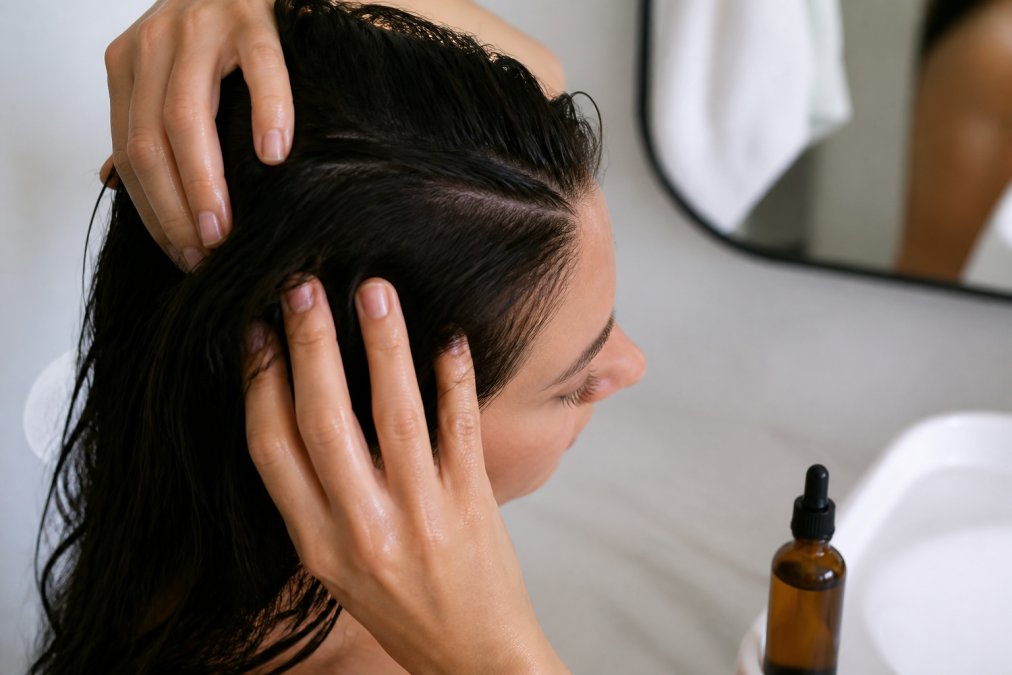
Allow the serum to absorb for at least 5-10 minutes before applying other products or styling your hair. Copper peptides work through cellular penetration, which takes time.
Apply once daily, typically in the evening, though twice daily is acceptable if your scalp tolerates it well. Consistency matters more than frequency.
:::pro-tip Use a gentle scalp brush immediately after applying your copper peptide serum. The brush helps distribute the serum evenly, stimulates blood flow to the dermal papilla, and removes dead skin cells that might block peptide penetration. :::
Long-term Maintenance and Consistency
Copper peptides work through cumulative effects on cellular processes. Collagen synthesis, inflammation reduction, and follicle signalling changes take time. Most individuals need 8-12 weeks of consistent daily application before noticing visible scalp improvements. Hair density or thickness changes may take 12-16 weeks or longer.
This timeline is longer than many expect, which is why consistency is critical. Missing applications undermines the cumulative effect.
Long-term use is safe based on dermatological evidence. There's no evidence of diminishing returns or tolerance development.
Formulation Compatibility and Layering
Copper peptides are stable within specific pH ranges (typically 4.5-6.5) and can be destabilised by certain ingredients. Apply copper peptide serum first, on clean scalp, and allow it to absorb fully before applying other treatments.
If you're using other active ingredients like niacinamide, biotin, or botanical extracts, these typically complement copper peptides. The Pepcare Lab Hair and Scalp Serum combines 2% copper peptides with niacinamide, biotin, and botanical extracts specifically because these ingredients work synergistically.
Avoid layering copper peptides with products containing high concentrations of vitamin C (ascorbic acid), as the low pH can destabilise the peptide complex. If you use vitamin C elsewhere in your routine, apply it at a different time of day.
Clinical Research and Real-World Results
Copper peptides have been studied extensively in dermatology for wound healing, collagen synthesis, and anti-aging skin care. Studies show GHK-Cu increases collagen deposition, reduces inflammatory markers, and improves skin barrier function. These mechanisms directly translate to scalp health benefits.
Research documents that GHK-Cu activates fibroblast proliferation and increases type I collagen expression. Studies on skin tissue show measurable collagen increases within 4-6 weeks. The anti-inflammatory effects are well-documented, with GHK-Cu reducing TNF-α, IL-6, and other pro-inflammatory cytokines.
Real-world results vary. Some individuals report noticeable scalp improvements within 4-8 weeks. Others notice hair density improvements after 12-16 weeks. This variation reflects the complexity of hair thinning, which involves genetics, hormones, inflammation, and scalp health simultaneously.

The most consistent real-world benefit is scalp health improvement: reduced inflammation, better texture, improved comfort. Hair density changes are less predictable but more likely when copper peptides are part of a comprehensive scalp health routine.
Copper Peptides and Sensitive Scalps: Safety and Tolerance
Copper peptides are well-tolerated by most individuals, including those with sensitive scalps. Dermatological research shows copper peptides have low irritancy potential and actually reduce inflammatory responses in tissue.
Copper is essential for human health and plays a role in collagen synthesis, antioxidant defence, and immune function. The amount of copper absorbed from topical peptide serums is minimal and well within safe limits.
Individuals with sensitive scalps often tolerate copper peptides better than harsher actives. The anti-inflammatory action of GHK-Cu actually helps calm reactive, irritated scalps. Some individuals experience mild temporary tingling or warmth when first using copper peptides, which typically subsides within a few applications as the scalp adjusts.
Building Your Copper Peptide Routine
An effective copper peptide routine is simple and consistent. Complexity often undermines adherence.
Start with a copper peptide serum as your foundation. The Pepcare Lab Hair and Scalp Serum contains 2% GHK-Cu plus supporting ingredients (niacinamide, biotin, botanical extracts) designed to work synergistically. Apply daily to clean, dry scalp, massage gently, and allow to absorb.
Add a scalp brush to amplify the serum's effectiveness. Gentle scalp massage increases blood flow, distributes the serum evenly, and removes dead skin cells that might block absorption. The Pepcare Lab Scalp Brush is designed with flexible silicone bristles that stimulate without scratching.

If you want to expand beyond the basic routine, consider adding a gentle scalp cleanser and a lightweight leave-in conditioner. But the core routine, serum plus brush, applied daily, is sufficient for most individuals and far more likely to be sustained long-term.
For comprehensive skin and scalp support, the Pepcare Lab Complete Collection bundles the Hair and Scalp Serum with face serum, barrier repair balm, and scalp brush. This approach simplifies decision-making and ensures you're supporting both skin and scalp health with complementary peptide formulations.
Consistency is the differentiator between routines that work and routines that fail. A simple routine you'll actually use daily outperforms a complex routine you abandon after three weeks.
Copper peptides represent a science-led approach to scalp health that addresses multiple root causes of thinning simultaneously: inflammation, collagen breakdown, poor circulation, and compromised barrier function. Unlike single-mechanism treatments, copper peptides work through cellular signalling to create conditions where follicles can thrive. The evidence for collagen synthesis, anti-inflammatory action, and scalp circulation improvement is strong. Hair density changes are less predictable but scalp health improvements are consistent. Pepcare Lab's copper peptide formulations are designed specifically for sensitive scalps, combining GHK-Cu with complementary ingredients like niacinamide and biotin to support long-term scalp health. Start with the Hair and Scalp Serum, apply consistently, and give your scalp 8-12 weeks to respond. Shop our bestsellers and discover how copper peptides can support healthier, stronger-looking hair from the scalp up.
| Aspect | Timeframe | Expectation |
|---|---|---|
| Scalp comfort improvement | 2-4 weeks | Reduced itching, improved texture |
| Collagen synthesis activation | 4-6 weeks | Measurable structural changes |
| Visible scalp health changes | 6-8 weeks | Healthier appearance, improved tone |
| Hair density/thickness changes | 12-16 weeks | Variable; depends on baseline thinning |
| Long-term maintenance | Ongoing | Consistent daily application required |
Frequently Asked Questions
Q: How long does it take to see results from copper peptide scalp treatments?
A: Most users report initial improvements in scalp comfort and texture within 4-6 weeks of consistent application. Hair growth cycles operate on a longer timeline: the anagen (growth) phase lasts 2-7 years, so meaningful changes in hair density and thickness typically become visible after 8-12 weeks of daily use. Consistency matters more than speed, copper peptides work by supporting the dermal papilla and improving scalp circulation over time, not by triggering overnight transformation. Early adopters often notice reduced shedding before visible regrowth.
Q: Are copper peptides safe for sensitive scalps?
A: Copper peptides, particularly GHK-Cu, are generally well-tolerated by sensitive skin because they work with your scalp's natural processes rather than against them. They support the scalp barrier and possess anti-inflammatory properties, making them less irritating than many conventional hair treatments. However, individual sensitivity varies. Start with a patch test on a small area of your scalp and use the product 2-3 times weekly for the first week before moving to daily application. If you experience redness, itching, or burning, reduce frequency or discontinue. Products like the Pepcare Lab Hair/Scalp Serum are specifically formulated with sensitive skin in mind, using gentle peptide blends alongside nourishing botanicals.
Q: Can copper peptides be used alongside other hair loss treatments?
A: Copper peptides work through a different mechanism than most conventional treatments, making them compatible with many options. They support collagen synthesis, scalp circulation, and cellular signalling rather than blocking DHT like some pharmaceuticals do. However, layering multiple active ingredients requires care. If you're using prescription treatments or other potent actives, introduce copper peptides gradually and monitor your scalp's response. Avoid mixing copper peptides with products containing high concentrations of vitamin C or retinoids in the same application, as these can reduce bioavailability. Consult a dermatologist if you're on systemic medications. The Pepcare Lab Hair/Scalp Serum pairs well with gentle complementary products in a minimalist routine.
Q: Do copper peptides actually regrow hair, or just prevent shedding?
A: Copper peptides support both prevention and regrowth through distinct mechanisms. They reduce shedding by strengthening the hair shaft and supporting follicle health via improved scalp circulation and anti-inflammatory action. For regrowth, GHK-Cu stimulates the dermal papilla, the structure that determines follicle size and hair density, by triggering cellular signalling pathways that promote collagen and elastin synthesis. Clinical research shows copper peptides can increase hair density and reduce follicle miniaturization in androgenetic alopecia. Results depend on baseline hair loss severity, age, and consistency. Early-stage thinning responds better than advanced baldness. Copper peptides are most effective as part of a long-term maintenance protocol rather than a quick fix.
This article was written using GrandRanker