
Last Updated: November 14, 2026
Quick Summary
Before buying a face serum, identify your skin type and the one concern you want to target, then check that its ingredients and texture match both. Confirm it fits your existing routine without conflicting with actives you already use, patch test it first, and read the label for triggers like fragrance and drying alcohol.
- Write down one concern before you shop, because a serum built for dullness will not fix redness.
- Ingredients are listed in descending order of concentration until they drop below a certain percentage.
- Separate exfoliating acids and retinol: do not use them on the same evening.
- Patch test on your inner forearm for 24 hours, then repeat on your jawline for another 24 hours.
- Hydration is noticeable within days, but fine lines and firmness are measured in months.
Table of Contents
- Start With Your Skin Type and Concerns
- Face Serum Ingredients to Look For (and What to Skip)
- How to Read Skincare Ingredient Labels Without Getting Lost
- Will It Fit Your Existing Skincare Routine?
- How to Patch Test a Face Serum Before You Commit
- How Long Does Serum Take to Work?
- Check the Packaging, Shelf Life and Product Claims
- Shop the Pepcare Lab Face Serum Range
- Frequently Asked Questions
Start With Your Skin Type and Concerns
Before you compare a single ingredient list, answer two questions: what is your skin type, and what specific concern are you trying to solve? Those two answers help narrow the field to a shortlist. Mismatched serums waste more money than bad formulas, in our experience of how shoppers choose. A rich, occlusive serum on oily skin can trigger congestion; a lightweight hydrating serum on very dry skin often feels like nothing at all.
Skin type describes how your skin behaves day to day. Skin concern describes what you want to change. They are not the same thing, and confusing them is the most common buying mistake we come across.
Dry, Oily, Combination or Sensitive: What Changes
Your skin type decides texture, weight and how much occlusion a serum should carry. Dry skin usually tolerates richer formulas and benefits from ingredients that support moisture retention. Oily skin tends to do better with lightweight, fast-absorbing textures. Combination skin often needs a serum that hydrates without heaviness through the T-zone. Sensitive skin is the one that changes your buying process most: it demands a short ingredient list, no fragrance where possible, and a patch test before full application.
Name the Concern You Want to Target
Write down one concern before you shop. Fine lines, uneven skin tone, dark spots, redness, texture or dehydration each point toward different ingredients. A serum built for dullness will not fix redness, no matter how good the reviews are.
- Fine lines and firmness: peptides, including copper peptides
- Dehydration and tightness: hyaluronic acid, glycerin
- Uneven tone and dark spots: niacinamide, vitamin C
- Redness and reactivity: short ingredient lists, barrier-supporting formulas
- Texture and congestion: gentle exfoliating acids, used cautiously
Face Serum Ingredients to Look For (and What to Skip)
A face serum is a lightweight, concentrated skincare product applied after cleansing and before moisturiser. It carries active ingredients at a higher concentration than a cream, which is why the ingredient list matters more than the marketing on the front of the box.
Match ingredients to the concern you named, not to the trend of the month:
| Ingredient | Best For | Watch Out For |
|---|---|---|
| Copper peptides (GHK-Cu) | Firmness, barrier support, overall renewal | Layering with strong acids at the same time |
| Hyaluronic acid | Hydration and plumpness | Needs a moisturiser on top to seal it in |
| Niacinamide | Uneven tone, oil balance, barrier support | Very high percentages can sting sensitive skin |
| Vitamin C | Brightness and antioxidant defence | Can be unstable in poor packaging |
| Retinol | Fine lines and texture | Requires a slow build-up and daily sunscreen |
| Exfoliating acids | Texture and congestion | Overuse damages the barrier |
What to skip depends on your skin. Fragrance and drying alcohol are common triggers for reactive skin. Long botanical blends look appealing but increase the number of things your skin has to tolerate.
Here is the part most guides miss: more actives is not better. A short, well-chosen list usually beats a serum with twelve actives at low levels.
How to Read Skincare Ingredient Labels Without Getting Lost
Ingredients are listed in descending order of concentration until you reach the point where they drop below a certain percentage, after which order is flexible. That single rule tells you most of what you need to know.
Read the first five ingredients to understand the base of the formula. If water or a humectant leads, expect a lightweight serum. If an oil or silicone sits near the top, expect a richer feel. Then scan for the actives you came for and check where they sit.
Three practical checks:
- Find your active. If copper peptides or niacinamide appear near the end, the concentration is likely low.
- Look for the percentage. Brands that state it, as we do with our 1% copper peptides, are giving you something to evaluate.
- Scan for triggers. Fragrance, essential oils and drying alcohol are worth flagging if your skin reacts easily.
For a deeper walkthrough, our skincare ingredient transparency guide breaks down label reading step by step.
Will It Fit Your Existing Skincare Routine?
A serum only works if you actually use it, and you only use it if it slots into what you already do. Map your current routine first: cleanser, any treatments, moisturiser, sunscreen.
The standard order is cleanser, serum, moisturiser, sunscreen in the morning. A face serum belongs directly after cleansing on damp skin for hydration, or on dry skin for actives.
Where it gets complicated is layering, and this is the part most buying guides skip. Active ingredients can compete for the same skin real estate, irritate when stacked, or deactivate each other. Before you buy, run your intended serum against what you already own:
- Copper peptides and strong exfoliating acids (AHA/BHA): separate them. Acids in the evening, peptides in the morning, or alternate nights.
- Retinol and copper peptides: usable in the same week but not usually in the same layer. Many people alternate nights rather than stack them.
- Vitamin C and retinol: both can irritate, and vitamin C is pH-dependent. A common pattern is vitamin C in the morning and retinol at night.
- Niacinamide and vitamin C: the old warning about them cancelling out is overstated at typical cosmetic percentages, but sensitive skin may still sting when both are layered. Introduce one at a time.
- Exfoliating acids and retinol: do not use on the same evening. This is the most common route to a damaged barrier.
- Hyaluronic acid and anything: hyaluronic acid layers well with almost everything, but it needs a moisturiser on top to seal it in, or it can leave skin feeling tighter in dry conditions.
Ask yourself before buying:
- Does this replace something, or add a step I will skip?
- Do I already own a serum doing the same job?
- Can I use it morning and evening, or only once?
- Does it conflict with an active I already use, and am I willing to alternate?
- Will it sit under my sunscreen without pilling?
Watch out: pilling is usually a texture conflict, not a bad product. If a serum rolls off under moisturiser or sunscreen, apply it to damp skin, wait 30 to 60 seconds between layers, and use fewer drops rather than more.
If you are unsure how to sequence it, our guide on incorporating copper peptides into your routine walks through the order step by step.
How to Patch Test a Face Serum Before You Commit
A patch test is a small controlled application of a new product to check how your skin responds before you commit to your full face.
Before you patch test, read the ingredient list for known triggers. Fragrance (often listed as parfum), essential oils such as lavender, citrus peel oils and peppermint, and drying alcohol are common culprits for reactive skin.
How we would do it:
- Clean a small patch on your inner forearm or behind your ear.
- Apply one or two drops and let it absorb.
- Leave it untouched for 24 hours.
- Check for redness, itching, stinging or swelling.
- If clear, repeat on a small area of your jawline for another 24 hours before full-face use.
Watch out: a patch test on your arm does not guarantee your face will tolerate the product. That is why the second jawline step matters.
If you do react, stop the serum, rinse with lukewarm water, and return to a plain cleanser and moisturiser until the skin settles. Our guide to the signs of skincare ingredient intolerance helps you interpret what you are seeing.
How Long Does Serum Take to Work?
Most face serums need consistent daily use for several weeks before you see meaningful change, and barrier or texture improvements typically take longer than hydration. Anyone promising overnight transformation is selling hope.
Set realistic expectations by benefit:
- Hydration: noticeable within days
- Texture and smoothness: several weeks of daily use
- Fine lines and firmness: a longer horizon, measured in months
- Uneven tone: gradual, and dependent on daily sunscreen
Consistency and frequency matter more than quantity. Two drops used every day beats a generous pump used twice a week. Track it simply: take a photo in the same light on day one and again at week four and week eight, and judge against those rather than the mirror each morning.
For a realistic timeline specifically on copper peptides, our guide on how long copper peptides take to work sets out what to expect and when.
Check the Packaging, Shelf Life and Product Claims
Packaging is not cosmetic. Light and air degrade many actives, which is why opaque or amber glass and airless pumps protect a formula better than a clear jar.
Check the period-after-opening symbol on the pack, usually a small jar icon with a number of months. That tells you how long the product stays stable once opened. Store serums somewhere cool and dark, not on a sunny windowsill.
Then read the claims with a sceptical eye. Words like "clinically proven" should be backed by detail somewhere on the page or pack. "Reduces the appearance of" is a cosmetic claim, not a medical one, and it is worth understanding the difference.
Shop the Pepcare Lab Face Serum Range
If your answers point toward firmness, barrier support and hydration from a short ingredient list, our range is built around exactly that.
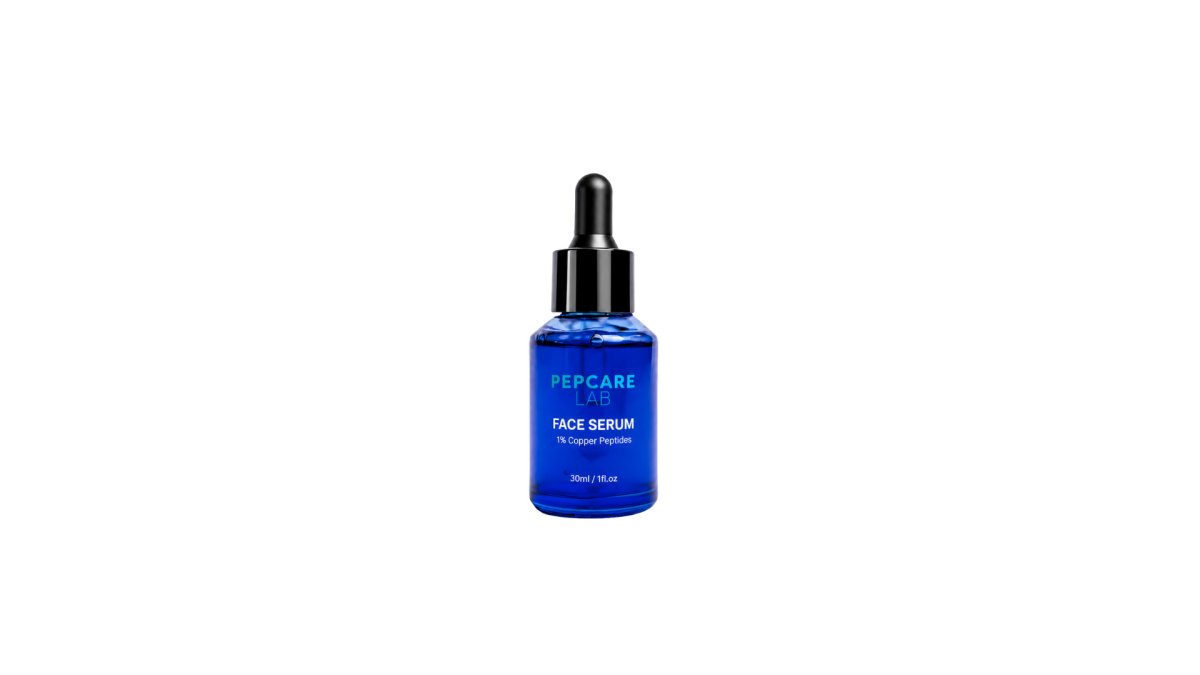
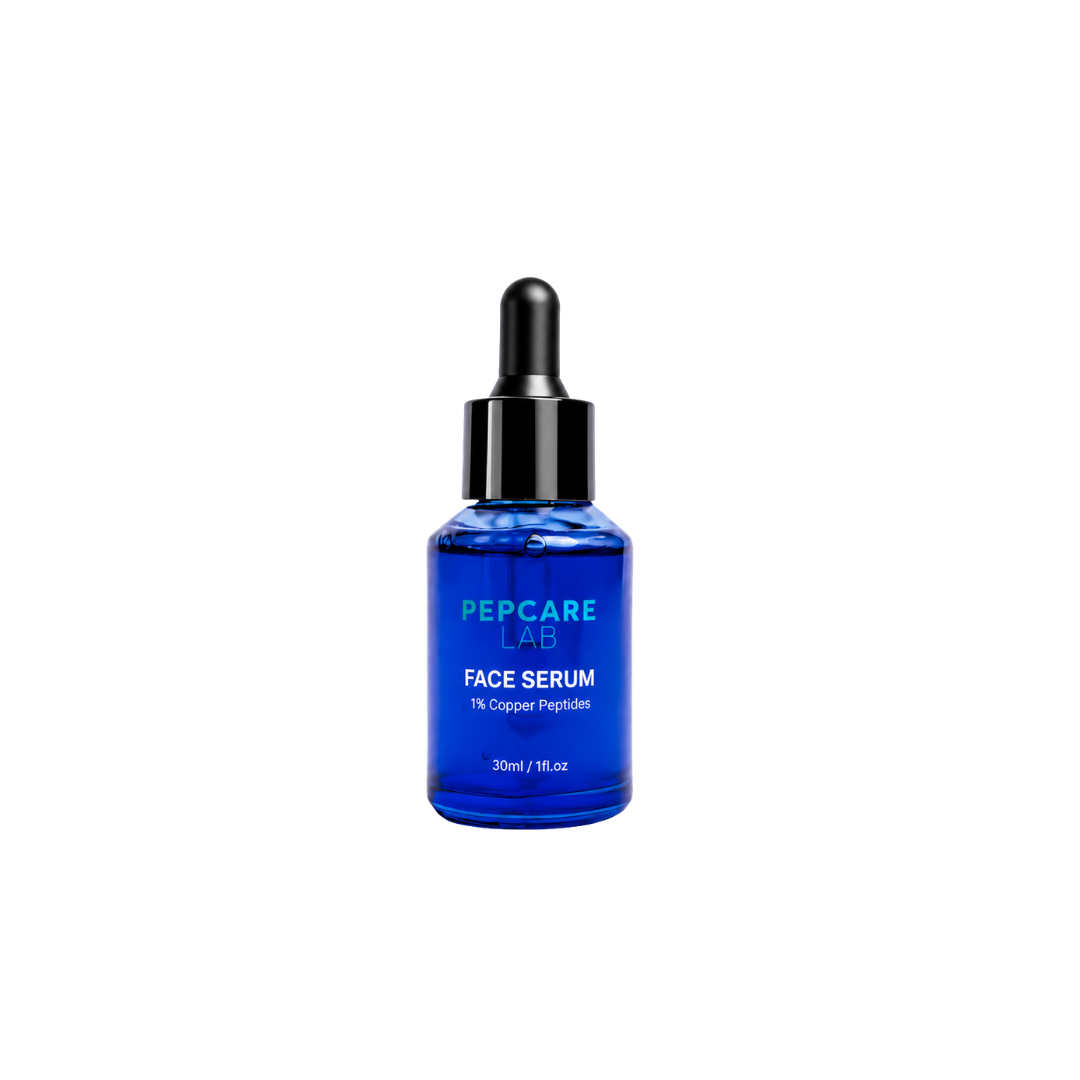
The Pepcare Lab Face Serum is a lightweight 30 mL formula with 1% copper peptides, niacinamide and hyaluronic acid, designed to hydrate, support the skin barrier and improve the appearance of texture and elasticity. It is $49.00 AUD.
The Barrier Cream, $49.00 AUD, is a rich yet lightweight 50 mL moisturiser with 1% copper peptides, niacinamide and squalane, designed to lock in hydration after the serum.
Buying a face serum well comes down to discipline: know your skin type, name one concern, read the label, patch test, and give it weeks rather than days. That process filters out most of the expensive mistakes.
Frequently Asked Questions
What should I look for when buying a face serum?
Check four things: your skin type and main concern, the active ingredients and their concentrations, whether the formula fits your current routine, and how the product should be stored. Look for a clear ingredient list and avoid anything you know irritates your skin. A face serum with 1% copper peptides, niacinamide and hyaluronic acid, for example, suits many people wanting hydration and barrier support, but a patch test is still wise before full use.
Which serum ingredients are best for sensitive skin?
Sensitive skin usually does better with fewer actives and a short ingredient list. Look for hydrating and barrier-supporting ingredients such as hyaluronic acid, niacinamide, squalane and peptides, including copper peptides. Avoid high-strength acids, strong fragrances and alcohol-heavy formulas until you know how your skin responds. Always patch test a new face serum on your inner forearm for a few days before applying it to your face, and stop if redness or stinging persists.
How long does it take to see results from a face serum?
Results vary by product and person, and changes to texture, fine lines and tone generally take consistent use over several weeks or longer. Take a photo in similar lighting at the start and every four weeks so you can judge honestly. Results depend on the ingredients, concentration and how regularly you apply the serum. If nothing changes after three months, review the formula or ask a dermatologist for advice.
Can I use more than one face serum at a time?
Yes, but layer them carefully. Apply the thinnest, most water-like formula first, then thicker ones, and finish with moisturiser and sunscreen in the morning. Avoid mixing strong actives such as retinol and high-strength acids in the same routine until your skin is used to each one. If you are patch testing a new face serum, introduce it alone for two weeks so you can tell which product causes any reaction.
