
Table of Contents
- How Long Do Copper Peptides Take to Work?
- The Copper Peptides Results Timeline: What to Expect Week by Week
- How to Know If Copper Peptides Are Working
- How Often to Use Copper Peptides for Best Results
- What Not to Use With Copper Peptides
- Reasons Results May Be Delayed or Absent
- When to Stop or Seek Professional Advice
- Conclusion
- Frequently Asked Questions
Last Updated: October 18, 2026
How Long Do Copper Peptides Take to Work?
Most people see early changes from copper peptides in two to four weeks.
Copper peptides are short chains of amino acids bound to copper. The best-known is GHK-Cu, or copper tripeptide-1.
So how long does it take for copper peptides to work? It depends on what you are measuring. Hydration and comfort arrive fast.
Below, we break the timeline into stages, show you how to track progress, and cover what slows results down.
Why There's No Single Answer
Three things decide your timeline: your skin, your product, and your routine.
Your skin. Age, barrier health and sensitivity all affect how quickly you respond.
Your product. Concentration and formulation matter. A 1% copper peptide serum delivers a different dose to a 2% scalp formula.
Your routine. Daily use, correct layering and sun protection all shape results. Skipping days slows the process.
That is why one person notices smoother skin in three weeks and another waits ten. Neither is doing it wrong.
The Copper Peptides Results Timeline: What to Expect Week by Week
Here is a copper peptides results timeline, based on how the ingredient works. Treat it as a realistic range, not a promise. The early stages are the most predictable; the later stages vary more between people.
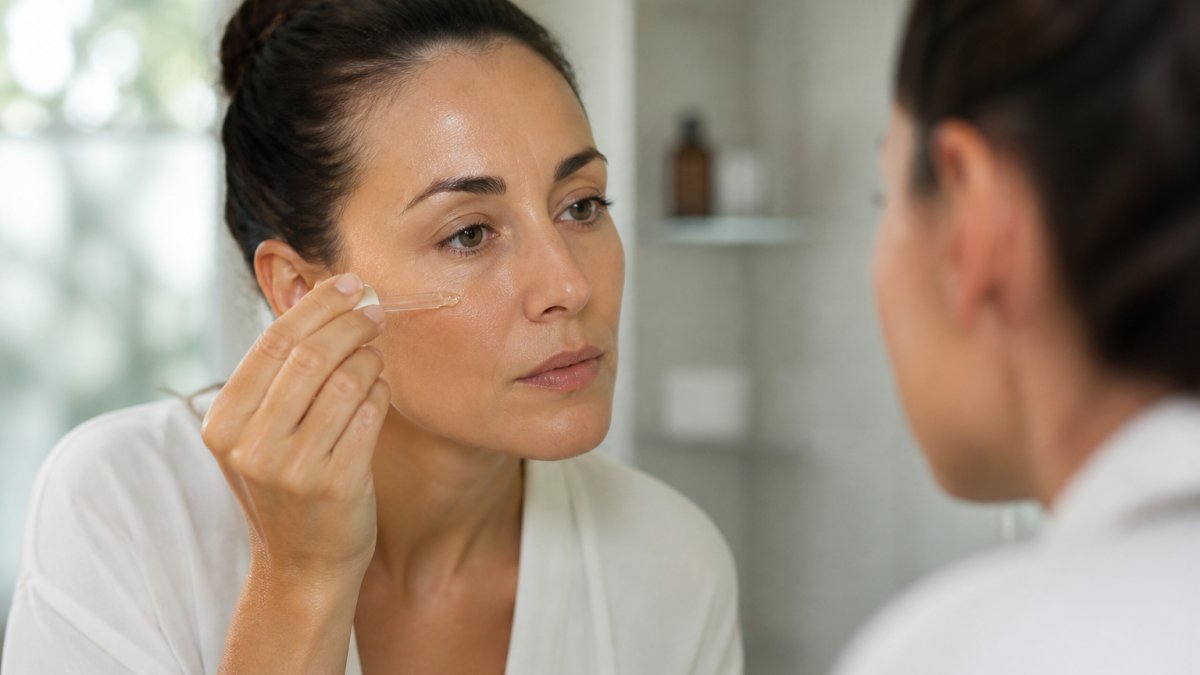
Weeks 1-2: Hydration and Comfort
The first change is usually how your skin feels, not how it looks. This stage is about barrier support rather than collagen remodelling.
- Skin feels softer and less tight after cleansing
- Redness and irritation settle down
- The barrier starts holding moisture better
- Makeup may sit more smoothly on dry patches
Copper peptides help the skin retain water and reduce visible inflammation. The mechanism here is relatively well supported: copper is a cofactor for enzymes involved in barrier repair, and GHK-Cu has been studied for its role in wound healing and skin remodelling. You may notice nothing in the mirror yet.
Weeks 4-8: Texture and Tone
By now, most people see a difference in skin texture and tone. This is where the timeline starts to separate people who use the product daily from those who use it intermittently.
- Pores look smaller because the surface is smoother
- Rough patches soften
- Skin looks more even and less dull
- Fine dehydration lines plump out
Collagen production is beginning to respond. Elastin support follows. This is the stage where before-and-after photos start to show something real, provided the lighting and angle are consistent.
Weeks 8-12 and Beyond: Firmness and Fine Lines
Firmness and fine lines take the longest. Expect eight to twelve weeks before you see meaningful change, and longer for deeper lines and for areas with thinner skin, such as around the eyes.
- Skin feels firmer to the touch
- Fine lines around the eyes look softer
- Elasticity improves gradually
- Overall tone looks more rested
Collagen turnover in adult skin is slow (pubmed.ncbi.nlm.nih.gov). The structural changes you are waiting for depend on your own renewal cycle, which is why twelve weeks is a more honest checkpoint than four.
Hair and Scalp: A Different Curve
Hair and scalp results follow a similar curve but on a slower clock. Scalp comfort may improve within weeks, but stronger-looking hair takes longer, because hair grows slowly and the follicle cycle runs on a scale of months. A common pattern is reduced scalp tightness and flaking within the first month, with visible changes in hair density or thickness judged over three to six months. Do not use scalp timelines to judge a facial serum, or the reverse.
How to Know If Copper Peptides Are Working
You will know copper peptides are working when skin feels calmer, looks smoother and holds moisture better. The changes are subtle at first, which is why tracking beats guessing.
Use this simple progress check every four weeks:
- Compare photos in the same lighting
- Note how skin feels after cleansing (tight or comfortable?)
- Check redness levels on a scale of one to five
- Look at texture on the cheeks and forehead
- Record any scalp or hair changes
What most guides miss is that copper peptides work quietly. They do not produce the peeling or stinging that stronger actives do. Absence of drama is not absence of progress.
How Often to Use Copper Peptides for Best Results
Daily use gives the best results. Apply copper peptides once or twice a day, depending on your skin's tolerance.
Start with once daily for the first two weeks. Sensitive skin often does better easing in.
Consistency matters more than frequency. Five days a week for three months beats two weeks of twice-daily use followed by nothing.
Our Face Serum uses 1% copper peptides and suits daily use. The Barrier Cream layers over it to lock in hydration.

What Not to Use With Copper Peptides
Some ingredients clash with copper peptides. Knowing what not to use with copper peptides protects both your skin and your results.
- Strong acids (AHA, BHA): use at a different time of day
- High-strength vitamin C: separate from copper peptides by hours
- Retinoids: alternate nights rather than layering
- Benzoyl peroxide: avoid in the same routine
- Harsh scrubs: skip physical exfoliation on application days
The issue is not danger. It is stability and irritation. Copper peptides prefer a calm routine.
If you use retinol, apply it at night and copper peptides in the morning. If you use vitamin C, use it in the morning and peptides at night. Simple separation solves most conflicts.
Reasons Results May Be Delayed or Absent
Sometimes copper peptides seem to do nothing. Before you conclude the ingredient does not work for you, work through the real reasons results can be delayed or absent. Most are fixable, and a few tell you something useful about your skin.
First, Check What You Are Comparing
A lot of disappointment comes from comparing the wrong things. Timelines and risks are not interchangeable across routes of use. Topical serums, scalp formulas and injectable or clinic-administered copper peptide products are different categories with different evidence bases.
It also helps to separate evidence quality. Human clinical evidence for copper peptides is strongest in wound healing and skin remodelling; cosmetic claims about firmness and fine lines are supported more by laboratory findings and user reports than by large controlled trials.
The Fixable Causes
- Inconsistent use. Skipping days resets your progress. Five days a week for three months beats two weeks of twice-daily use followed by nothing.
- A damaged barrier. If your skin is irritated, it repairs before it renews. Calm the irritation first, then expect the timeline to restart.
- Product degradation. Copper peptides break down with light and air exposure. An opened bottle kept in a warm bathroom or a clear container on a sunny shelf may be delivering less than the label suggests.
- Wrong concentration. Too little may not be enough for your goals, and more is not automatically better if it irritates your skin.
- Unrealistic timeline. Eight weeks is early, not late. Twelve weeks is the first fair checkpoint for firmness and fine lines.
- Sun exposure without protection. UV undoes collagen gains. Daily sunscreen is part of the treatment, not an optional extra.
- Health and lifestyle factors. Sleep, stress, smoking and diet affect skin repair, and no serum outruns them.
- Routine conflicts. Strong acids, high-strength vitamin C, benzoyl peroxide and harsh scrubs can destabilise the peptide or irritate skin. Separate them by time of day.
A Practical Troubleshooting Sequence
If you have used a stable, well-formulated product daily for twelve weeks with no change at all, that is useful information. Work through it in this order:
- Confirm consistency. Count the days you actually applied it, not the days you meant to.
- Check storage and expiry. Replace a product that has been open a long time or stored badly.
- Simplify the routine. Remove conflicting actives for four weeks and see whether comfort and texture improve.
- Review your baseline. Compare photos taken in the same light and angle. Memory is a poor judge of slow change.
- Consider your skin concern. Copper peptides suit barrier support and early ageing well.
- Then decide. It may be the product, the routine, or simply your skin's response. Stopping is a valid outcome, and so is switching to a different formulation.
When to Stop or Seek Professional Advice
Stop using copper peptides if you develop persistent redness, itching, swelling or a rash. These suggest irritation or a reaction, not a normal adjustment.
Seek advice from a doctor or dermatologist if you notice:
- A reaction that does not settle within a few days
- Sudden breakouts that worsen with use
- Scalp sores, flaking or hair loss that gets worse
- Any skin change that concerns you
Copper peptides are generally well tolerated, including on sensitive skin. But no ingredient suits everyone, and professional advice beats guesswork.
For hair and scalp concerns, a pharmacist or dermatologist can check for causes that peptides cannot address, such as nutritional deficiencies or hormonal factors.
Conclusion
Copper peptides reward patience. The early weeks bring comfort and hydration, the middle weeks bring texture and tone, and the twelve-week mark is where firmness and fine lines start to shift. If you want a routine built around that timeline, our Face Duo pairs the Face Serum with the Barrier Cream for daily barrier support and gradual renewal. Both formulas use 1% copper peptides and are made with sensitive skin in mind.

Frequently Asked Questions
How long should you use copper peptides before judging the results?
Give a copper peptide routine at least eight to twelve weeks before making a judgement. Early changes such as better hydration and a calmer-feeling skin barrier often show up in the first four weeks, but texture, tone and firmness changes build more slowly because they depend on ongoing collagen support. Take a photo in consistent lighting on day one, then again at four, eight and twelve weeks. Judging after a fortnight usually tells you nothing except whether your skin tolerates the formula.
Can you use copper peptides with retinol or vitamin C?
You can, but timing matters. Copper peptides and retinol both support skin renewal, and layering them in the same routine can increase irritation, particularly on sensitive skin. A common approach is retinol at night and copper peptides in the morning, or alternating evenings. Vitamin C is acidic, and some people find applying it directly before a copper peptide serum reduces comfort, so separate them into different parts of the day. If your skin stings or flushes, simplify to one active at a time.
How often should you apply copper peptides to your face?
Once or twice daily is typical for a leave-on copper peptide serum. Start with once a day for the first two weeks to check your skin tolerates it, then add a second application if you want. Consistency matters more than frequency: daily use over eight to twelve weeks gives a clearer picture than sporadic heavy application. Apply to clean, dry skin before richer moisturisers, and follow with a barrier cream to lock in hydration.
What cancels out copper peptides?
Strong acids and harsh exfoliants are the main culprits. High-strength AHAs, BHAs and ascorbic acid applied at the same time can disrupt the formula and irritate the skin barrier, which works against the calming effect copper peptides are used for. Chelating ingredients and some clay masks can also bind to copper. Keep exfoliation to a separate part of your day, and don't mix copper peptides into the same layer as vitamin C or a strong acid serum.