
Table of Contents
- What Are Copper Peptides and Why They Belong in Your Routine
- How to Layer Copper Peptides in Your Skincare Routine
- Copper Peptides: Morning or Night Application
- How Often to Use Copper Peptides When Starting Out
- What Not to Use With Copper Peptides
- Patch Testing and Monitoring Your Skin's Response
- Troubleshooting Common Reactions and Adjusting Your Routine
- Frequently Asked Questions
Last Updated: October 5, 2026
What Are Copper Peptides and Why They Belong in Your Routine
To incorporate copper peptides into your skincare, you should understand that they are short chains of amino acids bonded with copper that support skin renewal. The most studied form is GHK-Cu, which signals your skin to produce more collagen and strengthen its barrier. When you incorporate copper peptides into your existing routine, you're adding a targeted active that works alongside your current products rather than replacing them.
Copper plays a role in collagen synthesis (pubmed.ncbi.nlm.nih.gov). As you age, your body produces less collagen naturally. Copper peptides stimulate this production, addressing fine lines, texture, and skin resilience.
Copper peptides work well with sensitive skin. Unlike harsher actives, they calm inflammation while delivering anti-aging benefits, making them ideal if you've had bad experiences with stronger ingredients.
Copper peptides are versatile, you don't need to overhaul your routine.
How to Layer Copper Peptides in Your Skincare Routine
Layering order determines absorption and peptide efficacy.
The foundational layering principle: lightest to heaviest

Apply products from lightest to heaviest texture. Copper peptide serums are lightweight and water-based, so they go on before heavier creams or oils.
Here's the correct sequence:
- Cleanser (remove dirt and oil)
- Toner or essence (optional; rebalances pH)
- Lightweight actives (vitamin C, copper peptides, niacinamide serums)
- Heavier actives (retinoids, if using)
- Moisturiser (seals everything in)
- Sunscreen (morning only)
- Occlusive (squalane, facial oil, or sleeping mask; optional, evening only)
Applying copper peptides: step-by-step
Step 1: Start with clean, dry skin. Cleanse and pat your face dry. Residual moisture dilutes the serum and slows absorption.
Step 2: Dispense the correct amount. Most copper peptide serums require only 2-3 drops for your full face and neck.
Step 4: Wait for full absorption. Copper peptide serums typically take 60-90 seconds to feel dry to the touch.
Step 5: Apply your moisturiser. Once the serum is fully absorbed, apply your regular moisturiser.
Step 6: Seal with sunscreen (morning) or occlusive (evening). In the morning, apply broad-spectrum sunscreen (SPF 30+).
Layering copper peptides with other actives
If you use multiple actives (vitamin C, niacinamide, retinoids), the order depends on pH and potency.
Copper peptides + Vitamin C: Apply vitamin C first on clean, dry skin. Wait 10-15 minutes for full absorption.
Copper peptides + Niacinamide: These pair beautifully and can be applied in either order.
Copper peptides + Retinoids: Never layer on the same day during your first 4-6 weeks.
Copper peptides + Exfoliating acids (AHA/BHA): Do not layer on the same day.
Timing between products: the 30-90 second rule
Do not apply the next product immediately after the previous one. Layering too quickly causes pilling, reduced efficacy, and increased irritation.
Troubleshooting common layering problems
Pilling (products balling up on your skin): You've applied too much product or layered too quickly.
Serum not absorbing (feels wet after 2 minutes): You've applied too much. Use only 2 drops next time.
Visible irritation or redness after layering: You're using too many actives or layering them too close together.
Serum feels sticky or uncomfortable under makeup: Your moisturiser is too heavy or you've applied too much serum.
Copper Peptides: Morning or Night Application
You can use copper peptides both morning and night. Many people find the best results come from twice-daily use, but starting with just one time per day is perfectly acceptable when you're new to the ingredient.
Morning application works well if you have a simple routine. Apply your copper peptide serum after cleansing, then add your moisturiser and sunscreen. The serum absorbs quickly and won't interfere with makeup or other products.
Evening application is often preferred because your skin repairs itself at night. Copper peptides support this natural renewal process. You can apply the serum after cleansing, follow with your moisturiser, and let it work while you sleep.
Some people alternate: copper peptides in the morning on weekdays, and in the evening on weekends. This flexible approach still delivers benefits without overwhelming your skin. The key is consistency. Using copper peptides three times per week is better than sporadic use.
How Often to Use Copper Peptides When Starting Out
Begin with once per day, ideally in the evening. Use it consistently for 2-3 weeks before deciding whether to increase frequency. Your skin needs time to adjust to new actives, even gentle ones like copper peptides.
After 3 weeks, most people can safely move to twice-daily use. This is when you'll start seeing clearer improvements in skin texture and fine lines. If your skin feels comfortable, continue with morning and evening application.
If you experience any sensitivity, dryness, or irritation, drop back to once daily. There's no rush to use copper peptides twice per day. Consistent, tolerated use beats aggressive use that irritates your skin.
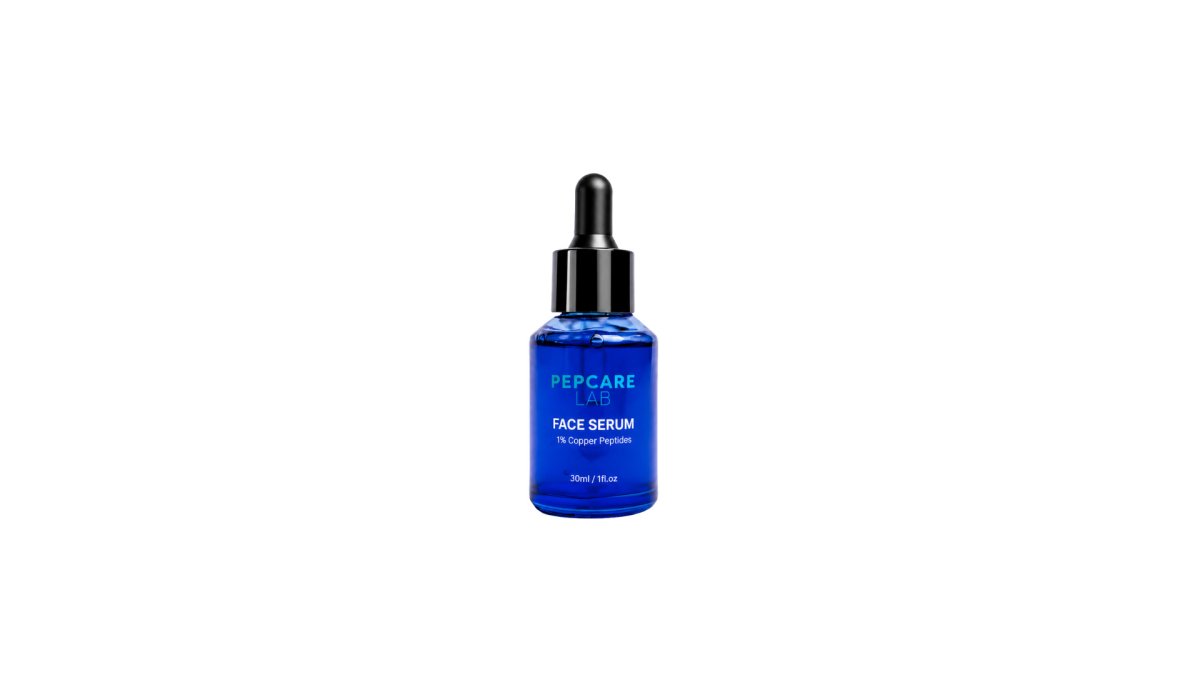
The Pepcare Lab Face Serum is formulated for daily use. Its lightweight formula won't overburden your skin even with twice-daily application. Most users see noticeable changes in skin smoothness and radiance within 4-6 weeks of daily use.
What Not to Use With Copper Peptides
Copper peptides are generally compatible with most skincare actives, but certain combinations require careful sequencing or avoidance to prevent irritation or reduced efficacy. Understanding the science behind these interactions helps you make informed decisions about your routine.
Why some ingredients conflict with copper peptides
Copper peptides deliver the GHK-Cu complex, which signals collagen synthesis. Some actives interfere with this mechanism or create an overly aggressive environment. Conflicts fall into three categories: pH sensitivity, chelation risk, and cumulative irritation.
Ingredient compatibility guide
| Active Ingredient | Compatibility | Why | How to Use Together |
|---|---|---|---|
| Vitamin C (L-ascorbic acid) | Safe with caution | Requires pH 2.5-3.5 to be stable; copper peptides work best at pH 4-5. Mixing them can destabilise vitamin C. | Apply vitamin C first on clean, dry skin. Wait 10-15 minutes for it to fully absorb and dry. Then apply copper peptide serum. The time gap prevents pH conflict. |
| Retinoids (retinol, retinaldehyde, prescription retinoids) | Proceed slowly | Both stimulate cell turnover and collagen remodelling. Combined use accelerates skin adaptation and increases irritation risk, especially in the first 4-6 weeks. | Alternate days: retinoid on Monday, Wednesday, Friday evenings; copper peptides on Tuesday, Thursday, Saturday mornings. After 8 weeks of tolerance, you may use both on the same day if your skin barrier is strong. |
| Glycolic acid (AHA) | Avoid same day | Both resurface skin. Combining them on the same day overwhelms the barrier and triggers inflammation, redness, and sensitivity. | Use glycolic acid 2-3 times per week in the evening. Use copper peptides on non-acid days, or in the morning on acid days. Space them by at least 12 hours. |
| Salicylic acid (BHA) | Avoid same day | Similar to AHA; BHA penetrates pores deeply and combined use risks barrier damage. | Apply salicylic acid on alternate evenings. Use copper peptides in the morning or on non-BHA days. |
| Niacinamide | Excellent pairing | Both strengthen the skin barrier and reduce inflammation. No pH or chelation conflict. | Use together daily. Niacinamide can be applied before or after copper peptides with no loss of efficacy. |
| Peptides (other than copper) | Generally safe | Most peptide serums work on similar mechanisms (collagen signalling). Layering multiple peptide actives is unlikely to cause irritation but offers diminishing returns. | Apply one peptide serum per routine (morning or evening). If using two peptide products, space them 12 hours apart to allow each to work independently. |
| Hyaluronic acid | Excellent pairing | Hyaluronic acid is a humectant that draws water into skin; copper peptides support barrier repair. They complement each other. | Use together. Apply hyaluronic acid first (on damp skin), then copper peptides on top. The hydration base enhances peptide absorption. |
| Azelaic acid | Safe with caution | Azelaic acid is anti-inflammatory and antibacterial. No direct conflict, but both can be drying if used twice daily on sensitive skin. | Use azelaic acid in the evening, copper peptides in the morning. Or use both once daily if your skin is resilient. Monitor for dryness. |
| Benzoyl peroxide | Avoid same day | Benzoyl peroxide is oxidising and can degrade peptide structures. It also increases irritation risk when layered with other actives. | Use benzoyl peroxide in the evening on acne-prone areas. Use copper peptides in the morning or on non-benzoyl peroxide days. |
Why pH and chelation matter
Copper peptides are most stable at pH 4-5. Vitamin C and exfoliating acids are formulated at lower pH (2.5-3.5). Layering low-pH products over copper peptides can denature the peptide structure and reduce signalling ability. Chelation occurs when copper binds to other molecules (like high-concentration vitamin C), pulling it away from the peptide complex and reducing bioavailability.
Practical sequencing rules
- Always apply actives to completely dry skin. Damp skin accelerates absorption and increases irritation risk.
- Wait 10-15 minutes between actives with different pH levels.
- If using two actives in the same routine, apply the gentler one first.
- Limit active ingredients to one per routine during the first 4 weeks.
- If using prescription retinoids or strong acids, introduce copper peptides on alternate days only.
What to do if you're already using an incompatible combination
If you've been layering copper peptides with retinoids or acids and your skin feels irritated, stop one of them immediately. Keep the copper peptides and pause the other active for 1-2 weeks. Once your skin barrier has recovered (redness and sensitivity subside), reintroduce the second active on a separate day of the week. You do not need to choose between them; you just need to space them.
If you're using benzoyl peroxide for acne, do not layer copper peptides on top. Instead, use benzoyl peroxide in the evening on affected areas only, and use copper peptides in the morning on your full face. This separation prevents oxidative degradation of the peptides.
Patch Testing and Monitoring Your Skin's Response
Patch test before daily use. Apply a small amount to your inner arm or behind your ear and wait 24 hours. For facial testing, apply to your jawline once daily for 3-5 days and watch for irritation. Keep a simple log during your first month to spot patterns and track improvements. If your skin feels tight, dry, or reactive, simplify your routine.
Troubleshooting Common Reactions and Adjusting Your Routine
Dryness or tightness: Add a hydrating toner before your serum, then follow with moisturiser and an occlusive. Redness or sensitivity: Cut back to once-daily use and simplify your routine. Breakouts: Ensure you're not over-layering and check that your moisturiser isn't too heavy. No visible changes after 6 weeks: Copper peptides work gradually; some need 8-12 weeks. After three months, consider adding a complementary active on alternate days.
The Pepcare Lab Face Serum and Barrier Cream form a complete system for sensitive skin, both containing 1% copper peptides. Stick with this pairing for at least 6 weeks before making changes.

Incorporating copper peptides into your routine doesn't require complexity. Start simple: cleanse, apply your copper peptide serum, then moisturise. Our Face Duo pairs a lightweight serum with a nourishing moisturiser, both powered by 1% copper peptides and formulated for sensitive skin. Start with once-daily application and adjust based on how your skin responds. Shop our Bestsellers to find the right copper peptide products for your routine.

Frequently Asked Questions
How should I layer copper peptides in my skincare routine?
Apply copper peptide serum to clean, dry skin first, allowing 1-2 minutes for absorption. Follow with your moisturiser to lock in hydration and support the skin barrier. The Pepcare Lab Face Serum (1% copper peptides) absorbs quickly and pairs perfectly with the Barrier Cream. This two-step sequence ensures optimal absorption and allows the peptide complex to work effectively without interference from heavier formulations.
Can I use copper peptides with retinol or vitamin C?
Copper peptides work best when used separately from exfoliating acids and retinoids. If you use retinol or vitamin C, apply them on alternate evenings rather than the same night. This spacing prevents irritation and allows each active ingredient to perform without competing for absorption. Start slowly, use copper peptides 3-4 times weekly initially, then introduce your other actives on different days as your skin adjusts.
Should I use copper peptides in the morning or at night?
Copper peptides are suitable for both morning and evening routines. Morning application supports hydration and skin barrier function throughout the day, whilst evening use aligns with your skin's natural renewal cycle. Many users find evening application beneficial for supporting collagen synthesis and dermal remodelling overnight. Choose based on your routine, consistency matters more than timing.
How often should I use copper peptides when starting out?
Begin with 3-4 applications per week, gradually increasing to daily use as your skin adapts. This gradual introduction helps your skin barrier adjust without triggering sensitivity. If you have particularly reactive skin, start twice weekly and progress slowly.