
Last Updated: November 4, 2026
Quick Summary
Dietary habits for healthy skin regeneration matter because skin rebuilds itself constantly and needs raw materials from food. Protein, healthy fats, vitamin C, zinc, omega-3s, antioxidants and water all support the skin barrier. Think of diet as the building supply that works alongside topical care.
- Protein supplies amino acids that new skin cells use to rebuild
- Vitamin C helps the body make collagen, which gives skin its firmness
- Zinc supports wound healing and normal cell turnover
- Oily fish, citrus, capsicum, and kiwi are everyday sources of key nutrients
- Skin renews itself on a cycle of several weeks, so changes show slowly
Table of Contents
- How Your Diet Feeds Skin Regeneration
- Key Nutrients for Skin Health and What They Do
- Foods for Skin Repair You Can Add to Your Meals
- Building a Diet That Supports Your Skin Barrier
- How Long Skin Regeneration Takes
- Common Dietary Mistakes That Slow Skin Recovery
- Start With One Change This Week
- Frequently Asked Questions
How Your Diet Feeds Skin Regeneration
Dietary habits for healthy skin regeneration matter more than most people expect. Your skin is one of the most active organs in your body, and it rebuilds itself constantly. Those repairs need raw materials, and food is where those materials come from.
Topical care focuses on what happens on the skin's surface, but the skin also depends on what you eat. Think of the diet as the building supply and topical care as the finishing work. Neither does the job alone.
The skin's outer layer, the barrier, needs steady supplies of water, fats, and protein to hold together. When intake runs low for long periods, the barrier tends to feel dry, tight, and reactive. Many people notice this most in winter or after a stressful month.
- Protein supplies amino acids for new skin cells
- Healthy fats help keep the barrier flexible
- Vitamins and minerals support repair enzymes
- Water keeps the outer layer hydrated from within
Key Nutrients for Skin Health and What They Do
Certain nutrients play an outsized role in skin repair. Vitamin C helps the body make collagen, the structural protein that gives skin its firmness. Zinc supports wound healing and normal cell turnover. Omega-3 fatty acids help the barrier keep moisture in.
Antioxidants matter too. They help neutralise free radicals produced by sun exposure and pollution. If you want more detail on this, our guide to the best antioxidants for cellular skin health explains which options have the strongest support.
Topical peptides work on a different layer of the same process. Our Copper Peptides for Skin Barrier article explains how they fit alongside dietary support.
The article names a few nutrients that play an outsized role in skin repair. Here is how each one contributes.
| Nutrient | Role in skin repair | Note |
|---|---|---|
| Vitamin C | Helps the body make collagen | Gives skin its firmness |
| Zinc | Supports wound healing | Supports normal cell turnover |
| Omega-3 fatty acids | Help the barrier keep moisture in | Support barrier flexibility |
| Antioxidants | Help neutralise free radicals | Produced by sun and pollution |
Foods for Skin Repair You Can Add to Your Meals
You do not need a special diet to support skin repair. Most of the nutrients above come from everyday foods that are easy to add to meals you already cook.
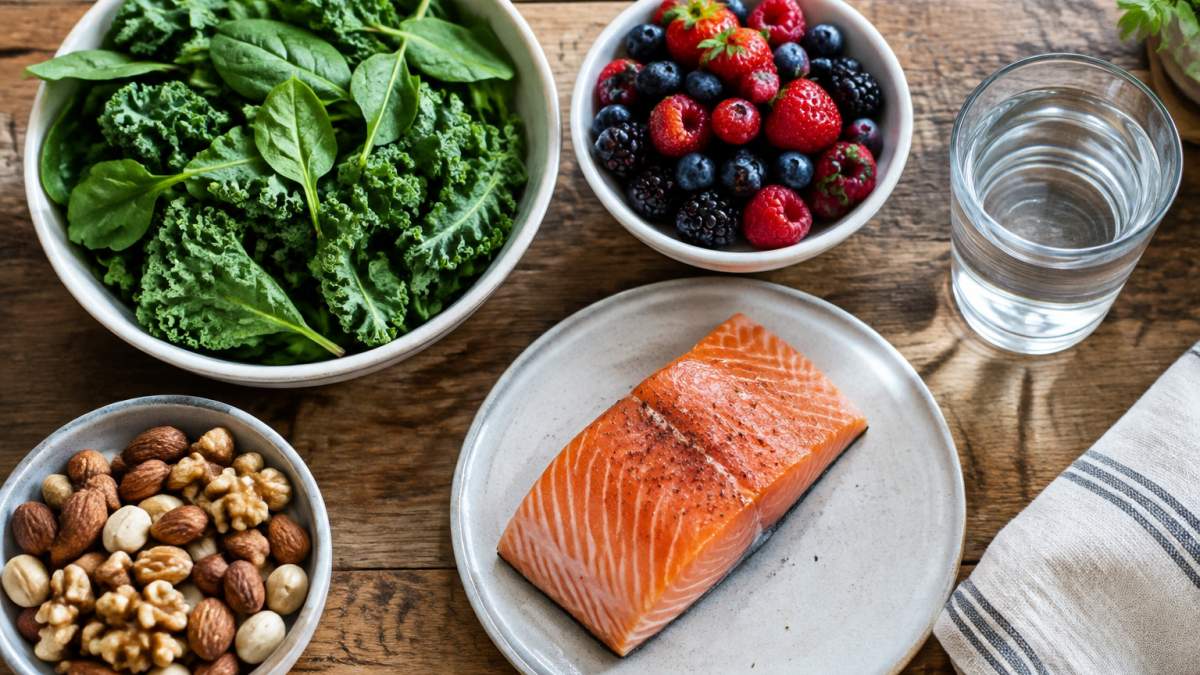
Oily fish such as salmon and sardines provide omega-3s. Citrus fruit, capsicum, and kiwi bring vitamin C. Eggs, lean meat, and legumes supply the protein that skin cells use to rebuild.
Some simple ways to add these foods:
- Add a handful of berries to breakfast porridge or yoghurt
- Swap one meal a week for fish with vegetables
- Snack on nuts, seeds, or a piece of fruit instead of chips
- Add capsicum or leafy greens to eggs, soups, and stir-fries
Keep the goal simple. Aim for variety across the week rather than perfection at every meal.
Building a Diet That Supports Your Skin Barrier
A barrier-friendly diet is less about single "superfoods" and more about consistency. Eat regular meals with a mix of protein, healthy fats, and colourful plant foods. Drink water through the day, and go easy on very heavy sugar intake, which many people find makes their skin look dull.
Diet alone rarely fixes a damaged barrier. Pair good eating with a gentle routine. Our Barrier Cream is designed to help hold moisture in once your skin has had what it needs from food.

How Long Skin Regeneration Takes
Skin renews itself on a cycle of several weeks, so changes from diet and care tend to show slowly.
If you want a realistic timeline, our guide to repairing a damaged moisture barrier walks through what to expect at each stage. Our peptide timelines article also covers how long results typically take.
Be patient, and judge progress over a reasonable period rather than after a few days.
Common Dietary Mistakes That Slow Skin Recovery
Several habits can work against skin repair without people realising it:
- Cutting out whole food groups, which can leave gaps in key nutrients
- Relying on supplements while eating very little real food
- Drinking too little water on hot or busy days
- Eating very large amounts of sugar or processed food most days
- Expecting a single change to fix a problem that built up over months
A common mistake is adding too many changes at once. It becomes hard to tell what is helping. Change one thing at a time so you can see what works.
Start With One Change This Week
You do not need to overhaul your entire diet to begin. Pick one change and stick with it for two weeks. Adding a serve of oily fish, a daily piece of fruit, or an extra glass of water are all good starting points.
Once that habit feels normal, add another. Over a few months, these small steps build a diet that supports your skin barrier and gives your routine a better foundation.
Frequently Asked Questions
What foods support healthy skin regeneration?
Foods rich in vitamin C, such as oranges, kiwifruit and capsicum, are a source of this vitamin. Oily fish provides omega-3 fatty acids, while nuts and seeds supply vitamin E. Leafy greens add vitamins A and K.
Can diet help repair a damaged skin barrier?
Diet can support the skin barrier, but it works slowly and alongside good skincare rather than replacing it. Adequate protein, healthy fats and micronutrients such as zinc and vitamin A are part of a balanced diet. Barrier damage from harsh products, sun exposure or dryness usually needs topical care as well, so treat diet as one part of a wider approach.
Do sugar or highly processed foods affect skin health?
Reducing refined sugar and heavily processed foods and choosing whole, minimally processed options is a practical everyday habit. Noticing how your own skin responds over several weeks can be more useful than following a rigid rule.
When should I see a doctor about persistent skin irritation?
See a GP if skin irritation lasts more than a few weeks, spreads, becomes painful, weeps or bleeds, or does not respond to gentle care. Sudden changes in a mole or patch of skin also warrant a check. Diet changes are unlikely to resolve these issues alone, so professional assessment is the right first step rather than waiting for dietary changes to take effect.
Pepcare Lab's routines are built to keep things simple: three steps, transparent ingredients, and formulas made with sensitive skin in mind. If you want a starting point, our Face Duo pairs the Face Serum with the Barrier Cream for a two-step daily routine.

