
Table of Contents
- How to Repair a Damaged Moisture Barrier: Start Here
- Signs of a Damaged Skin Barrier
- What Causes Moisture Barrier Damage
- Your Step-by-Step Skin Barrier Repair Routine
- Best Ingredients for Skin Barrier Repair
- How Long Does Skin Barrier Repair Take?
- How to Reintroduce Active Ingredients Without Re-Irritating Skin
- When to See a Doctor About a Damaged Moisture Barrier
- Frequently Asked Questions
Last Updated: October 14, 2026
How to Repair a Damaged Moisture Barrier: Start Here
A damaged moisture barrier is the thin outer layer of your skin losing its ability to hold water and keep irritants out. The fix is not more products. It is fewer, gentler ones, used consistently for four to six weeks.
If your skin stings when you apply moisturiser, feels tight minutes after washing, or turns red at the slightest thing, your barrier is likely compromised. The opposite usually works better.
This guide covers how to repair a damaged moisture barrier step by step, from what went wrong to how long recovery takes.
Signs of a Damaged Skin Barrier
The signs of a damaged skin barrier fall into two groups: how your skin feels, and how it looks. Sensory signs usually show up first, before anything is visible in the mirror.
Sensory Signs: Tightness, Stinging and Burning
Tightness after cleansing is the earliest warning. Your skin should feel comfortable within a minute of patting dry, not pulled or dry.
Stinging is the next stage. A product that never bothered you before now burns on contact. That is a classic sign of a compromised barrier.
Burning that lasts more than a few minutes after application points to active irritation. Stop the product immediately.
Visible Signs: Redness, Flaking and Breakouts
Redness across the cheeks and nose is common. So is flaking that does not improve with more moisturiser.
Breakouts can also signal barrier damage, not just clogged pores. When the barrier is weak, bacteria and irritants get in more easily, and skin reacts with inflammation.
- Tightness within minutes of washing
- Stinging from products you used to tolerate
- Redness that lingers
- Flaking despite moisturising
- Breakouts in new areas
- Dehydrated skin that looks dull and crepey
What Causes Moisture Barrier Damage
Most barrier damage comes from doing too much, not too little. Over-cleansing, over-exfoliating, and stacking active ingredients are the usual culprits.
Common causes include:
- Cleansing more than twice a day, or with hot water
- Daily use of strong exfoliating acids
- Retinol used too often or at too high a strength
- Fragrance and essential oils in multiple products at once
- Cold, dry or windy weather stripping moisture
- Long hot showers
- Sun exposure without protection
A common mistake is treating irritation with more exfoliation to "clear" the flaking. That makes it worse.
Your Step-by-Step Skin Barrier Repair Routine
The skin barrier repair routine that works is short: cleanse gently, hydrate, and seal. Two steps, twice a day, for at least a month. What changes is how you adjust those steps for your skin type and how damaged your barrier is.
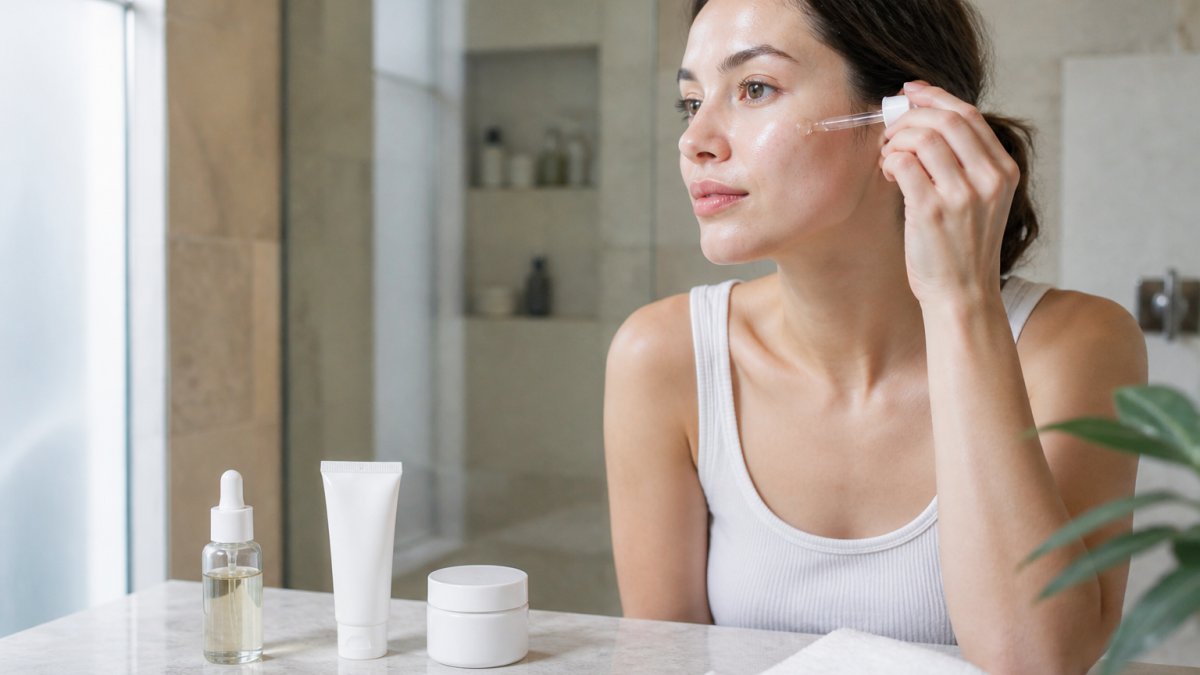
Step 1: Strip Back to a Gentle Cleanser
Use a gentle cleanser with no fragrance, no sulphates, and a low-foam texture.
- Morning: rinse with lukewarm water, or use cleanser only if your skin is oily
- Evening: one cleanse to remove sunscreen and grime
- Water temperature: lukewarm, never hot
- Drying: pat, do not rub
If your skin feels tight after cleansing, your cleanser is too harsh.
Step 2: Rehydrate and Seal with Barrier-Supporting Moisturiser
Apply a hydrating serum to damp skin, then seal it with a moisturiser rich in lipids.
Look for humectants like hyaluronic acid to draw in water, and emollients and occlusives like squalane and shea butter to hold it there. Our Barrier Cream pairs 1% Copper Peptides with niacinamide and squalane to replenish hydration and support the skin's natural barrier. Apply it after your serum, morning and night.

Adjust the Routine by Skin Type
A generic routine is a starting point, not a finish line. Most practitioners find the same two steps need different weights depending on your skin type.
- Oily or acne-prone: keep the cleanser for both morning and evening if you are congested, choose a lightweight gel-cream moisturiser, and avoid heavy occlusives that can trap oil. Do not skip moisturiser to dry out breakouts, a weak barrier makes inflammation worse.
- Dry: cleanse once in the evening only, layer a humectant serum on damp skin, then a richer cream with ceramides and shea butter. An occlusive balm over dry patches at night can reduce water loss.
- Sensitive or reactive: patch-test every new product on the inner forearm for three nights before using it on your face. Introduce nothing else while your barrier is unstable.
- Combination: use a lighter moisturiser on the T-zone and a richer one on the cheeks, rather than one product everywhere.
Adjust the Routine by Severity
How aggressive you are with the routine should match how damaged your barrier is.
- Mild (tightness, occasional stinging): keep your existing gentle cleanser and moisturiser, drop all exfoliation and retinol, and hold for two weeks.
- Moderate (daily stinging, visible redness, flaking): switch to a fragrance-free cleanser, add a humectant serum and a ceramide cream, and use only lukewarm water. No actives at all.
- Severe (burning on contact, raw or oozing patches): rinse with water only, apply a plain occlusive such as petrolatum, and avoid all other products until the skin settles. If it does not improve within a week, seek medical advice.
Best Ingredients for Skin Barrier Repair
The best ingredients for skin barrier repair fall into three groups: humectants, emollients, and occlusives. Ceramides, niacinamide, squalane, and shea butter are the ones worth prioritising.
- Humectants (hyaluronic acid, glycerin): pull water into the skin
- Emollients (squalane, shea butter): soften and smooth
- Occlusives (petrolatum, dimethicone): reduce water loss
- Niacinamide: supports the barrier and calms redness
- Ceramides: replace barrier lipids
- Copper Peptides (GHK-Cu): support collagen production and skin renewal
- Panthenol: soothes irritation
Our Face Serum combines 1% Copper Peptides with niacinamide and hyaluronic acid to hydrate and support the barrier in one step.

How Long Does Skin Barrier Repair Take?
How long skin barrier repair takes depends on how damaged your skin is, but most people see real improvement in two to four weeks and full recovery in four to six.
Progress markers to watch for:
| Timeline | What You Should Notice |
|---|---|
| Week 1-2 | Less stinging, less tightness after cleansing |
| Week 3-4 | Redness fading, less flaking |
| Week 5-6 | Skin feels comfortable, products absorb normally |
| Week 8+ | Barrier function largely restored |
If nothing improves after six weeks of gentle care, see a doctor.
How to Reintroduce Active Ingredients Without Re-Irritating Skin
Wait until your barrier feels stable for at least a week before adding anything back. Then reintroduce one active at a time, starting low and slow. The principle is simple: your barrier has to tolerate a product without stinging before you increase how often you use it.
A Cautious Reintroduction Schedule
Use this as a guide, not a rule. If any step causes stinging, redness or tightness, drop back to the previous step and hold for another two weeks.
| Week | What to Do |
|---|---|
| 1 | One application of the active, buffered over moisturiser |
| 2 | Two applications, spaced at least three days apart |
| 3 | Three applications, still buffered |
| 4 | Every other night, unbuffered if tolerated |
| 5+ | Increase frequency slowly, one step at a time |
Order of Reintroduction
Not all actives are equally irritating. A common pattern is to restart the gentlest first and leave the harshest until last.
- First: niacinamide, vitamin C in a low-strength formulation, or a gentle hydrating serum
- Second: retinoids, starting at the lowest strength you can buy
- Last: exfoliating acids such as glycolic, lactic or salicylic acid
Never reintroduce exfoliating acids and retinol in the same week. If you use both long term, keep them on separate nights.
Why Buffering and Spacing Work
Buffering means applying moisturiser before the active, which dilutes how much reaches the skin and slows absorption. Spacing applications gives the barrier time to recover between exposures. Both reduce the chance of a flare without stopping the active altogether.
Signs You Have Gone Too Fast
Stop the active and return to the gentle routine if you notice:
- Stinging that was not there before
- Redness that lasts more than an hour after application
- Flaking in areas that were previously comfortable
- New breakouts in unusual areas
Most people find that a slow reintroduction takes longer than they expect, but it is faster than recovering from a second round of barrier damage.
When to See a Doctor About a Damaged Moisture Barrier
See a doctor if your skin does not improve after six weeks, or if you notice signs that suggest something more than barrier damage.
Book an appointment if you have:
- Severe pain, swelling, or oozing
- A rash that spreads or blisters
- Persistent redness in a butterfly pattern across the cheeks
- Symptoms that worsen despite gentle care
- Yellow or green crusting, which can signal infection
Barrier damage and conditions like rosacea, eczema, or seborrheic dermatitis can look similar. A doctor can tell the difference. The Australasian College of Dermatologists lists qualified specialists if you need a referral.
For general skin health guidance, the healthdirect skin conditions guide is a reliable starting point.
Most people trying to fix a damaged moisture barrier are using too many products, not too few. The fastest route back to comfortable skin is a short, gentle routine built around hydration and barrier support.
Pepcare Lab makes that simple. Our Face Duo pairs the Face Serum and Barrier Cream into a two-step routine powered by 1% Copper Peptides, niacinamide, and squalane, with no fragrance and no filler. It is designed for sensitive skin and built to support your barrier long term.

Get started with Pepcare Lab and give your skin the simple, consistent care it needs to recover.
Frequently Asked Questions
How long does it take to restore a damaged moisture barrier on the face?
Most people notice reduced stinging and tightness within one to two weeks of a simplified routine, with visible improvement in redness and flaking by four to six weeks. Full barrier recovery can take eight to twelve weeks, depending on how much exfoliation or active ingredients caused the damage. Track progress by how your skin feels after cleansing: if it no longer feels tight or stings when you apply moisturiser, the barrier is recovering.
What vitamins and ingredients repair the skin barrier?
Niacinamide (vitamin B3) supports ceramide production and reduces water loss. Copper peptides, found in Pepcare Lab's Barrier Cream and Face Serum, support skin renewal and barrier function. Humectants like hyaluronic acid draw water into the skin, while emollients such as squalane and shea butter soften and seal it. Occlusives reduce water loss overnight. A combination of humectant, emollient and occlusive in one moisturiser covers all three needs.
What should you avoid when your skin barrier is damaged?
Stop all exfoliating acids (AHAs, BHAs), retinoids, vitamin C serums and physical scrubs until the barrier recovers. Avoid foaming cleansers with sulfates, hot water, and fragranced products. Skip facial massage tools and harsh towels. Reduce shower temperature and time. Once symptoms settle, reintroduce one active at a time, once or twice a week, buffered with moisturiser. If stinging returns, stop the active and wait another week.
When should you see a dermatologist about a damaged skin barrier?
See a doctor or dermatologist if symptoms persist beyond four to six weeks despite a gentle routine, or if you notice weeping, crusting, yellow discharge, severe swelling or pain. These can signal infection or a condition such as rosacea, eczema or perioral dermatitis that needs prescription treatment. A GP can assess and refer you to a dermatologist. In Australia, a Medicare rebate may apply for a GP visit, and dermatologist fees vary.