
Table of Contents
- Copper Peptides vs Growth Factors: What Each One Does
- How Copper Peptides Work in Skin
- How Growth Factors Work in Skin
- Copper Peptides for Skin Benefits: Firmness, Repair and Barrier Support
- Growth Factors in Skincare: Broader Regenerative Signals
- Copper Peptides vs Growth Factors: Head-to-Head Comparison
- Copper Peptide Serum How to Use: Layering, Compatibility and Irritation
- What the Evidence Shows: Clinical Limits and Realistic Timelines
- Conclusion
- Frequently Asked Questions
Last Updated: October 9, 2026
Copper Peptides vs Growth Factors: What Each One Does
Copper peptides versus growth factors for skin compares two ingredient classes that both support collagen and skin repair, but work through different mechanisms, evidence profiles and routines. This Pepcare Lab guide breaks down what each does, where the research is strong, and where it thins out. Copper peptides are a specific, well-characterised ingredient built around a copper-carrying molecule; growth factors are a broader category of signalling proteins.
Copper peptides are short chains of amino acids bound to copper ions, most commonly the GHK-Cu complex. Growth factors are naturally occurring proteins that send regenerative signals to skin cells.
How Copper Peptides Work in Skin
Copper peptides work by delivering copper ions into the skin, where they act as trace elements in cellular signalling. In the GHK-Cu complex, the peptide chain transports copper and the copper does the biological work.
That work touches collagen synthesis, tissue repair and antioxidant defence. Copper is a required cofactor for enzymes involved in extracellular matrix maintenance, which is why it appears in wound healing research as well as cosmetic formulas.
The carrier matters: free copper is poorly tolerated, but bound to a peptide it is delivered in a form skin can handle, which is why copper peptides suit sensitive skin better than many anti-aging actives.
How Growth Factors Work in Skin
Growth factors in skincare are proteins that mimic the body's own regenerative signals, binding to receptors on skin cells and triggering responses associated with wound healing, collagen production and skin repair.
The category is wide. Epidermal growth factor is the best known, but formulations may include several proteins or plant-derived alternatives. That breadth is both the appeal and the problem.
Proteins are large, fragile molecules. They degrade with heat, light and time, and struggle to cross the skin barrier intact. A label listing growth factors tells you what went in, not what is still active when you apply it.
Copper Peptides for Skin Benefits: Firmness, Repair and Barrier Support
Copper peptides for skin benefits centre on three areas: collagen production, skin repair and barrier support.
Collagen Production and Skin Elasticity
Copper is involved in collagen synthesis and in the cross-linking that gives skin its mechanical strength, supporting firmness and skin elasticity over time. It is support, not a rebuild: topical ingredients influence the skin's surface environment but do not replace what ageing removes.
Wound Healing, Skin Repair and Hydration
Copper peptides have a longer history in wound healing than in cosmetics, where the tissue repair signal is better documented. In skincare, the realistic claim is support for the skin's own renewal processes plus improved hydration when paired with humectants. Our Face Serum combines 1% copper peptides with niacinamide and hyaluronic acid for exactly that reason.

Growth Factors in Skincare: Broader Regenerative Signals
Growth factors in skincare aim for broader regenerative signalling rather than one defined pathway: where copper peptides deliver a specific trace element, growth factors prompt the skin with messenger proteins.
That ambition is why the category commands higher prices and why the evidence is harder to pin down. Formulation stability, penetration and concentration vary enormously, and there is no standardised growth factor the way there is a defined GHK-Cu complex.
For sensitive skin, more signalling is not automatically better: a broader input means a broader chance of a reaction.
Copper Peptides vs Growth Factors: Head-to-Head Comparison
Most comparisons of these two ingredients imply someone has run them against each other in a trial. That is not the case.
| Factor | Copper Peptides | Growth Factors |
|---|---|---|
| Ingredient identity | A defined carrier-peptide complex, most commonly GHK-Cu, where the peptide binds and transports a copper ion | A category, not a single molecule: epidermal growth factor, fibroblast growth factors, keratinocyte growth factor, and plant-derived alternatives all behave differently |
| Mechanism | Delivers copper as a trace-element cofactor for enzymes involved in extracellular matrix maintenance and antioxidant defence | Binds to cell-surface receptors and triggers signalling cascades associated with repair and proliferation |
| Evidence type | Wound-healing and tissue-repair literature plus cosmetic studies; the molecule is characterised and reproducible | Variable; evidence quality depends entirely on which protein and which delivery system is studied |
| Direct comparative trials | None that establish superiority over growth factors | None that establish superiority over copper peptides |
| Stability | Generally robust in well-made aqueous and emulsion formulas when pH and chelation are controlled | Proteins are large and fragile; heat, light, oxygen and time can denature them, and preservative systems can affect them |
| Penetration | Small enough to be formulated for meaningful skin delivery, though intact barrier penetration is still limited | Large molecular size makes intact barrier penetration a genuine formulation challenge |
| Concentration disclosure | Often stated as a percentage of the peptide complex | Rarely stated in a way that tells you the activity of what remains in the bottle |
| Best fit | Firmness support, barrier comfort, sensitive or reactive skin | Those wanting a broader regenerative signalling approach, with realistic expectations |
| Main limitation | Narrower mechanism; benefits are supportive, not reconstructive | Formulation and penetration uncertainty; harder to verify what is active at application |
How to read that table without being misled. Three points matter more than the rows themselves.
First, ingredient identity is not the same as ingredient class. "Copper peptides" usually means one recognisable complex. "Growth factors" can mean almost anything, so a category-level comparison is inherently looser on the growth-factor side.
Second, evidence type is not evidence strength. A long wound-healing history for copper is useful context, but wound healing is a different biological situation from cosmetic ageing, and results do not transfer automatically.
Third, stability is where labels mislead most. A growth factor on an ingredient list tells you it was included at manufacture, not how much survived storage, transport and weeks on your shelf.
Australian Therapeutic Goods Administration guidance on cosmetic claims
Copper Peptide Serum How to Use: Layering, Compatibility and Irritation
Copper peptide serum how to use comes down to three rules: apply to clean skin, layer from thinnest to thickest, and introduce one new active at a time. Copper peptides are generally well tolerated, but sensitive skin still needs a gradual start.
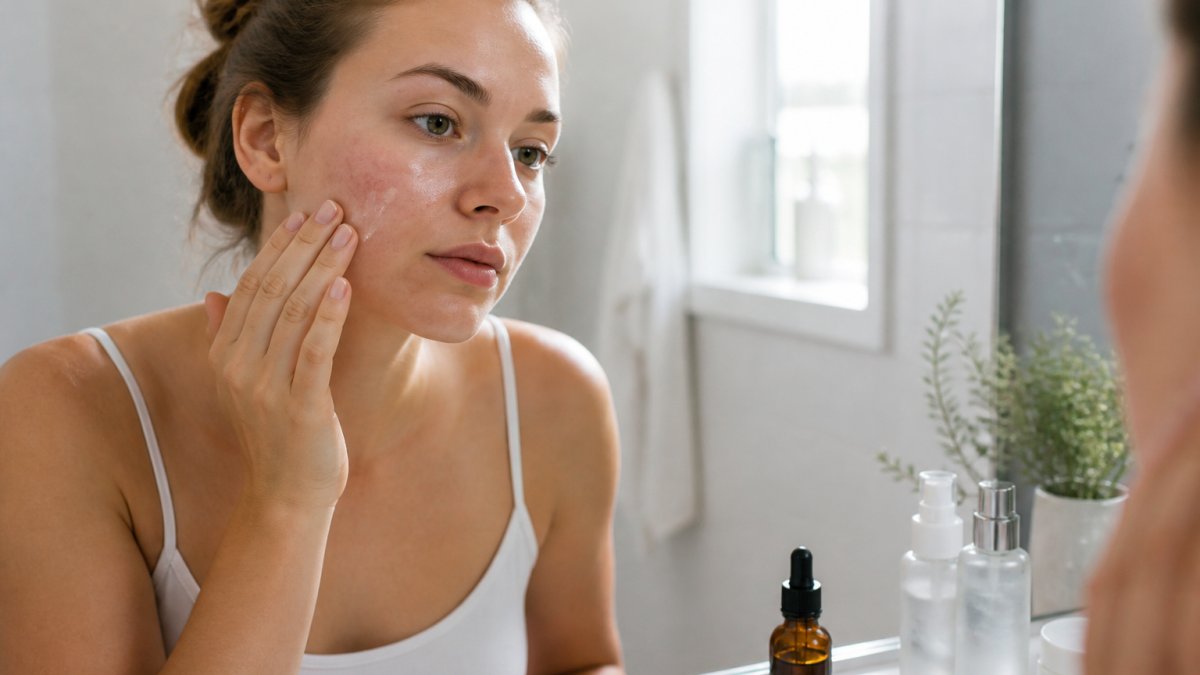
A practical sequence:
- Cleanse and let skin dry fully
- Apply copper peptide serum to damp or dry skin, patting rather than rubbing
- Wait one to two minutes for absorption
- Follow with a barrier cream to seal in hydration
- Use sunscreen in the morning, every day
The irritation risk sits less with copper peptides themselves than with what you pair them with. Strong acids and high-strength retinoids in the same layer can overwhelm a sensitive barrier, so space them out or alternate days.
Copper Peptides and Growth Factors Together: What to Know
Copper peptides and growth factors together are not automatically a conflict, but they are not a free upgrade either. Both push the skin toward repair signalling, and stacking them increases irritation risk without a guaranteed gain.
If you want to try both, alternate rather than layer: copper peptides in the morning, growth factors at night, or swap every other day. Watch your barrier for the first two weeks. Redness, stinging or flaking means you are doing too much, not too little.
What the Evidence Shows: Clinical Limits and Realistic Timelines
Almost every article on this topic says the evidence is "mixed" and leaves it there.
Laboratory and cell-culture studies. These show what an ingredient can do to cells in a dish: influence collagen-related gene expression, support fibroblast activity, act as an antioxidant.
Ingredient-supplier studies. Much of the human data on both copper peptides and growth factors comes from studies funded or run by the companies that sell the raw ingredient.
Independent human clinical research. This is the strongest category and the scarcest.
The honest limits of topical use. Skincare works at the surface. It can support the skin's own processes, improve hydration and barrier comfort, and over months contribute to how skin looks and feels.
Realistic timelines. Judge results over a full skin cycle and beyond.
peer-reviewed research on copper peptide wound healing
Conclusion
The real challenge is not choosing between two ingredients. It is finding a formulation that delivers the active in a stable, well-tolerated form, then sticking with it long enough to judge. That is where most routines fail.
At Pepcare Lab, we build around copper peptides for exactly this reason. The Barrier Cream locks that hydration in with squalane and skin-conditioning ingredients, forming a simple two-step routine made with sensitive skin in mind.

If you want to start with one product, begin with the Face Serum. If you want the full routine, the Face Duo covers serum and moisturiser for $79, or $149 for the Complete Collection with our hair and scalp serum.
Australian Skin and Skin Cancer Research Centre information
Get started with Pepcare Lab and build a routine your skin can actually tolerate.
Frequently Asked Questions
What is the difference between copper peptides and growth factors in skincare?
Copper peptides are short chains of amino acids bound to copper ions, most commonly GHK-Cu. They support collagen production, skin repair and barrier strength. Growth factors are signalling proteins that tell skin cells to divide and rebuild, working on broader regenerative pathways. Copper peptides act on a narrower set of repair processes; growth factors trigger wider cellular responses. Both are topical actives, and both work gradually rather than overnight.
Are copper peptides as effective as growth factors for skin?
They target different things. Copper peptides have a longer history of topical research for wound healing, collagen synthesis and barrier support. Growth factors show promise for skin regeneration and firmness, but topical evidence is smaller and formulation stability is harder to guarantee. If your main concerns are firmness, fine lines and a compromised barrier, copper peptides are a well-studied starting point. Growth factors may suit those chasing broader regenerative effects.
Can you use copper peptides and growth factors together?
Some routines combine them, but layering both at once can overwhelm sensitive skin and makes it hard to tell which product is causing irritation. A safer approach is to introduce one at a time, use copper peptides in the morning and growth factors at night, or alternate days. If your skin reacts easily, start with copper peptides alone for four to six weeks before adding anything else.
Are copper peptides suitable for sensitive skin?
Copper peptides are generally well tolerated, and formulas built around them often skip harsh exfoliants and high-strength acids. Start with a lower concentration, patch test behind the ear for 48 hours, and apply every second day before moving to daily use. Avoid pairing them with strong retinoids or vitamin C in the same layer if your skin is reactive. A simple two-step routine, like a 1% copper peptide serum followed by a barrier cream, is easier to tolerate than a multi-product stack.
How long does it take to see results from copper peptides?
Most people notice improved hydration and skin comfort within two to four weeks. Changes to firmness, fine lines and skin texture typically take eight to twelve weeks of consistent daily use. Copper peptides support collagen production gradually, so results build over time rather than appearing after a few applications. Photograph your skin monthly in the same lighting to track real change rather than relying on how it feels day to day.