
Table of Contents
- The Correct Order: Copper Peptides Before or After Hyaluronic Acid
- Can You Mix Copper Peptides with Hyaluronic Acid in One Step?
- Step-by-Step: How to Layer Copper Peptides with Hyaluronic Acid
- How Long to Wait Between Layers
- Copper Peptides Morning or Night: When to Use Each
- How to Use Copper Peptides in a Skincare Routine Alongside Other Actives
- Irritation, Patch Testing, and Troubleshooting
- Conclusion: A Simple Routine You Can Start Tonight
- Frequently Asked Questions
Last Updated: October 7, 2026
The Correct Order: Copper Peptides Before or After Hyaluronic Acid
Hyaluronic acid goes on first, then copper peptides, then moisturiser. That is the short answer to how to layer copper peptides with hyaluronic acid.
Here is why. Hyaluronic acid is a humectant, which means it pulls water into the skin.
So the rule is simple: thinnest texture first, richest texture last.
That single rule settles almost every layering question you will ever have.
Why Texture and Formulation Decide the Order
Texture beats ingredient name every time. A watery HA serum always goes before a cream, no matter what actives each one contains.
Formulation matters for a second reason. Some products combine everything in one bottle, which removes the ordering question entirely. Others keep actives separate so each one stays stable.
Think of it as a queue:
- Watery serums and essences go first
- Peptide serums and treatments go next
- Creams and moisturisers go last
Change the texture of any product and you change its place in the queue.
Can You Mix Copper Peptides with Hyaluronic Acid in One Step?
Yes, you can mix copper peptides with hyaluronic acid, and many people do it without issue.
Mixing saves time. It also cuts the wait between steps to zero.
There is one trade-off worth knowing. When you mix two products in your hand, you cannot control how much of each one lands on your skin.
Here is how the two approaches compare:
| Approach | Time Needed | Control Over Dose | Best For |
|---|---|---|---|
| Mix in palm | Under 30 seconds | Low | Busy mornings |
| Layer separately | 1-2 minutes | High | Sensitive or reactive skin |
| Single combined product | Under 30 seconds | Fixed by formula | Simple routines |
A combined formula is the third option, and it removes the guesswork completely. Our Face Serum pairs 1% copper peptides with hyaluronic acid and niacinamide in one bottle, so the layering question disappears.

If your skin is calm and you want speed, mix. If your skin reacts easily, layer.
Step-by-Step: How to Layer Copper Peptides with Hyaluronic Acid
The full routine takes about two minutes once you know the order. What most guides skip is how to work out that order for the specific bottles on your shelf, because texture and formulation decide placement, not the ingredient name on the front.
Step 1: Read Your Products Before You Touch Your Face
Line up everything you plan to use and rank it from thinnest to thickest. A quick way to check without guessing:
- Tip a drop onto the back of your hand. If it runs, it is a watery layer and goes early.
- If it holds a dome shape, it is a thicker serum or lotion and goes later.
- If it does not move at all, it is a cream or balm and goes last.
Check the ingredient list for the first five ingredients. If water (aqua) is first and there is no oil or silicone near the top, it is water-based.
A hybrid product complicates this. A copper peptide cream is both a peptide step and a moisturiser, so it replaces both rather than stacking with a separate cream. If your hyaluronic acid is already built into a peptide serum, you have one step, not two.
Step 2: Cleanse and Prep
Start with a gentle cleanser and lukewarm water. Hot water strips the skin and makes everything that follows sting more.
Pat your face dry, then leave it slightly damp. Damp skin absorbs watery serums better than bone-dry skin, and hyaluronic acid in particular needs available water to hold onto.
If your skin is reactive, this is the moment to patch test anything new. More on that below.
Step 3: Apply the Watery Layer First
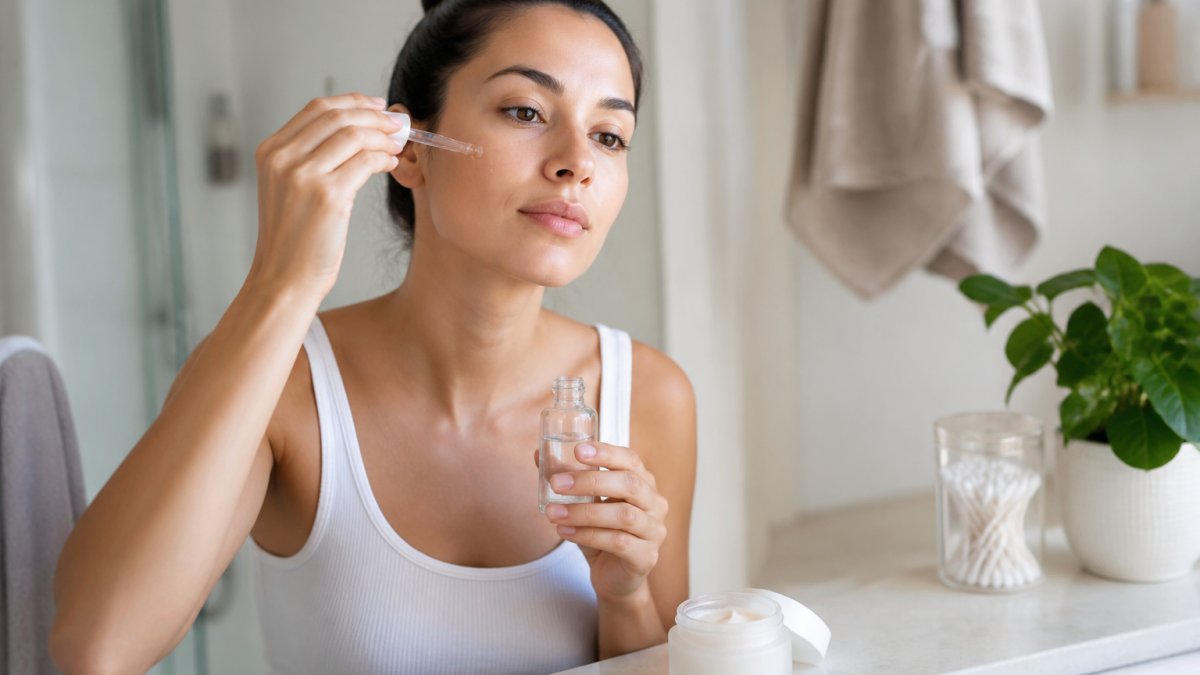
Apply your hyaluronic acid serum to damp skin. Use two or three drops for the whole face and press them in with gentle movements rather than rubbing.
Give it 30 to 60 seconds. You want the surface to feel tacky, not wet. If it still feels wet, the next layer will slide and pill.
Step 4: Apply the Copper Peptide Layer
Next comes the copper peptide serum. Use a pea-sized amount, or roughly the size of a five-cent coin, and press it over the same areas. Avoid rubbing hard around the eyes, where the skin is thinnest.
If your copper peptide product is watery and your HA product is a thicker gel, the order flips: the thinner one goes first. This is why texture beats ingredient name every time.
Step 5: Seal and Protect
Finish with a moisturiser to lock in the water you just added. Without this step, hyaluronic acid can pull moisture back out of the skin in dry air.
Our Barrier Cream is built for exactly this job. It pairs 1% copper peptides with niacinamide and squalane to hold hydration in and support the skin barrier.

In the morning, add sunscreen as your final step. Every time.
How Long to Wait Between Layers
Thirty to sixty seconds is enough between most layers. You do not need to wait until each product dries completely.
The goal is simple: let each layer settle so the next one does not push it around.
Some products do need more space:
- Sunscreen needs a minute or two to set before makeup
- Retinol at night should go on dry skin, not damp
- Any product that pills needs more time before the next layer
Pilling is the tell. If you see little balls of product rolling up, you either waited too little or layered a water-based product over a silicone-heavy one.
Speed matters less than consistency here. A routine you actually finish beats a perfect one you skip.
Copper Peptides Morning or Night: When to Use Each
Copper peptides suit both morning and night, which is one reason they fit so easily into a routine.
Morning use pairs well with hydration and sun protection.
If you are new to copper peptides, start once a day.
Once your skin is comfortable, twice daily is fine for most people.
The one rule that does not bend: sunscreen in the morning, every morning.
How to Use Copper Peptides in a Skincare Routine Alongside Other Actives
Copper peptides play well with hydrating ingredients and poorly with a few strong ones. Knowing why the conflicts happen makes the scheduling obvious, so you stop guessing.
Safe partners include hyaluronic acid, niacinamide, squalane, glycerin and most moisturising ingredients. These support the barrier rather than fighting it, and none of them interfere with how the peptide reaches the skin.
The conflicts are worth understanding, not just memorising:
- Vitamin C (L-ascorbic acid): it works at a low pH, roughly 3 to 3.5, while copper peptides are stable closer to skin's natural pH of about 5.5. Used back to back, the acid environment can destabilise the peptide and the copper can oxidise the vitamin C, so both lose potency. Split them by time of day.
- Strong exfoliating acids (glycolic, lactic, salicylic): same pH problem, plus they strip the surface layer the peptide is trying to reach. Keep them on separate days or separate times.
- Retinol and retinoids: not a chemical clash so much as a tolerance clash. Both can irritate, and stacking them raises the chance of redness and flaking. Alternate nights rather than layering.
A Simple Weekly Schedule That Works
You do not need to abandon any of these actives. You need to space them. A pattern most people tolerate well:
- Morning: cleanse, hyaluronic acid, copper peptides, moisturiser, sunscreen. Or swap copper peptides to night and use vitamin C in the morning.
- Night A: cleanse, hyaluronic acid, copper peptides, moisturiser.
- Night B: cleanse, retinol or exfoliating acid, moisturiser. Skip copper peptides on this night.
- Repeat, giving your skin at least one plain night a week if it is sensitive.
The rule underneath all of it: do not put a low-pH active and a copper peptide in the same layer or the same sitting. Time of day is the cleanest separation.
What Not to Layer with Copper Peptides
Do not apply copper peptides directly after a strong acid peel or a high-strength vitamin C serum. Space them out instead.
If you use both vitamin C and copper peptides, split them by time of day. That is the simplest fix and it works for most people.
Irritation, Patch Testing, and Troubleshooting
Patch test any new peptide product before it touches your whole face. Apply a small amount behind your ear or on your inner forearm and wait 24 hours.
Redness, itching or stinging means stop and reassess. A mild tingle that fades within a minute is usually fine.
Common issues and their fixes:
- Pilling: wait longer between layers, or apply less of each product
- Stinging: your skin barrier may be compromised, so cut back to basics for a week
- Dryness: you may need a richer moisturiser over your hyaluronic acid
- No visible change: give it time, since barrier support is a slow process
Sensitive skin responds better to a short routine done daily than a long one done occasionally. Our Face Duo pairs the serum and cream in two steps for that reason.

Conclusion: A Simple Routine You Can Start Tonight
Layering copper peptides with hyaluronic acid comes down to one habit: watery products first, creams last, and a short wait in between.
Most people overcomplicate this. Two or three well-chosen products, used in the right order, do more than a shelf full of bottles.
If you want the order handled for you, our Face Serum pairs 1% copper peptides with hyaluronic acid and niacinamide in a single step, and the Barrier Cream seals it in.
Shop our Bestsellers and start with a routine you can actually keep.
Frequently Asked Questions
Can I mix copper peptides and hyaluronic acid together in my hand?
You can, but applying them separately gives you more control. If your hyaluronic acid is a watery serum and your copper peptides are in a cream or thicker serum, mix a small amount in your palm first and patch test on your jawline. If either product pills or feels tacky, apply them in layers instead, thinnest first. Pepcare Lab's Face Serum already combines 1% copper peptides with hyaluronic acid in one formula, so you can skip the mixing step entirely.
Do you put peptides on before or after hyaluronic acid?
Apply the thinner, more watery product first. Most hyaluronic acid serums are lighter than copper peptide creams or serums, so HA goes on first, then copper peptides. If your copper peptide product is the runnier of the two, reverse the order. The rule is texture, not ingredient name: watery before creamy, always. Wait about 30 to 60 seconds between layers so each product absorbs rather than sitting on top of the last one.
Is GHK-Cu better in the morning or at night?
Either works, but night suits most routines. Copper peptides support collagen production and skin renewal, processes that peak while you sleep. Using them at night also avoids any interaction with daytime vitamin C, which can destabilise copper peptides if layered directly. If you prefer mornings, apply copper peptides first, wait a minute, then follow with sunscreen. Whichever you choose, keep it consistent so your skin adjusts.
What should I not layer with copper peptides?
Avoid direct layering with vitamin C, exfoliating acids (AHA, BHA), and strong retinoids in the same step. These ingredients work at different pH levels and can reduce how well copper peptides perform, or increase irritation on sensitive skin. Separate them by routine instead: copper peptides at night, vitamin C in the morning. If you use acids, leave at least 30 minutes before applying copper peptides, or alternate days. Always patch test new combinations on your inner forearm first.