
Table of Contents
- Why Carrier Oils Matter When Using GHK-Cu for Hair
- How to Use GHK-Cu for Hair: Choosing the Right Carrier Oil
- Carrier Oils for Scalp Health: Top Options and Their Benefits
- GHK-Cu Scalp Serum: Pairing With Carrier Oils for Best Results
- GHK-Cu and Hair Growth Evidence: What the Science Shows
- Application Techniques and Common Mistakes to Avoid
- Frequently Asked Questions
Last Updated: October 8, 2026
Why Carrier Oils Matter When Using GHK-Cu for Hair
Copper peptides like GHK-Cu work best when properly delivered to the scalp using carrier oils GHK-Cu hair formulations require. Using the right carrier oil isn't optional, it fundamentally changes how effectively the peptide penetrates and performs.
Carrier oils GHK-Cu formulations require serve three critical functions. They dissolve the peptide for absorption, protect it from degradation, and maintain scalp health while the active ingredient works. Different oils offer different lipid profiles, absorption rates, and compatibility with peptide stability.
Think of the carrier oil as the delivery vehicle. GHK-Cu molecules are hydrophilic, they prefer water-based environments. Carrier oils bridge this gap by creating an emulsion that allows the peptide to cross the lipid barrier of your scalp.
The secondary benefit is scalp health itself. A nourished scalp creates an ideal environment for follicle function. Certain oils reduce inflammation, balance sebum production, and strengthen the scalp's natural barrier.
How to Use GHK-Cu for Hair: Choosing the Right Carrier Oil
The best carrier oil for your situation depends on your hair type and scalp condition. Fine or oily hair requires different treatment than dry or sensitive scalps. Choosing incorrectly results in either poor absorption or product buildup that defeats the purpose.
Lightweight Oils for Fine or Oily Hair
Lightweight oils absorb quickly without leaving residue. They won't weigh hair down or create the greasy appearance that makes many people abandon scalp serums after a few applications.
Fractionated coconut oil is the fastest-absorbing option available. It penetrates within minutes and leaves no visible residue. The fractionation process removes longer-chain fatty acids, making it nearly weightless while maintaining non-comedogenic properties.
Jojoba oil mimics scalp sebum structurally, so it absorbs readily without triggering additional oil production. It's slightly heavier than fractionated coconut but still suitable for fine hair. The linoleic acid content supports scalp health directly, which is a bonus beyond just carrier function.
A practical mistake many people make: they apply lightweight oil serums to soaking-wet hair, expecting faster absorption. Water on the scalp actually slows penetration. Apply to damp, not wet, hair for optimal transdermal delivery.
Heavier Oils for Dry or Sensitive Scalps
Dry scalps need occlusive support. Heavier oils stay on longer, allowing deeper hydration and creating a protective barrier that sensitive skin appreciates.
Argan oil is rich in oleic acid and vitamin E, both of which nourish dry, irritated scalps. It absorbs more slowly than fractionated coconut, giving it time to condition while delivering GHK-Cu. For sensitive scalps prone to inflammation, argan's anti-inflammatory properties add real value beyond carrier function.
Cold-pressed rosemary oil (when used as a carrier base, not as an essential oil) supports scalp circulation and has documented antimicrobial properties. It's heavier, more suited to dry hair, and pairs particularly well with peptides because the improved blood flow enhances nutrient delivery to follicles.
The trade-off with heavier oils is that they require slightly longer wait times before styling. Most people apply in the evening or use a shower cap for 20-30 minutes to allow absorption without visible shine.
Carrier Oils for Scalp Health: Top Options and Their Benefits
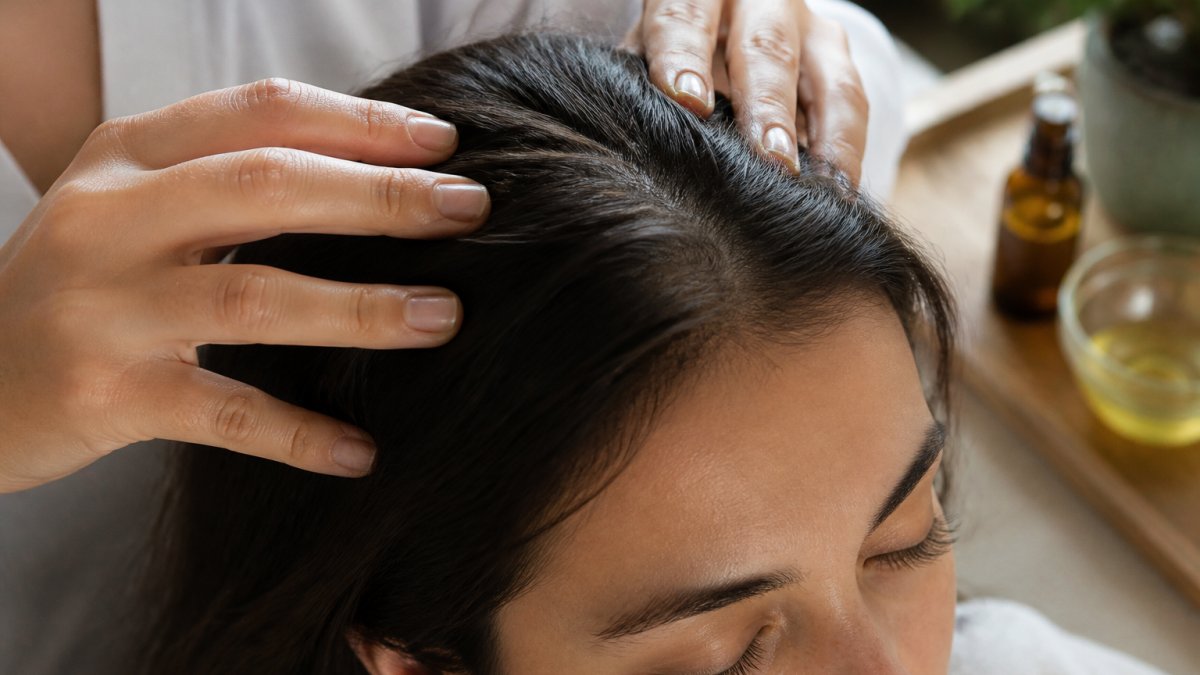
Beyond their role as delivery vehicles, carrier oils GHK-Cu hair applications use actively improve scalp condition when chosen correctly. A healthier scalp supports stronger hair growth more effectively than any single ingredient can alone.
Jojoba Oil: The Scalp-Balancing Choice
Jojoba oil's molecular structure closely mirrors human sebum, which is why it balances rather than disrupts scalp chemistry. It won't strip oily scalps or leave dry ones parched. This makes it universally suitable, though it shines for combination scalps.
The linoleic acid content is particularly relevant. Low linoleic acid is associated with barrier dysfunction and increased scalp sensitivity. Jojoba replenishes this, supporting the scalp's natural protective function. When paired with GHK-Cu, you're addressing both follicle stimulation and the underlying scalp health that determines whether follicles can respond.
Absorption rate is moderate, roughly 15-20 minutes for full penetration on most scalp types. This gives the peptide time to work without requiring extended wait times before washing or styling.
Argan Oil: For Scalp Nourishment
Argan oil is nutrient-dense in ways most lightweight carriers aren't. It contains vitamin E, polyphenols, and ferulic acid, antioxidants that protect scalp cells from oxidative stress. This matters because inflammation and oxidative damage are linked to hair thinning.
The oleic acid profile makes argan particularly suited to dry scalps. It conditions without clogging, and it has documented anti-inflammatory effects. People with scalp conditions like seborrheic dermatitis or psoriasis often find argan more tolerable than heavier oils.
One consideration: argan's richness means it stays on the scalp longer. This is an advantage if you're applying in the evening, but less ideal if you need to style within an hour. Plan application timing accordingly.
Rosemary Oil: Supporting Scalp Circulation
Rosemary's reputation for hair health isn't purely anecdotal. The herb contains compounds that improve blood flow to the scalp, and improved circulation means better nutrient delivery to follicles. This synergises well with GHK-Cu's follicle-stimulating properties.
Use rosemary as a carrier base (cold-pressed rosemary oil), not as an essential oil. Essential rosemary oil is too concentrated and can irritate sensitive scalps. The carrier-grade version provides the circulation benefits without the risk of irritation.
Rosemary also has mild antimicrobial and antifungal properties, which can reduce scalp inflammation if bacterial overgrowth is contributing to thinning. It's a particularly good choice if your hair loss coincides with scalp sensitivity or visible inflammation.
Fractionated Coconut Oil: Fast Absorption
Fractionated coconut oil is processed to remove longer-chain triglycerides, leaving only the lighter components. This makes it the fastest-absorbing carrier available, usually under 10 minutes for full penetration.
The speed of absorption is valuable for people who can't wait extended periods before styling or showering. It's also ideal for fine hair because there's no residual heaviness. Non-comedogenic properties mean it won't clog pores or trigger acne on sensitive facial skin if the serum drifts beyond the scalp line.
The trade-off: it provides minimal conditioning benefit on its own. For dry scalps, pair it with another oil or use it only if your GHK-Cu serum contains additional humectants.
GHK-Cu Scalp Serum: Pairing With Carrier Oils for Best Results
The Pepcare Lab Hair/Scalp Serum contains 2% copper peptides designed specifically for scalp delivery. It's formulated with peptides, niacinamide, biotin, and botanical extracts, ingredients chosen to work synergistically with carrier oils rather than against them.

When you use a peptide serum, the carrier oil determines how effectively those actives reach follicles. The serum's own formulation supports this process, but your choice of application method and timing matters enormously.
Most peptide serums are designed to be applied directly to clean, damp scalp without additional dilution. The serum itself contains carrier components. If you're adding extra carrier oil, you're diluting the peptide concentration, which reduces efficacy.
This two-step approach gives you the best of both worlds: concentrated peptide delivery followed by scalp nourishment. It also prevents the "too much product" feeling that discourages consistent use.
GHK-Cu and Hair Growth Evidence: What the Science Shows
GHK-Cu's mechanism for supporting hair health centres on follicle stimulation and collagen production. The peptide increases expression of growth factors that influence follicle cycling, moving hairs from resting phases into active growth phases. This is why it's particularly relevant for hair thinning rather than complete hair loss.
Scalp health directly influences whether follicles can respond to this stimulation. A compromised barrier, chronic inflammation, or poor circulation limits the peptide's effectiveness. This is why carrier oil selection isn't a minor detail, it determines whether your scalp environment supports the peptide's intended function.
The peptide works best when applied consistently over weeks. Results typically appear within 8-12 weeks of consistent use. This timeline assumes consistent application and appropriate carrier oil selection. Skipping either undermines results.
Application Techniques and Common Mistakes to Avoid
How you apply GHK-Cu matters as much as what you apply. Poor technique undermines even the best formulation.
Dilution Ratios and Patch Testing
Never dilute a peptide serum with water or excessive carrier oil. Peptides are sensitive to pH changes and dilution reduces their bioavailability. If your serum feels too heavy, use a lighter carrier oil as a finishing layer rather than mixing it into the serum itself.
Patch testing is non-negotiable for sensitive scalps. Apply a small amount to the inside of your wrist or behind your ear 48 hours before full scalp application. Watch for redness, itching, or any reaction. Scalp skin is more permeable than other skin, so sensitivities that wouldn't show elsewhere might appear on your scalp.
Timing and Frequency
Apply peptide serums to clean, damp scalp, not soaking wet. Water on the scalp creates a barrier that slows absorption. Damp scalp allows the peptide to penetrate while the moisture helps distribute the serum evenly.
Most formulations are designed for daily use. Consistency matters more than occasional heavy applications. A small amount applied daily outperforms larger amounts applied sporadically.
Timing relative to other products matters. Avoid applying directly after silicone-based styling products, which can create a barrier. Wait at least 4-6 hours after using heavy conditioners. The peptide needs direct scalp contact to work.
What Not to Mix With GHK-Cu
Don't combine GHK-Cu with vitamin C serums or other acidic actives on the same application. The pH shift can destabilise the peptide. If you use multiple actives, apply them on alternate days or in different parts of your routine.
Avoid mixing with essential oils unless they're specifically formulated as carrier bases. Essential oils can irritate scalp skin and may interact unpredictably with peptide formulations. Stick to established carrier oils with known compatibility profiles.
Retinoids and GHK-Cu can work together, but apply them at different times. Retinoids are evening-use actives; GHK-Cu works well as a morning serum. This separation prevents unnecessary irritation while allowing both ingredients to function optimally.
Choosing the right carrier oil for GHK-Cu isn't about finding the "best" universal option, it's about matching your scalp type and lifestyle to an oil that will actually get used consistently.
| Carrier Oil | Best For | Absorption Time | Key Benefit |
|---|---|---|---|
| Fractionated Coconut | Fine, oily hair | 8-10 minutes | Fast absorption, no residue |
| Jojoba | Combination scalps | 15-20 minutes | Sebum-balancing, linoleic acid |
| Argan | Dry, sensitive scalps | 20-30 minutes | Nourishing, anti-inflammatory |
| Rosemary | Circulation support | 15-25 minutes | Improved blood flow, antimicrobial |
Frequently Asked Questions
Can you mix GHK-Cu with carrier oils?
Yes. GHK-Cu peptides work effectively when diluted in carrier oils, which improve scalp penetration and reduce irritation on sensitive skin. The key is choosing an oil with compatible absorption rates and pH stability. Jojoba, argan, and fractionated coconut oil are your best options. Always patch test first to ensure no reaction occurs, especially if your skin is reactive to new products.
Which carrier oil is best for a dry scalp?
Argan oil and rosemary oil are ideal for dry scalps. Argan oil contains linoleic acid and oleic acid, which support the scalp's lipid barrier. Rosemary oil promotes blood flow to the scalp, enhancing nutrient delivery. Apply diluted GHK-Cu with either oil 2-3 times weekly, massaging gently into the scalp and leaving it for 15-20 minutes before shampooing.
Does rosemary oil work with GHK-Cu for hair growth?
Rosemary oil complements GHK-Cu well because it improves scalp circulation, helping peptides reach hair follicles more effectively. Always dilute rosemary oil (it's potent) before mixing with GHK-Cu, and use sparingly, a few drops in a carrier base is sufficient for scalp massage.
How does GHK-Cu support hair growth and scalp health?
GHK-Cu (copper peptides) stimulates collagen production in the scalp and strengthens hair follicles by promoting cellular renewal. It reduces scalp inflammation, improves sebum regulation, and enhances transdermal delivery when paired with the right carrier oil. The Pepcare Lab Hair/Scalp Serum combines 2% copper peptides with niacinamide and biotin to support these processes. Results typically appear within 8-12 weeks of consistent use.