
Table of Contents
- What Does GHK-Cu Actually Do for Your Skin?
- The Science Behind GHK-Cu for Skin Health
- How to Use GHK-Cu Serum in Your Routine
- How Long to See Results from Copper Peptides
- GHK-Cu for Rosacea and Sensitive Skin
- GHK-Cu vs Retinol: Which Should You Pick?
- Synergistic Ingredients and What to Avoid
- Conclusion: A Realistic Plan for Your Skin Barrier
- Frequently Asked Questions
Last Updated: September 6, 2026
What Does GHK-Cu Actually Do for Your Skin?
Copper peptides have moved into mainstream skincare, and the benefits of GHK-Cu for skin are the reason. GHK-Cu is a naturally occurring copper peptide that signals skin cells to produce more collagen, elastin, and other structural proteins. At Pepcare Lab, we formulate around this molecule.

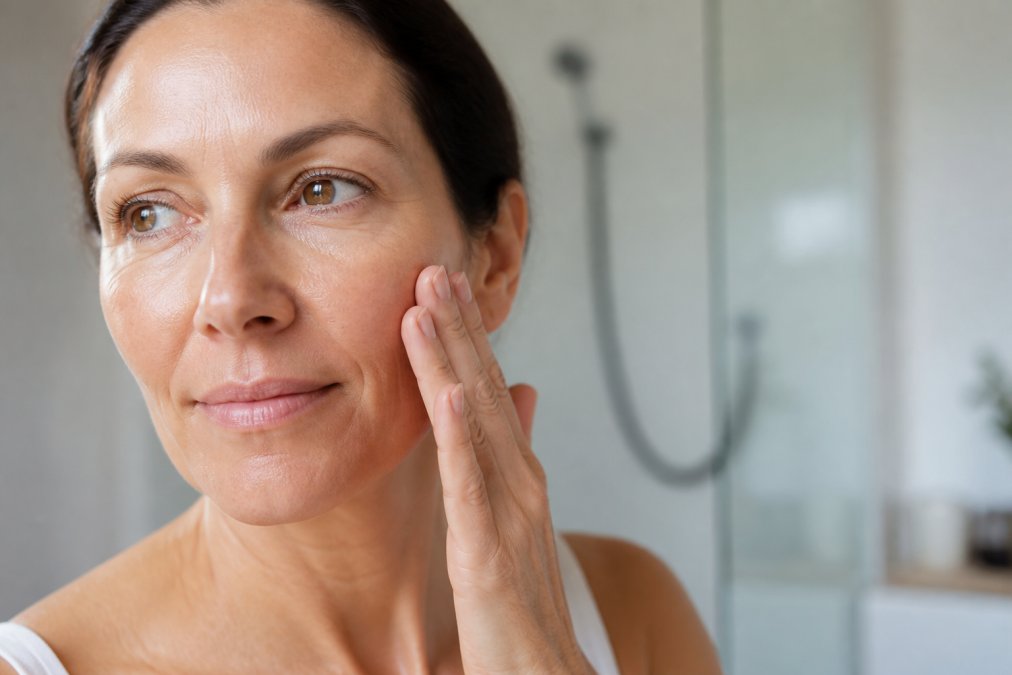
The most immediate benefit is visible in skin firmness and density. When applied topically, GHK-Cu promotes fibroblast proliferation, which directly supports collagen synthesis, translating to improved skin laxity, reduced fine lines, and a visible lift.
Collagen Synthesis and Skin Firmness
Collagen is the primary structural protein in skin, and its production declines steadily with age. GHK-Cu works by modulating gene regulation to stimulate fibroblasts, the cells responsible for building new collagen. Unlike some ingredients that only protect existing collagen, GHK-Cu encourages fresh production, which is what makes it valuable for addressing skin laxity and coarse wrinkles.
Wound Healing and Barrier Repair
Beyond aesthetics, GHK-Cu has documented roles in tissue recovery and skin barrier repair. It supports the natural healing cascade, which is why it is often recommended for post-procedure recovery and for those with compromised barriers. Its anti-inflammatory properties also help calm photodamaged skin and reduce mottled pigmentation over time.
The Science Behind GHK-Cu for Skin Health
Researchers have studied GHK-Cu for decades, particularly its effects on wound healing and cellular regeneration. The molecule is small, which aids transdermal delivery, and it is considered non-toxic at topical concentrations. The mechanism involves reducing matrix metalloproteinases, enzymes that break down collagen, while simultaneously encouraging new matrix production.
What separates GHK-Cu from many trendy ingredients is the depth of research into its signalling pathways. It does not just sit on the skin's surface; it interacts with receptors and influences how skin cells behave. Research summaries available through the National Library of Medicine's peptide research database document its role in modulating inflammation and supporting dermal thickness. This is why the ingredient is often described as a signal peptide rather than simply an antioxidant.
Clinical evidence on copper peptides is promising, though much comes from controlled laboratory settings rather than large consumer trials. What the research consistently shows is that GHK-Cu supports the skin's own renewal processes, making it a solid choice for long-term maintenance rather than a quick fix.
How to Use GHK-Cu Serum in Your Routine
Using GHK-Cu serum is straightforward, but order matters. Apply it to clean, dry skin before heavier moisturisers. The serum should be absorbed fully before layering anything on top. Most formulations, including the Pepcare Lab Face Serum with 1% copper peptides, are designed to be lightweight and fast-absorbing.

A simple routine looks like this:
- Cleanse with a gentle, non-stripping cleanser.
- Apply a few drops of GHK-Cu serum to your face and neck.
- Allow 60 seconds for absorption.
- Follow with a barrier-supporting moisturiser.
- In the morning, finish with SPF 50+ sunscreen.
The 1% concentration is a sensible starting point for most people. Consistency matters more than concentration.
How Long to See Results from Copper Peptides
Copper peptides are a marathon ingredient, not a sprint. Because GHK-Cu works by stimulating your skin's own renewal cycle rather than forcing rapid exfoliation, results accumulate in distinct phases. Understanding this timeline is the difference between abandoning the product at week four and achieving the structural changes you started it for.
The Three-Phase Timeline
Phase 1: Hydration and Texture (Weeks 1-3)
In the first few weeks, the most noticeable changes are often mistaken for simple moisturisation. The peptide's anti-inflammatory action reduces surface redness, and improved barrier cohesion makes skin feel smoother and look more evenly hydrated. This is the calming and barrier-supporting effect that lays the groundwork.
Phase 2: Barrier Resilience (Weeks 4-8)
By the second month, most people report that their skin feels less reactive. If you started with a compromised barrier, this is when the 'tight' feeling after cleansing diminishes and sensitivity to environmental triggers drops noticeably. This phase reflects the upregulation of barrier lipids and the reduction in matrix metalloproteinases.
Phase 3: Structural Change (Weeks 8-16)
Collagen remodelling is a slow biological process. Visible improvements in skin laxity, fine line depth, and overall firmness typically emerge between weeks 8 and 16 of consistent use, when fibroblast stimulation translates into measurable dermal density. Users often notice the change first in photographs, the skin looks 'tighter' in consistent lighting before you consciously see it.
Why Cycling Matters for Long-Term Skin Health
Adjusting Expectations by Skin Type and Age
Results timelines are not uniform. Skin in its late 20s with high baseline collagen production will see faster surface-level changes than skin in its late 50s where the fibroblast population is diminished. Skin damaged by years of unprotected sun exposure will require a longer remodelling phase than skin showing early signs of age-related laxity.
If using GHK-Cu alongside a retinoid on alternating nights, expect the timeline to shift. Retinoids accelerate surface cell turnover, making texture improvements appear faster, but structural changes from GHK-Cu still follow the same 8-16 week biological clock.
A common mistake is judging the ingredient at week four and stopping, the equivalent of abandoning a gym membership after the first month because you cannot see muscle definition. The structural work is happening beneath the surface, but it takes a full remodelling cycle to become visible. Commit to the 12-week active phase before evaluating whether GHK-Cu is right for you.
GHK-Cu for Rosacea and Sensitive Skin
GHK-Cu is generally well tolerated, making it a candidate for rosacea-prone and sensitive skin. The copper peptide has anti-inflammatory properties that may help calm reactive skin, and it supports the barrier function often impaired in rosacea.
That said, sensitive skin requires caution. Start with a patch test and introduce the serum slowly, perhaps every second night for the first week. If you have a known sensitivity to copper or peptides, consult a dermatologist before use. The scientific consensus, reflected in dermatological guidance on peptide use for sensitive skin, is that peptides are gentler than retinoids but still warrant a gradual introduction.
For those with reactive skin, pairing GHK-Cu with a minimal, fragrance-free routine is essential. The Pepcare Lab Barrier Cream, with its blend of niacinamide and squalane, is formulated to complement the serum without adding potential irritants.
GHK-Cu vs Retinol: Which Should You Pick?
The comparison between GHK-Cu and retinol comes down to how each ingredient works and your skin's tolerance. Retinol accelerates cell turnover, delivering faster visible results but often causing irritation, redness, and peeling during adjustment. GHK-Cu works more gradually by supporting collagen production and barrier health without the same irritation profile.
| Ingredient | Primary Action | Typical Timeline | Skin Tolerance |
|---|---|---|---|
| GHK-Cu | Signals collagen and elastin production | 8-12 weeks for firmness | Generally gentle |
| Retinol | Accelerates cell turnover | 4-8 weeks for texture | Often irritating |
For sensitive skin, GHK-Cu is often a good starting point. The two are not mutually exclusive, some alternate them on different nights, using retinol for surface texture and GHK-Cu for structural support. If new to both, start with GHK-Cu to establish a healthy barrier before introducing a retinoid.
The evidence base for retinol is larger and spans decades of clinical use. However, the tolerability profile of GHK-Cu makes it a practical choice for those who cannot use retinoids. As noted in comparative reviews of copper peptides versus retinoids in cosmetic dermatology, both ingredients have meaningful roles, and the choice depends on your skin's condition and your tolerance for irritation.
Synergistic Ingredients and What to Avoid
GHK-Cu does not work in isolation. Its effectiveness depends as much on what you pair it with, and what you keep away from it, as on the peptide itself.
Ingredients That Amplify GHK-Cu
Niacinamide (2-5%) is the most reliable partner for copper peptides. It supports the same barrier-repair pathways, reduces inflammatory signalling, and helps stabilise ceramide production. The combination is particularly effective for rosacea-prone or sensitised skin because both work without forcing cell turnover.
Hyaluronic acid at any molecular weight keeps the stratum corneum pliable, improving peptide penetration into the deeper epidermis. Apply it to damp skin, then follow with GHK-Cu before your moisturiser.
Ceramides and squalane are the finishing layer. They do not interact with the peptide directly but seal in hydration and provide the lipid matrix a remodelling barrier needs. A compromised lipid barrier will slow down every other ingredient you apply.
The pH Problem Most Guides Ignore
GHK-Cu is most stable in a pH range of roughly 4.5 to 6.0. Many active ingredients require a different pH to function, and layering incompatible pH products can destabilise the peptide before it has a chance to work.
High-strength vitamin C (L-ascorbic acid) is the most problematic pairing. Effective vitamin C serums are formulated at a pH below 3.5. At that acidity, the copper in GHK-Cu can oxidise, and the vitamin C degrades faster in the presence of copper ions. Both lose potency, and you may experience stinging or flushing that neither would cause alone.
AHAs (glycolic, lactic, mandelic) and BHAs (salicylic acid) also sit at a low pH. Using them in the same routine as GHK-Cu, even at different times of day, can leave your skin's pH temporarily lowered, reducing the peptide's stability when you apply it hours later.
How to Layer Without Conflict
If you want to use both vitamin C and GHK-Cu, the safest protocol is:
- Vitamin C in the morning on clean, dry skin.
- Wait at least 10 minutes before applying anything else.
- GHK-Cu in the evening on clean skin, followed by moisturiser.
This separation of at least 12 hours minimises direct interaction. If your skin is sensitive, consider alternating days, vitamin C one day, GHK-Cu the next.
For AHA or BHA exfoliation, do not use them on the same evening as GHK-Cu. Exfoliate one night, then allow a full 24 hours before applying the peptide. This gives your skin's pH time to recover and avoids micro-irritation.
Visual Signs Your Routine Is Conflicting
Your skin will tell you when ingredients are working against each other. Watch for these signs during the first two weeks of a new routine:
- Transient flushing or warmth within 10 minutes of application suggests a pH or oxidation reaction, not a true allergy.
- Small, clustered breakouts that appear in areas where you applied both products can indicate that one ingredient is destabilising the other.
- A 'tight' feeling that does not resolve with moisturiser often means the acid layer has disrupted your barrier faster than the peptide can repair it.
- Product pilling or balling on application is a physical sign of formulation incompatibility, often between a silicone-based serum and a water-based peptide.
Physical Exfoliation and Peptides
Physical exfoliants, scrubs, brushes, or gritty cleansers, are best avoided on days you use GHK-Cu. If you enjoy physical exfoliation, do it on a rest day, and wait 24 hours before resuming your peptide routine.
The principle is simple: GHK-Cu is a builder, not a resurfacer. It works best when the skin is calm, hydrated, and free from competing chemical signals. A minimalist routine that respects pH and layering order can be beneficial.
Conclusion: A Realistic Plan for Your Skin Barrier
The benefits of GHK-Cu for skin are real, but they require patience and consistency. This is not a molecule that delivers overnight transformation. It works by supporting your skin's natural renewal cycle, so results accumulate over months rather than days.
A realistic plan involves committing to an 8 to 12 week trial with a simple routine. Use a 1% GHK-Cu serum daily, pair it with a barrier-supporting moisturiser, and protect your skin with SPF every morning. Take progress photos, track how your skin feels, and resist the urge to add more products.
At Pepcare Lab, we built our range around this principle. The Face Serum and Barrier Cream are designed as a two-step system that supports collagen production and barrier repair without the complexity of a 10-step routine. For those addressing early signs of aging, photodamaged skin, or a compromised barrier, this is a science-led starting point.
Frequently Asked Questions
Does GHK-Cu actually help skin?
Yes. Clinical evidence shows GHK-Cu supports collagen synthesis and elastin production, which are structural proteins responsible for skin firmness and elasticity. It also assists wound healing and has anti-inflammatory properties. Studies focus on its role in dermal remodeling, which improves skin density and reduces the appearance of fine lines and coarse wrinkles over time. For visible results, consistent daily application over 8 to 12 weeks is typically recommended.
Should I apply GHK-Cu daily?
Most research and formulation guidance supports daily application. A standard routine uses a 1% copper peptide serum once or twice a day on clean skin. Consistency matters more than applying a larger amount. If you have sensitive skin, start with once daily to let your barrier adjust. You can pair it with a barrier cream containing niacinamide and squalane to support moisture retention while your skin adapts.
How does GHK-Cu differ from other anti-ageing ingredients?
Unlike retinol, which speeds up cell turnover, GHK-Cu works by signalling fibroblasts to produce more collagen and elastin. While vitamin C is an antioxidant that protects against oxidative stress, GHK-Cu focuses on tissue recovery and structural repair. Many people use GHK-Cu as a gentler alternative or alongside other ingredients.
What are the side effects of using copper peptides?
GHK-Cu is considered non-toxic and well tolerated in topical application. Some people with very sensitive skin may experience mild redness or irritation when first starting, particularly if they use a high concentration. Avoid combining GHK-Cu with strong acids like L-ascorbic acid in the same routine, as this can reduce its effectiveness. Patch testing on your jawline is a sensible first step.
Can I rub GHK-Cu on my face?
Yes, topical application is the standard method. Apply a few drops of a GHK-Cu serum to your face and neck after cleansing. Gently press the product into your skin rather than rubbing vigorously. Follow with a moisturiser to seal in hydration. The molecular weight of GHK-Cu allows for transdermal delivery, meaning it can penetrate the upper layers of the skin where it supports barrier repair and collagen production.
How long does it take to see results from GHK-Cu?
Skin barrier improvements such as reduced redness and better hydration often appear within 2 to 4 weeks. Changes to skin density, firmness, and the appearance of fine lines take longer because collagen synthesis is a gradual process. Most clinical studies track results over 8 to 12 weeks. For mottled pigmentation and deeper wrinkles, a 6-month maintenance protocol may be needed to see the full effect.
GHK-Cu is not a quick fix, and that is precisely its strength. A copper peptide routine asks for consistency, but the reward is skin that looks healthier because it is structurally stronger. If you are ready to commit to a simplified, evidence-based approach, the Pepcare Lab Face Duo offers a complete starting routine. Shop our Bestsellers and begin your 12-week skin barrier plan today.