
Table of Contents
- What Are Peptides and Why They Matter for Your Skin
- Step 1: Choose Your Peptide Products and Assess Your Skin Type
- Step 2: Patch Test Before Full Application
- Copper Peptides vs Retinol for Aging: Which Should You Use
- Peptide Layering Guide: How to Combine Serums and Moisturisers
- Can You Mix Peptides with Vitamin C and Other Active Ingredients
- Morning vs Evening Application and Timeline for Results
- Common Mistakes to Avoid When Building Your Peptide Routine
- Frequently Asked Questions
Last Updated: September 2, 2026
What Are Peptides and Why They Matter for Your Skin
A peptide routine is a skincare regimen built around peptide-based products, short chains of amino acids designed to support skin barrier function and promote collagen production. Peptides work by sending signals to skin cells, encouraging them to repair themselves and behave younger.
Your skin's structure depends on collagen and elastin. As you age, your body produces less collagen and existing collagen breaks down. Peptides mimic the signalling molecules your body naturally produces, essentially telling your skin cells to keep building collagen and repairing damage.
What makes peptides different from other anti-aging ingredients is their specificity. Retinol works through irritation and cell turnover (the American Academy of Dermatology). Vitamin C prevents damage through antioxidant action. Peptides work through direct cellular communication, making them gentler on sensitive skin whilst still delivering measurable results.
At Pepcare Lab, we've built our approach around copper peptides (GHK-Cu) because research on their ability to support skin renewal is compelling. Our Face Serum and Barrier Cream both use 1% copper peptides as their foundation, paired with niacinamide and hyaluronic acid to maximise absorption and barrier support.

Most people need 6-8 weeks of consistent use before noticing meaningful changes in skin texture, elasticity, or firmness (peer-reviewed research). Unlike retinol, peptides don't deliver visible peeling within days. Once you're past that threshold, improvements tend to be sustainable, peptides support long-term skin health rather than delivering a temporary boost.
Step 1: Choose Your Peptide Products and Assess Your Skin Type
Building a peptide routine starts with understanding your skin type, which determines which products you need and how aggressively you can layer them.
If you have sensitive skin, peptides are one of your best options. They don't trigger the inflammatory response that retinol or strong vitamin C serums do. Start with a single peptide serum and peptide-based moisturiser, often enough to see real changes without overwhelming your barrier.
For normal to combination skin, you have more flexibility. You can use peptide serums morning and evening, layer them under other actives, and experiment with stacking multiple peptide products.
Oily or acne-prone skin benefits from lightweight peptide serums rather than heavy creams. Look for formulations that include peptides alongside niacinamide, which helps regulate sebum production whilst peptides support barrier repair.
The most practical starting point is the Pepcare Lab Face Duo, which combines our Face Serum (1% copper peptides) with our Barrier Cream (1% copper peptides). At $79 AUD, it's a straightforward entry point covering the essential peptide routine for most people.

One common mistake is buying multiple peptide products from different brands without understanding how they'll interact. If you're using a 1% peptide serum from one brand and a 2% peptide moisturiser from another, consistency at a moderate concentration beats chasing higher percentages.
Step 2: Patch Test Before Full Application
Peptides are gentle, but your skin is individual. A patch test takes five minutes and prevents a week of irritation.
Apply a small amount of your new peptide serum or moisturiser to your inner arm or behind your ear, areas with thin, sensitive skin that will show a reaction quickly. Use about the size of a rice grain and leave it for 24 hours without washing or applying other products. If you see redness, itching, or irritation, you've caught a potential problem before it spreads across your face.
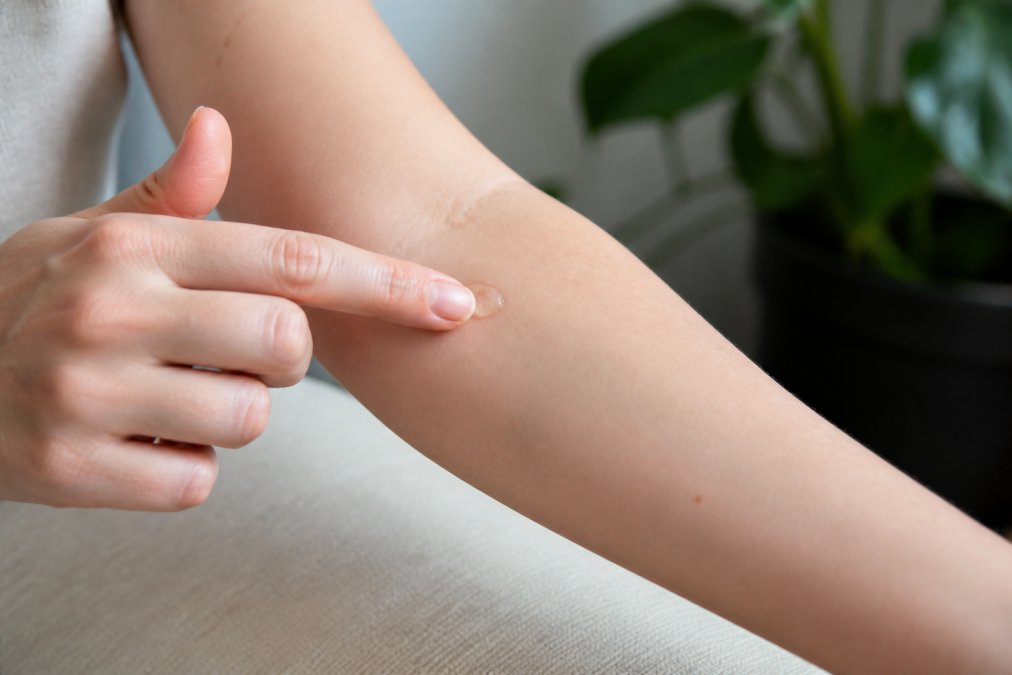
Most people tolerate peptides without issue, but preservatives, fragrance, or other actives in the formulation might trigger sensitivity. The patch test identifies whether it's the peptides themselves or something else in the formula.
If the patch test passes, start with a small amount on your face, about the size of a pea, applied to clean, damp skin. Use the serum three times a week for the first week, then increase to daily use if there's no irritation.
The adjustment period typically lasts 2-3 weeks. Your skin might feel slightly tight or dry as your barrier adjusts. This is normal and usually resolves once your skin acclimates. If irritation persists beyond three weeks, the product isn't right for you, but this is rare with peptide formulations.
Copper Peptides vs Retinol for Aging: Which Should You Use
Retinol drives results through irritation and accelerated cell turnover. You see visible changes within 2-4 weeks, but the process is inflammatory. Your skin gets red, flakes, becomes sensitive to sun exposure, and often gets worse before it gets better.
Peptides work through cellular signalling, supporting your skin's natural repair processes without triggering inflammation. Results take 6-8 weeks, but they're gentler and more sustainable. You're enabling change rather than forcing it.
For sensitive skin, this difference is everything. If retinol makes your skin angry, peptides often work beautifully. For resilient skin, retinol might deliver faster results, but peptides provide better long-term skin health.
The practical answer: they're not mutually exclusive. You can use peptides as your foundation and add retinol later if you want faster results. Start with peptides for 8-12 weeks to establish a strong barrier, then introduce retinol if you choose. Your skin will handle it better because your barrier is already healthy.
Pepcare Lab's approach is to build your routine around peptides first. Our Face Serum and Barrier Cream establish a strong foundation. If you later want to layer in retinol or other actives, you can do so from a position of strength.

Peptide Layering Guide: How to Combine Serums and Moisturisers
Layering is where a peptide routine becomes genuinely effective. The order matters: lightest texture first, heaviest last.
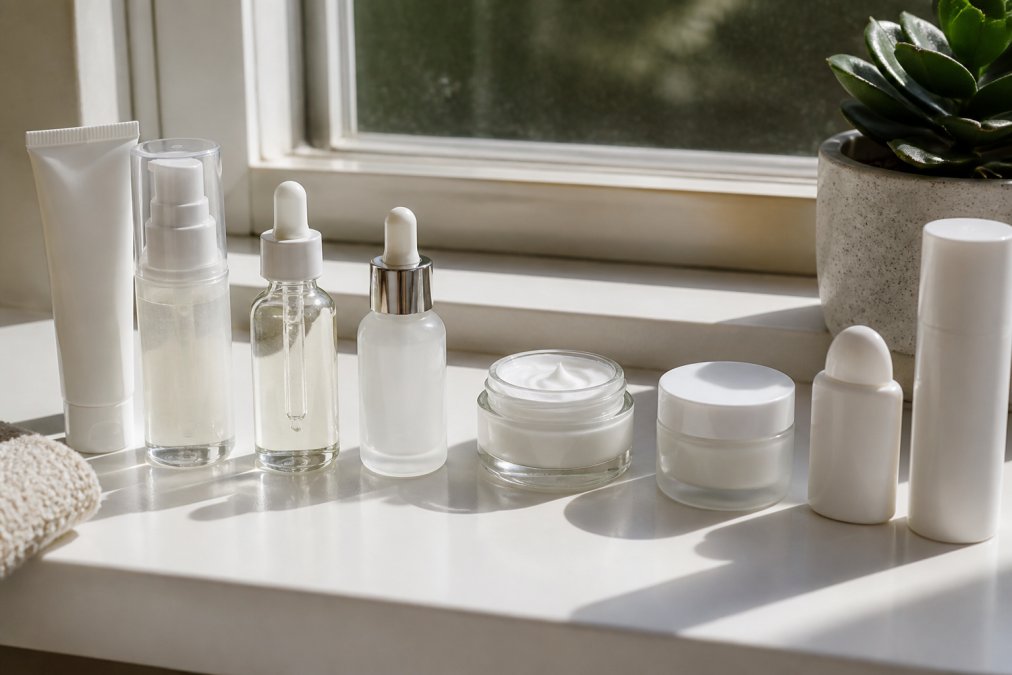
Your basic peptide layering sequence is:
- Cleanser - Remove dirt and oil with lukewarm water.
- Peptide Serum - Apply to damp skin for better absorption.
- Peptide Moisturiser - Lock in hydration and seal the serum underneath.
- SPF (morning only) - Protect against sun damage that breaks down collagen.
A serum is lighter and more concentrated, penetrating better on slightly damp skin before you apply a heavier cream. If you reverse the order, the serum can't penetrate the occlusive layer you've already created.
With the Pepcare Lab Face Duo, this is your complete peptide routine: lightweight serum morning and evening, followed by the Barrier Cream. Nothing else is necessary for most people.
If you want to add vitamin C in the morning or treatment oil at night, vitamin C goes before the peptide serum (water-based, needs to penetrate first). Treatment oils go after the moisturiser (occlusive, seals everything in). The principle remains: lightest to heaviest, water-based before oil-based.
Layering too many peptide products doesn't give better results. A peptide serum and moisturiser are sufficient. Adding a peptide eye cream and treatment mask just wastes product and complicates your routine.
Can You Mix Peptides with Vitamin C and Other Active Ingredients
Peptides play well with most ingredients, but a few combinations need careful handling.
Peptides + Vitamin C: This combination works, but timing matters. Vitamin C needs an acidic environment (pH 2.5-3.5) to penetrate effectively (peer-reviewed research). If you use them together in the same product, the formulation compromises on pH and vitamin C's efficacy drops. Better approach: use vitamin C in the morning, peptides in the evening, or on alternate days.
Peptides + Retinol: These work beautifully together. Introduce retinol slowly, once or twice a week initially, gradually increasing frequency. Peptides support your barrier whilst retinol accelerates cell renewal.
Peptides + Niacinamide: No issues. Niacinamide enhances peptide absorption and supports barrier function. This is why Pepcare Lab includes niacinamide in both our Face Serum and Barrier Cream.
Peptides + Hyaluronic Acid: Perfect pairing. Hyaluronic acid draws moisture into your skin, and peptides work better in a hydrated environment.
Peptides + AHAs or BHAs: Don't use them on the same night. Use exfoliants 2-3 times per week, peptides on other nights. Exfoliants compromise your barrier temporarily; peptides repair it.
Peptides + Azelaic Acid: These work together without conflict.
The general rule: if an ingredient supports barrier function (niacinamide, hyaluronic acid, ceramides), it pairs well with peptides. If an ingredient compromises your barrier temporarily (retinol, exfoliants, vitamin C at low pH), use them on different nights or introduce them gradually.
Morning vs Evening Application and Timeline for Results
Your peptide routine should be consistent, but timing can vary based on your other products and skin's needs.
Morning routine: Peptide serum on damp skin, followed by peptide moisturiser and SPF. This is your foundation. If you use vitamin C or other antioxidants, they go before the peptide serum.
Evening routine: Peptide serum on damp skin, followed by peptide moisturiser. You can be more aggressive at night, if you're using retinol or treatment oils, they layer on top of your peptide moisturiser.
Many people use the same peptide products morning and evening. The Pepcare Lab Face Duo works this way. Consistency matters more than variation.
Timeline for visible results:
Weeks 1-2: Your skin adjusts. You might notice improved hydration and smoother texture.
Weeks 3-4: Skin tone becomes more even. Fine lines appear slightly softer.
Weeks 5-8: Skin elasticity improves noticeably. Your skin feels firmer. Deeper lines start to soften.
Weeks 9-12: Continued improvement in firmness and texture. Results plateau somewhat but are sustained with consistent use.
Beyond 12 weeks: You're in maintenance mode. Your skin barrier is stronger, collagen production is supported, and you're seeing long-term benefits. If you stop using peptides, results gradually fade over 4-6 weeks.
This timeline assumes daily use. Consistency is non-negotiable for peptide routines.
Common Mistakes to Avoid When Building Your Peptide Routine
Most people sabotage their own results by making one of these predictable errors.
Mistake 1: Using too much product. A pea-sized amount of serum is sufficient for your entire face. More product doesn't mean better results.
Mistake 2: Expecting overnight results. Peptides work gradually. Commit to 8 weeks minimum before deciding whether a peptide routine is right for you.
Mistake 3: Layering peptides from multiple brands without understanding concentrations. Stick with one brand's system or understand exactly what concentration you're using.
Mistake 4: Introducing too many new products at once. Introduce one new product, use it for 2-3 weeks, then add the next. This way you'll know which product is causing any irritation or delivering results.
Mistake 5: Not addressing sun protection. Peptides support collagen production, but UV exposure breaks collagen down faster than peptides can rebuild it. SPF is non-negotiable.
Mistake 6: Skipping the patch test. Five minutes of patch testing prevents a week of irritation.
Mistake 7: Switching products too frequently. Peptides need consistency to work. Give your routine at least 8 weeks before deciding it's not working.
Mistake 8: Using peptides without a moisturiser. Peptides are more effective in a hydrated environment. A serum alone isn't enough; you need a moisturiser to lock in hydration and support barrier function.
Building a peptide routine doesn't require complexity or expensive multi-step systems. Start with a peptide serum and moisturiser, use them consistently for 8 weeks, and you'll likely see measurable improvements in skin texture, elasticity, and overall appearance. The Pepcare Lab Face Duo ($79 AUD) gives you exactly this foundation, both products powered by 1% copper peptides, designed specifically for sensitive skin, with transparent formulations that support your skin barrier rather than compromising it. If you're ready to commit to a routine that prioritises long-term skin health over quick fixes, shop our bestsellers and experience the difference consistency makes.
Frequently Asked Questions
How long does it take to see results from a peptide routine?
Most people notice improvements in skin hydration and texture within 4-6 weeks of consistent use. Collagen production and skin elasticity changes take longer, typically 8-12 weeks. Results depend on your skin type, the peptide concentration, and how regularly you apply the products. Patience and consistency matter more than expecting overnight transformation.
Can I use peptides with retinol and vitamin C?
Yes, peptides work well alongside retinol and vitamin C, but timing and formulation matter. Apply peptide serums first on clean skin, then layer vitamin C if desired. Retinol is best used at night. Start slowly if combining multiple actives, introduce one new ingredient every 2-3 weeks to avoid irritation, especially if you have sensitive skin.
How do I layer peptides in my routine?
Apply peptides to clean, dry skin as your first step. Use a lightweight peptide serum, then follow with a peptide-enriched moisturiser. If layering with other actives, apply peptides before heavier products. This order maximises peptide absorption and allows each product to work without interference. Always patch test new combinations first.
Should I use peptides in the morning or at night?
Peptides work well in both morning and evening routines. Morning application supports hydration and skin barrier function throughout the day. Evening use supports overnight cellular repair and collagen production. Many people use peptides twice daily for best results. If you're new to peptides, start with once-daily application at night, then add morning use after two weeks.
This article was written using GrandRanker