
Table of Contents
- Why Storage Matters for Copper Peptide Skincare
- Should Copper Peptide Serum Be Refrigerated
- How to Protect Skincare from Heat and Light
- Room Temperature Storage for Daily Use
- Copper Peptide Serum Shelf Life After Opening
- Recognising Changes: Copper Peptide Serum Colour Change and When to Discard
- Storage for Travel and Portable Use
- Frequently Asked Questions
Last Updated: October 13, 2026
Why Storage Matters for Copper Peptide Skincare
When you store copper peptide skincare, you're protecting sensitive ingredients that degrade when exposed to heat, light, and air. They degrade when exposed to heat, light, and air. Proper storage keeps them stable and effective for months longer than careless handling.
At Pepcare Lab, we formulate our copper peptide products with stability in mind. But even the best formula loses potency if stored incorrectly. Temperature swings, direct sunlight, and humidity cause the active compounds to break down. This affects how well the product works on your skin.

Think of storage as part of your skincare routine. It's as important as application. A serum stored poorly loses effectiveness even if you use it correctly every day.
The key factors that damage copper peptides are:
- Heat above 25°C
- Direct sunlight and UV exposure
- Humidity fluctuations
- Repeated opening and closing of containers
- Air exposure over time
Each of these accelerates degradation. When you store copper peptide skincare properly, you extend its active life. Your investment works harder for longer.
Should Copper Peptide Serum Be Refrigerated
Refrigeration is optional for most copper peptide serums. Room temperature storage works fine if your bathroom stays cool and dry. But refrigeration offers real benefits if your climate is warm or humid.
Refrigeration slows chemical breakdown. Cooler temperatures reduce the rate at which peptides degrade. This extends shelf life by weeks or months compared to room temperature storage.
When refrigeration makes sense:
- You live in a warm climate (above 25°C regularly)
- Your bathroom gets hot and steamy from showers
- You want maximum longevity from an opened bottle
- You prefer cooler products on your skin (many find this soothing)
When room temperature is fine:
- Your home stays consistently cool (under 22°C)
- Your bathroom has good ventilation
- You use the product quickly (within 2-3 months of opening)
- You prefer the texture of room-temperature serum
Check your product label first. Pepcare Lab's Face Serum and other formulations perform well at room temperature in cool conditions. If your label says "store at room temperature," that's the baseline. Refrigeration is a bonus, not a requirement.

Once opened, use it within 2-3 months for best results, whether stored in the fridge or not.
How to Protect Skincare from Heat and Light
Light and heat are the main enemies of copper peptides. UV rays break down the molecular structure. Heat accelerates this process.
Store your serum in a dark place. A closed bathroom cabinet works well. Avoid windowsills, bathroom shelves near windows, and anywhere sunlight reaches during the day. Even indirect light adds up over weeks.
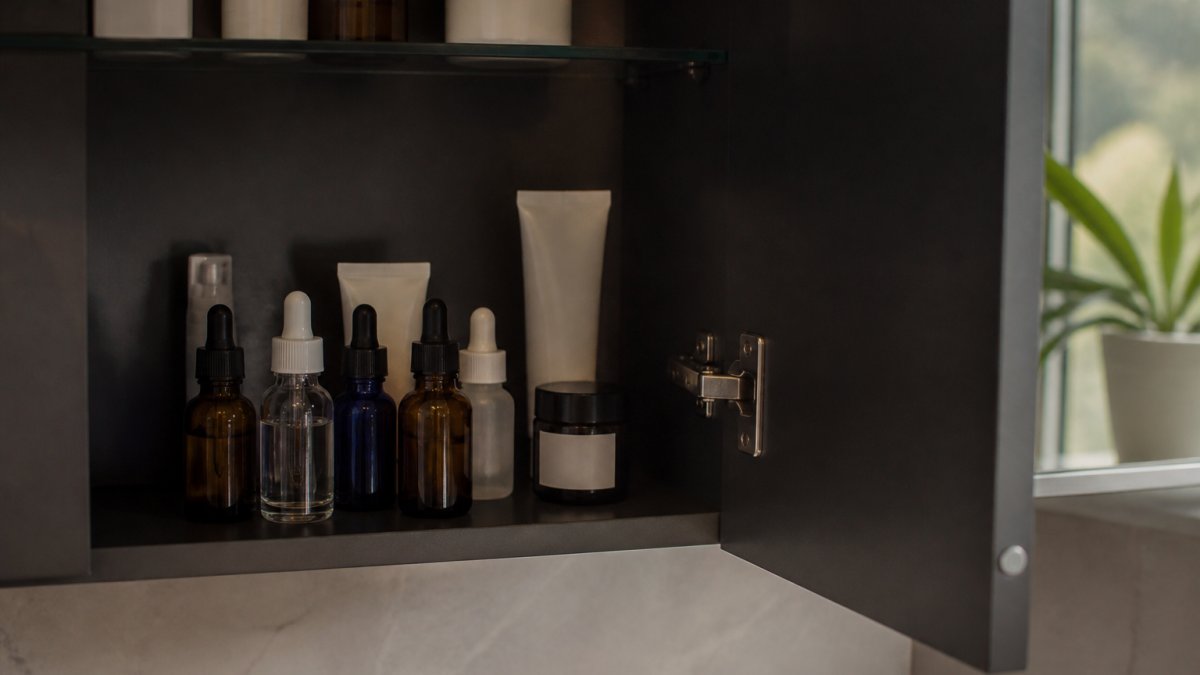
Temperature control is equally critical. Keep your serum away from:
- Heaters and radiators
- Direct sunlight
- Hot water pipes
- Steamy shower areas (store it away from the shower, not on a shelf above the bathtub)
- Windowsills facing south or west
The ideal storage spot is a cool, dark corner of a bathroom cabinet or a bedroom drawer. Consistent temperature matters more than cold temperature. A cool room at 18-22°C is better than a warm room that fluctuates between 20°C and 28°C.
If your bathroom gets very steamy, consider moving your serum to a bedroom or hallway. Humidity causes water to seep into the bottle. This dilutes the formula and speeds up degradation.
For travel, use an insulated pouch or a small cooler bag. This protects the serum from temperature swings and light exposure during transit.
Room Temperature Storage for Daily Use
Room temperature storage is practical and safe if conditions are right. "Room temperature" means 15-25°C. Most Australian homes stay in this range.
The Pepcare Lab Face Serum and Barrier Cream are formulated to work at room temperature. You don't need a fridge to get results. What matters is consistency.
Keep your serum in the same cool spot every day. Avoid moving it between rooms or placing it in different locations. Temperature swings damage peptides more than steady warmth does.
A bathroom cabinet is ideal. It's dark, relatively cool, and convenient. Close the door after each use. This limits air exposure and keeps the serum away from humidity spikes caused by showers.
If your bathroom is very warm (above 25°C in summer), move the serum to a cooler room. A bedroom drawer or hallway shelf works well. You can still apply it from there each morning and evening.
Opened bottles last 2-3 months at room temperature. Write the opening date on the label with a permanent marker. This helps you track when to replace it.
Copper Peptide Serum Shelf Life After Opening
There is no single shelf life that applies to every copper peptide serum. Stability depends on the specific formula, the preservative system, the packaging, and how the product is handled once opened. Any article that gives you one fixed number of weeks or months is generalising.
Three different dates matter, and they are not the same thing:
- Expiry date (use-by): the date printed on the box or bottle. After this date, the manufacturer no longer guarantees the product's stability or performance.
- Period-after-opening (PAO): the small open-jar symbol on the label with a number and the letter M inside it, such as 6M or 12M. This is the number of months the product is considered stable after you first open it, assuming it is stored as directed.
- Real-world usable life: how long the product actually stays in good condition in your home, which can be shorter than the PAO if you store it badly.
The label takes priority over anything a general guide tells you. If the label says 12M and you keep the bottle cool, dark, and tightly sealed, the product is designed to last that long after opening. If the label says 3M, treat three months as your working deadline regardless of how it looks.
Several factors shorten real-world usable life below the printed PAO:
- Warm storage, especially above 25°C
- Repeated opening and closing, which draws in air and humidity
- Exposure to light, including indirect daylight
- Contamination from fingers, a dirty dropper, or a dropper touching the face
- Condensation inside the bottle from moving it between the fridge and a warm room
You can protect the full PAO by:
- Keeping the cap tightly sealed between uses
- Using a clean applicator and never touching the dropper to your skin
- Storing in a cool, dark place, or refrigerating if your home runs warm
- Keeping the bottle away from the shower and its steam
- Writing the opening date on the label so you can track the PAO
Unopened products are a different calculation. As long as the bottle is sealed and stored away from heat and light, an unopened copper peptide serum should remain stable until its printed expiry date. Check that date when you buy, and avoid stockpiling more than you can realistically use before it passes.
Recognising Changes: Copper Peptide Serum Colour Change and When to Discard
Copper peptide serums are usually clear or slightly golden. If the colour changes, the formula may have degraded.
Watch for these signs of damage:
- Darkening (from clear to amber or brown)
- Cloudiness or haziness
- Separation (liquid pooling at the bottom)
- Visible particles or sediment
- Unpleasant smell (sour, musty, or chemical odour)
- Thickening or change in texture
Any of these means the serum has oxidised or been contaminated. Discard it. Using a degraded serum won't work as intended.
Light colour change is normal. Copper peptides can develop a slight golden tint over time. This doesn't always mean the product is ruined. But if the colour darkens significantly or the serum becomes cloudy, it's time to replace it.
A slight smell change is normal as the formula ages. But a strong, unpleasant odour is a red flag.
If you're unsure, err on the side of caution. It's not worth risking your skin barrier with a questionable product.
Storage for Travel and Portable Use
Everyday life is where most copper peptide serums are damaged, not long-haul flights. Heat, sunlight, shower steam, and a hot car do more harm than a single trip. The same principles that protect your serum at home apply when you are out, but the risks change.
In the bathroom. A steamy bathroom is one of the worst places for an opened water-based serum. Shower steam raises humidity, and humidity inside the bottle can dilute the formula and speed degradation.
In the car. A parked car in the sun can reach well above 40°C inside, and a closed car on a hot day can exceed 60°C. That is far beyond any temperature a copper peptide serum is designed to tolerate.
In sunlight. Direct sun is the fastest way to degrade a copper peptide. UV exposure breaks down the peptide structure, and heat accelerates the process. Keep the bottle out of direct light at all times, including on a windowsill, a balcony table, or a car dashboard.
For short trips (1-2 weeks). Decanting into a small travel bottle is convenient but introduces two risks: contamination and extra air exposure. If you decant, use a clean, dry container, fill it from the main bottle without touching the dropper to anything, and seal it tightly. A 10-15 mL bottle is plenty for a fortnight.
For longer trips (3+ weeks). A small sealed backup bottle is usually safer than decanting, because it avoids repeated opening and the contamination risk of transferring product.
In a hotel or unfamiliar room. Hotel bathrooms are often small and steamy. Use the room's mini-bar fridge if one is available, or ask reception for a small fridge. Otherwise, store the serum in a closed drawer in the main room, away from the window and any heat source.
An insulated pouch helps, but only partly. A small insulated bag or cool bag slows temperature swings during transit, but it does not keep a product cold for hours. Treat it as short-term protection, not a portable fridge.
Frequently Asked Questions
Should I refrigerate copper peptide serum products?
Check your product's label first, manufacturer instructions take priority. Most finished copper peptide formulations remain stable at room temperature (15-25°C) in a cool, dark place. Refrigeration (2-8°C) can extend shelf life and may reduce degradation, particularly for opened products, but is not always necessary for unopened bottles stored correctly. If you choose to refrigerate, allow the serum to warm slightly before application to avoid skin irritation from temperature shock.
How long does copper peptide serum last after opening?
Opened copper peptide products typically remain effective for 3-6 months when stored properly in cool conditions away from light and heat. Once opened, the product is exposed to air and potential contamination, which accelerates degradation. Always check your product's expiration date and discard if you notice colour changes, unusual odour, or texture separation.
How can I tell if my copper peptide serum has degraded?
Copper peptide serums may develop a slight yellow or brownish tint over time due to photolytic degradation and oxidation, this indicates the product is breaking down. Watch for separation of ingredients, thickening, thinning, or an off odour. If colour changes noticeably or the serum develops a strong smell, discard it. Degraded formulations are less effective. Store-bought serums should maintain their original appearance and consistency when stored correctly.
What's the best way to store copper peptide products when travelling?
Keep your copper peptide serum and barrier cream in a cool, dark bag away from direct sunlight and heat sources. Use opaque pouches or store them in a bathroom bag rather than on a sunny windowsill. If travelling to a warm climate, consider a small insulated pouch with a cool pack. Limit exposure time outside refrigeration and avoid leaving products in hot cars or luggage. Shorter trips (under two weeks) require less intensive protection; longer travel may benefit from cool storage if available.