
Table of Contents
- What Copper Peptides Are and How They Work on Hair Follicles
- GHK-Cu Hair Growth Evidence: What Laboratory and Human Studies Show
- Hair Follicle Changes: Follicle Size, Density, and Hair Shaft Thickness
- Copper Peptides Hair Side Effects: Safety by Route of Administration
- How to Use Copper Peptides on the Scalp: Dose, Duration, and Formulation Factors
- Copper Peptides vs Minoxidil for Hair: Efficacy and Treatment Sequencing
- What Happens After You Stop: Longitudinal Outcomes and Hair-Growth Cycle Recovery
- Frequently Asked Questions
Last Updated: October 17, 2026
What Copper Peptides Are and How They Work on Hair Follicles
Copper peptides are short amino acid chains bonded to copper that act as signalling molecules communicating with cells in copper peptides hair follicles, potentially influencing whether hair remains in active growth or enters a resting phase.
Copper is essential for enzymatic processes including collagen cross-linking and angiogenesis; bound to peptides, it becomes more bioavailable to follicle cells, potentially supporting a healthier scalp microenvironment.
Copper peptides may help extend anagen and reduce follicular miniaturization, a hallmark of androgenetic alopecia.
GHK-Cu and AHK-Cu: The Two Main Forms
GHK-Cu (glycine-histidine-lysine copper complex) is the most studied copper peptide for hair and skin. Investigated for decades, it appears to stimulate collagen synthesis and may enhance wound healing, processes relevant to follicle recovery after damage or stress.
AHK-Cu (copper-binding tripeptide) is a related formulation with suggested similar benefits, though direct comparative studies in hair follicles remain limited.
Neither has demonstrated clear superiority in human hair studies, so selection typically comes down to product quality, concentration, and scalp sensitivity.
Proposed Mechanisms in Follicle Environment
Copper peptides are thought to work through several interconnected pathways. First, they may reduce oxidative stress within the follicle by supporting copper-dependent antioxidant enzymes, theoretically supporting longer anagen duration.
Second, they may stimulate angiogenesis around the follicle, improving nutrient and oxygen delivery to the dermal papilla.
Third, they appear to influence growth factor signalling, particularly TGF-β and FGF pathways, potentially shifting the follicle toward prolonged growth and away from premature shedding.
GHK-Cu Hair Growth Evidence: What Laboratory and Human Studies Show
The research base includes promising laboratory findings alongside limited human data.
In-Vitro and Preclinical Research
Laboratory studies show GHK-Cu stimulates collagen production in dermal fibroblasts, promotes angiogenesis in tissue cultures, and reduces oxidative stress and inflammatory signalling in cultured cells.
However, in-vitro findings do not automatically translate to living scalps: cell cultures lack the whole follicle ecosystem, immune landscape, and individual hormonal and genetic context.
Preclinical animal studies are sparse; a few rodent studies suggest topical or injected GHK-Cu may increase hair density or delay shedding, but use non-standard protocols, small samples, and endpoints that do not measure human hair outcomes.
Human Clinical Trial Findings and Study Limitations
Human clinical trials specifically testing copper peptides for hair loss are remarkably limited, and most published data comes from small, short-term studies.
A few studies report modest increases in hair density or reduced shedding after several months of topical application, but typically enrolled fewer than 50 participants, lacked strong controls, and ran only 12 weeks to 6 months.
The major limitation is the absence of long-term follow-up: we do not know whether changes persist after discontinuing, whether tolerance develops, or whether benefits plateau. Studies also rarely stratify by hair-loss type.
Hair Follicle Changes: Follicle Size, Density, and Hair Shaft Thickness
The most clinically relevant question is whether copper peptides actually reverse follicular miniaturisation, the progressive follicle shrinking that characterises androgenetic alopecia.
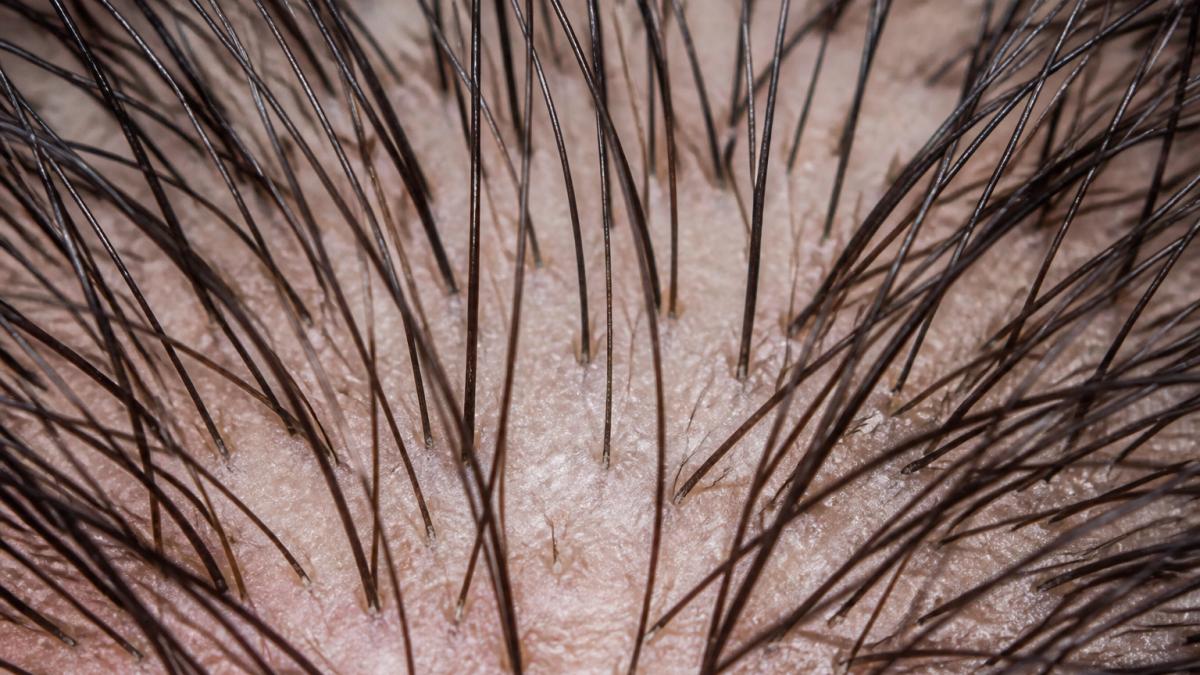
Follicular Miniaturisation and Reversal
Follicular miniaturisation occurs when follicles gradually produce thinner, shorter hairs: the follicle shrinks, shaft diameter decreases, and anagen shortens.
Copper peptides hair follicles may theoretically reverse miniaturisation by restoring growth factor signalling and improving the microenvironment; in laboratory settings, GHK-Cu stimulates dermal fibroblasts and promotes tissue remodeling.
However, human evidence for actual reversal is limited: most studies measure hair density or self-reported shedding, not follicle size, which requires specialised imaging.
Measuring Changes in Hair Density and Shedding
Hair density is typically measured by counting hairs in a defined scalp area using phototrichography or manual counting; shedding is assessed through hair-pull tests or counting shed hairs over a set period.
Studies reporting copper peptide effects have observed modest improvements. These changes are statistically detectable but clinically modest, and may reflect normal variation or placebo effects without rigorous blinding.
A critical issue is that increased density or reduced shedding does not necessarily mean new hair growth; it may reflect delayed shedding, with hairs staying in anagen slightly longer, rather than activation of dormant follicles.
Copper Peptides Hair Side Effects: Safety by Route of Administration
Safety varies significantly depending on whether copper peptides are applied topically or injected.
Topical Application and Scalp Irritation
Topical copper peptide products are generally well-tolerated, with irritation rates comparable to other active skincare ingredients.
However, "well-tolerated" does not mean risk-free: formulations vary in concentration, pH, and excipients, and higher concentrations or incompatible carriers may trigger more significant irritation, especially in sensitive skin or compromised scalp barriers.
The long-term irritation profile remains under-characterised: most safety data comes from 12-week to 6-month studies, with little on irritation, sensitisation, or barrier disruption after 1-2 years of continuous use.
Systemic Exposure and Copper Balance
Systemic copper exposure is the key safety concern for injected copper peptides or high-concentration topical formulations that penetrate deeply into the dermis.
Topical application generally poses minimal systemic risk because the stratum corneum limits dermal penetration.
Injected copper peptides carry higher systemic exposure risk. Direct injection into or around the scalp introduces copper peptides into the bloodstream, bypassing the skin barrier.
For topical use at standard concentrations, systemic copper accumulation is unlikely to be clinically significant.
How to Use Copper Peptides on the Scalp: Dose, Duration, and Formulation Factors
Practical guidance on using copper peptides is complicated by the lack of standardised dosing protocols and the wide variation in commercial products.
Concentration, Absorption, and Product Variability
Most topical copper peptide products contain 1-3% GHK-Cu or AHK-Cu by weight.
Absorption of topical copper peptides is limited by molecular size and the skin barrier.
Product variability is substantial. Copper peptide concentration, purity, and stability vary across brands. Some products may contain minimal active copper peptide or may degrade during storage.
The Pepcare Lab Hair/Scalp Serum contains 2% Copper Peptides formulated with peptides, niacinamide, biotin, and botanical extracts to support scalp hydration and follicle environment.

Application Frequency and Long-Term Use Patterns
Most studies and commercial products recommend daily topical application, typically 1-2 applications per day.
Long-term use patterns, what happens after 6, 12, or 24 months of continuous application, are poorly characterised. Do benefits plateau? Does tolerance develop? Does discontinuation reverse changes? These questions remain unanswered.
Anecdotal reports suggest some individuals experience sustained benefits with continuous use, whilst others notice diminishing returns after 3-6 months. Without controlled long-term trials, we cannot distinguish between true tolerance, natural hair-cycle variation, or placebo effects.
Copper Peptides vs Minoxidil for Hair: Efficacy and Treatment Sequencing
Minoxidil (Rogaine) is an established, evidence-supported treatment for androgenetic alopecia. Comparing copper peptides to minoxidil reveals important differences in evidence strength and practical considerations.
Mechanism Differences and Evidence Comparison
Minoxidil is a potassium channel opener that increases blood flow to the follicle and extends the anagen phase.
Copper peptides operate through different pathways, growth factor signalling, collagen synthesis, and oxidative stress reduction. Whilst these mechanisms are plausible, the clinical evidence for efficacy is substantially weaker than for minoxidil.
In direct comparison, minoxidil has a higher evidence bar. If you have not tried minoxidil and are seeking treatment for androgenetic alopecia, minoxidil remains the more evidence-supported first-line option.
When to Use Each and Combination Approaches
Copper peptides may be considered in several scenarios:
First, as an adjunct to minoxidil. Some individuals use minoxidil for its established efficacy and add copper peptides to support scalp health and potentially enhance outcomes. This combination approach lacks formal study but is biologically plausible, minoxidil extends anagen, whilst copper peptides may improve the follicle microenvironment.
Second, for individuals who cannot tolerate minoxidil. Minoxidil can cause scalp irritation, dryness, or systemic side effects (palpitations, chest pain) in some users.
Third, for scalp health and maintenance. Even without active hair loss, copper peptides may support long-term scalp health and follicle resilience. This preventative use is speculative but aligns with the compounds' proposed mechanisms.
A practical approach: if you are treating androgenetic alopecia, start with minoxidil or finasteride (Propecia), which have strong evidence.
What Happens After You Stop: Longitudinal Outcomes and Hair-Growth Cycle Recovery
This is perhaps the most important unanswered question: what happens when you stop using copper peptides?
This pattern mirrors minoxidil withdrawal: users typically see shedding resume and density decline within 2-4 weeks of stopping.
The absence of longitudinal data creates a practical dilemma: are the benefits worth the commitment to indefinite use?
Copper peptides represent a plausible but incompletely proven approach to supporting hair follicle health.
The Pepcare Lab Hair/Scalp Serum delivers 2% Copper Peptides alongside supporting peptides, niacinamide, and biotin to nourish the scalp and create an optimal environment for healthier-looking hair. Paired with consistent use and realistic expectations about timelines and outcomes, it offers a science-led foundation for long-term scalp health. Shop our Bestsellers
| Aspect | Copper Peptides | Minoxidil |
|---|---|---|
| Evidence Strength | Limited human trials | Strong, decades of research |
| Typical Efficacy | 10-20% density increase | 40-60% see measurable benefit |
| Timeline to Results | 3-6 months | 4-6 months |
| Mechanism | Growth factors, oxidative stress | Potassium channel opening, blood flow |
| Scalp Irritation Risk | Low (topical) | Moderate (dryness, irritation common) |
| Systemic Risk | Minimal (topical) | Low (palpitations rare) |
| Cost (AUD) | $59 per month (Pepcare Lab) | $30-50 per month |
| Reversibility | Likely after stopping | Yes, effects reverse in weeks |
| Best Use Case | Adjunct, scalp health, sensitive skin | First-line androgenetic alopecia |
| Question | Answer |
|---|---|
| Do copper peptides work? | Plausible mechanisms, but limited human evidence. Laboratory studies promising; clinical trials small and short. |
| How long until I see results? | 3-6 months of consistent daily use. Modest changes in hair density or shedding are typical. |
| Are copper peptides safe long-term? | Topical use appears safe at standard concentrations. Long-term systemic safety data is lacking. |
| Can I use copper peptides with minoxidil? | Yes. Combination use is biologically plausible and may enhance outcomes, though not formally studied. |
| What happens when I stop? | Benefits likely reverse within weeks to months as follicles return to baseline. Copper peptides are maintenance, not cure. |
| How do copper peptides compare to minoxidil? | Minoxidil has stronger evidence and larger efficacy. Copper peptides are gentler but less proven. |
EXTERNAL SOURCES:
Research on copper peptides and hair follicles remains emerging. According to the National Institutes of Health PubMed database, GHK-Cu studies in dermatology span several decades, though hair-specific human trials are limited. The Cochrane Library systematic reviews on hair loss treatments consistently notes that evidence for emerging peptide therapies remains preliminary compared to minoxidil and finasteride. For scalp health and follicle biology, the International Society of Hair Restoration Surgery clinical guidelines recommend evidence-based approaches and caution against overstating emerging ingredient efficacy.
Frequently Asked Questions
What do copper peptides do to hair follicles?
Copper peptides, particularly GHK-Cu, are proposed to influence the follicle environment by supporting collagen synthesis, reducing oxidative stress, and promoting angiogenesis (blood vessel formation) around hair follicles. Laboratory studies suggest they may help enlarge shrunken follicles and extend the anagen (growth) phase of the hair-growth cycle. However, most evidence comes from in-vitro studies, and human clinical data on lasting follicle changes remains limited.
Are copper peptides safe for sensitive scalps?
Topical copper peptides are generally well-tolerated, with most users reporting minimal irritation when applied to the scalp. However, individual sensitivity varies. Some people experience mild dryness or temporary tingling. If you have a history of scalp reactions, start with lower concentrations and patch-test first. The Pepcare Lab Hair/Scalp Serum is formulated with sensitive skin in mind, combining 2% copper peptides with soothing botanical extracts and niacinamide to minimise irritation while supporting scalp health.
How long does it take to see results from copper peptides for hair?
Most human studies tracking hair density changes require 3 to 6 months of consistent use before measurable improvements appear. Hair-growth cycles move slowly; follicles spend months in the anagen phase before shedding and regrowing. Realistic expectations are modest gains in hair density and shaft thickness rather than dramatic regrowth. Discontinuing use may reverse some benefits, so long-term consistency matters more than short-term intensity.
Can copper peptides be used with minoxidil?
There is no established contraindication between topical copper peptides and minoxidil. Some evidence suggests they work via different mechanisms, so combining them may offer complementary benefits. However, human studies on combination therapy are scarce. If you are currently using minoxidil and considering adding copper peptides, introduce them gradually and monitor your scalp for unexpected irritation. Consult a healthcare provider if you have concerns about interactions or systemic copper exposure.