
Last Updated: October 24, 2026
Quick Summary
Can GHK-Cu reverse androgenetic alopecia symptoms? Not on current evidence. No published human study has shown GHK-Cu alone reverses established androgenetic alopecia; the one frequently cited trial used a combination formula without a placebo arm. GHK-Cu may support scalp health and slow progression, but minoxidil and finasteride remain the treatments with the strongest human evidence.
- The ALAVAX study, the most cited trial, used a combination formula with GHK-Cu plus other peptides and botanicals, not GHK-Cu alone, making it impossible to isolate the peptide's effect.
- Direct human hair-growth studies using GHK-Cu alone are absent from published literature; most research focuses on skin health and comes from animal studies.
- Minoxidil and finasteride have large randomised controlled trials supporting their use, while GHK-Cu has no comparable human evidence for reversing androgenetic alopecia.
- Most hair-growth treatments require 3-6 months of consistent use before visible change, with realistic timelines of weeks 1-4 showing no change and months 3-6 showing potential improvements.
- Many GHK-Cu scalp products are sold as cosmetics without Therapeutic Goods Administration listing in Australia, meaning hair-loss claims are unproven and unregulated.
Table of Contents
- What GHK-Cu Is and How It Affects Hair Follicles
- GHK-Cu Hair Growth Evidence: What the Research Shows
- Androgenetic Alopecia Treatment Options: Where GHK-Cu Fits
- How Long Does Hair Regrowth Take with GHK-Cu?
- Formulation, Safety, and Regulatory Considerations
- Starting Your GHK-Cu Scalp Care Routine
- Frequently Asked Questions
What GHK-Cu Is and How It Affects Hair Follicles
GHK-Cu is a copper peptide, a short chain of amino acids bonded with copper, found naturally in human plasma and saliva.
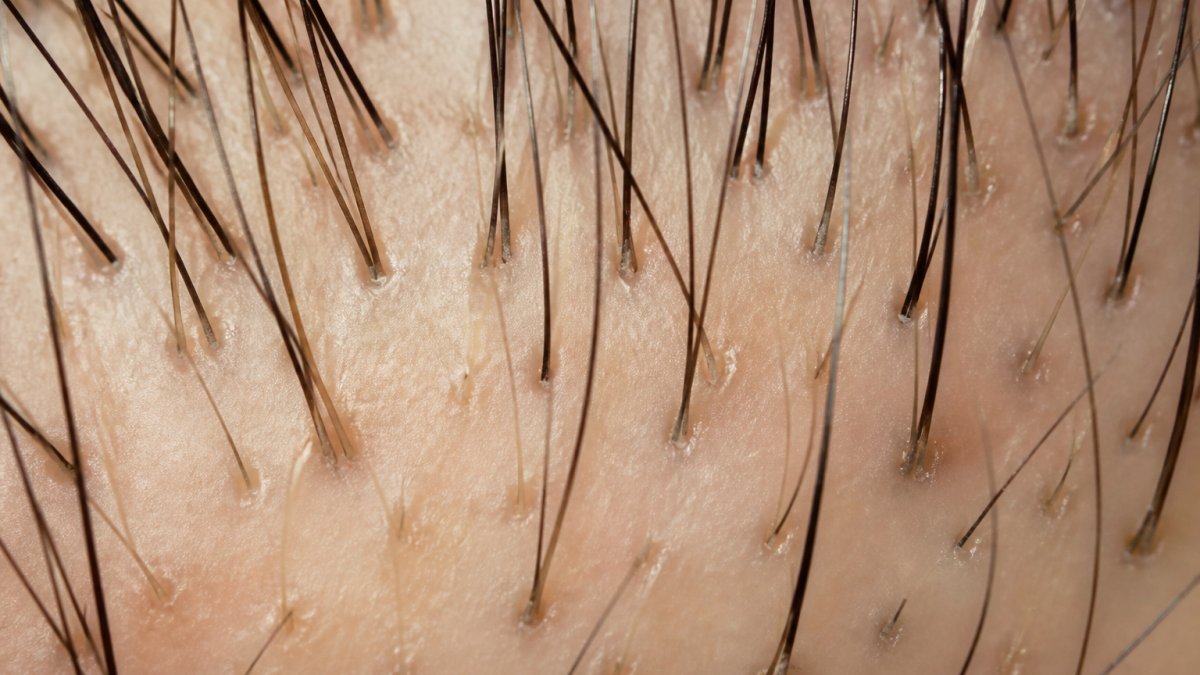
Proposed mechanisms include improved scalp blood flow, support for collagen and elastin around follicles, and influence on the hair follicle cycle.
Follicles cycle through anagen (active growth, 2-7 years), catagen (transition, 2-3 weeks) and telogen (resting, 2-3 months). In androgenetic alopecia, follicles gradually shrink through follicle miniaturization, producing thinner, shorter hairs until they stop producing visible hair altogether.
The theory is that GHK-Cu may slow or reverse miniaturization by supporting follicle health and extending anagen, but theory and evidence differ.
GHK-Cu Hair Growth Evidence: What the Research Shows
Most research focuses on skin health, wound healing and collagen. Direct human hair-growth studies are sparse, small, and often use combination formulations rather than GHK-Cu alone.
A frequently cited ALAVAX study tracked 45 men with hair loss over six months using a topical complex of GHK-Cu plus other peptides and botanicals. Average hair count rose from 52.6 to 71.5 hairs per 10 square centimetres, and density improved by approximately 9.6 hairs per 10 square centimetres.
Context matters: the study was small, used a combination formula rather than GHK-Cu alone, and lacked a true placebo control, making it hard to separate treatment effect from natural variation or the placebo effect.
The ALAVAX Study and Its Limitations
ALAVAX contained GHK-Cu alongside 5-ALA (5-aminolevulinic acid), additional peptides and plant extracts, so it's impossible to know which ingredient drove the results.
It also measured hair count in a small scalp area, hair loss is typically uneven, and didn't track whether improvements persisted beyond six months.
Animal Research Versus Human Studies
Most mechanistic research comes from animal studies, particularly mice, where copper peptides influenced follicle cycling and supported hair growth. But mouse skin and follicle biology differ from human biology in meaningful ways.
Direct hair-growth studies in humans using GHK-Cu alone are absent from the published literature. Claims about GHK-Cu reversing androgenetic alopecia therefore rest on mechanistic theory, small combination-product trials and anecdotal reports rather than strong human evidence.
That doesn't mean GHK-Cu is ineffective, only that the evidence base is thin.
Androgenetic Alopecia Treatment Options: Where GHK-Cu Fits
Can GHK-Cu reverse androgenetic alopecia symptoms? Not on the current evidence. No published human study has shown GHK-Cu alone reverses established androgenetic alopecia, and the one frequently cited trial used a combination formula without a placebo arm.
To answer the question properly, separate three outcomes that are often lumped together:
- Slowing further loss. The easiest outcome to achieve and the hardest to prove without a control group, since progression rates vary. No human trial has tested GHK-Cu alone for this.
- Increasing hair count or density. ALAVAX reported an average rise from 52.6 to 71.5 hairs per 10 square centimetres over six months, a real signal, but from a combination product in 45 men without a placebo arm, so it can't be attributed to GHK-Cu alone.
- Reversing established miniaturisation. The hardest outcome of all. Even minoxidil and finasteride, the two treatments with the strongest human evidence, rarely achieve full reversal and work best in recent, mild loss. No human evidence shows GHK-Cu alone reverses miniaturisation.
How GHK-Cu Compares with Established Treatments
Minoxidil is a topical vasodilator that prolongs anagen and increases follicle blood flow. Finasteride is an oral 5-alpha-reductase inhibitor that lowers scalp DHT, the hormone driving miniaturisation.
GHK-Cu works through a different proposed mechanism, supporting follicle health, collagen and the scalp environment rather than targeting DHT or blood flow. Some practitioners suggest it could complement established treatments, though the combination hasn't been tested in formal trials, so any additive benefit is theoretical.
| Treatment | Strongest human evidence | Mechanism | Typical trial period |
|---|---|---|---|
| Minoxidil | Large randomised controlled trials | Vasodilation, prolonged anagen | 4-6 months |
| Finasteride | Large randomised controlled trials | Lowers scalp DHT | 6-12 months |
| GHK-Cu (alone) | None published | Proposed follicle and scalp support | Unknown |
| GHK-Cu (in ALAVAX combination) | One small, uncontrolled study | Combination, mechanism unclear | 6 months |
A Practical Decision Framework
If your goal is to address androgenetic alopecia, work through these questions in order:
- Has the diagnosis been confirmed? Androgenetic alopecia can look like telogen effluvium, alopecia areata, traction alopecia or thyroid-related hair loss. A dermatologist or general practitioner can confirm the pattern and rule out other causes, sometimes with blood tests or a scalp biopsy.
- How advanced is the loss? Treatments work best before follicles have fully miniaturised. If you have significant bald patches, no topical peptide is likely to restore them.
- Are you using an evidence-based treatment first? Minoxidil and finasteride are the treatments with the strongest human evidence. A peptide is a reasonable adjunct to discuss with your clinician, not a substitute.
- Are you prepared to commit for at least six months? Hair-cycle changes are slow, and stopping and starting resets progress.
You can explore how to combine GHK-Cu with minoxidil for hair growth to understand how peptides might fit alongside proven options, but treat any combination protocol as experimental until better evidence exists.
How Long Does Hair Regrowth Take with GHK-Cu?
If you start a GHK-Cu product, keep timelines realistic. Hair growth is slow, and shrunken follicles take time to recover, if they recover at all.
Most hair-growth treatments need 3-6 months of consistent use before visible change. Some see results in 8-12 weeks; others see nothing for six months, then gradual improvement, variation depends on genetics, severity of loss, age and health.
ALAVAX measured changes over six months, a fair trial period. But it used a combination formula, so GHK-Cu alone may work more slowly or not at all for some people.
For a realistic timeline:
- Weeks 1-4: No visible change (normal for any hair-growth treatment)
- Weeks 5-12: Possible subtle improvements in scalp health or hair texture
- Months 3-6: Potential changes in hair count or density (if the treatment is working)
Learn more about GHK-Cu benefits and realistic expectations for hair thinning.
You can dive deeper into GHK-Cu benefits for hair thinning with realistic timelines for specific expectations tailored to hair thinning.
Formulation, Safety, and Regulatory Considerations
Not all GHK-Cu products are the same, and in Australia the regulatory picture adds a layer most articles ignore.
How Topical Peptides Are Regulated in Australia
In Australia, topical products are either cosmetics or therapeutic goods. The Therapeutic Goods Administration (TGA) regulates therapeutic goods, which must be listed or registered on the Australian Register of Therapeutic Goods (ARTG) before lawful supply.
Many GHK-Cu scalp products are sold as cosmetics, so they aren't evaluated by the TGA for efficacy or safety the way medicines are.
Copper peptides themselves are not scheduled as prescription medicines when used topically in cosmetic concentrations, but injectable GHK-Cu is a different matter.
Formulation and Stability
GHK-Cu can degrade with light, heat and certain pH ranges, and can bind to other ingredients. A poorly formulated product may contain little active peptide by the time it reaches you. Concentration varies widely, from around 0.5% to 2% or more, and a different formula means you aren't replicating what ALAVAX tested.
When assessing a product, look for:
- A full ingredient list with the peptide concentration stated
- Stability or shelf-life information, and packaging that protects from light and air
- A supplier who can explain whether the product is a cosmetic or a listed therapeutic good
Route-Specific Safety
Topical GHK-Cu has years of generally reassuring skincare use, but isn't risk-free. Some users experience irritation, redness or allergic contact dermatitis, particularly at higher concentrations.
Injectable GHK-Cu carries different and more serious risks: infection, contamination, incorrect dosing, and unknown long-term effects.
If you are pregnant, breastfeeding, taking medication, or have a health condition, discuss any peptide product with your doctor or pharmacist before use.
What This Means for You
Quality and regulatory status vary enormously, and the label isn't a reliable guide on its own. Choose suppliers transparent about formulation, concentration and regulatory classification, and be sceptical of any product promising to reverse hair loss without evidence. For demonstrated efficacy, discuss minoxidil or finasteride with a clinician; if you try GHK-Cu, treat it as an unproven adjunct and monitor for irritation.
Starting Your GHK-Cu Scalp Care Routine
If you decide to try GHK-Cu, a structured approach maximises your chances of success.
Step 1: Choose a quality product. Look for products from brands that publish their formulation, concentration, and stability data. At Pepcare Lab, we formulate our Hair/Scalp Serum with 2% Copper Peptides alongside supporting peptides, niacinamide, biotin, and botanical extracts designed to support scalp health and create an environment for stronger, healthier-looking hair.

Step 2: Establish a baseline. Take scalp photos and note hair count or density if possible, then repeat after three months. Objective tracking separates real changes from imagined ones.
Step 3: Apply consistently. Most topical treatments work best with daily use.
Step 4: Be patient. Commit to at least three months of consistent use. Six months is better. Hair growth is slow, and expecting faster results sets you up for disappointment.
Step 5: Monitor and adjust. Keep a simple log of dates, applications and observations.
Step 6: Consider a comprehensive approach. GHK-Cu alone may not be enough.
The bottom line: GHK-Cu is a promising ingredient with a plausible mechanism for supporting hair follicle health.
Frequently Asked Questions
Can GHK-Cu reverse androgenetic alopecia completely?
Current evidence suggests GHK-Cu may support hair density and reduce shedding in early-stage hair loss, but clinical data is limited to one small human trial. It does not reverse established androgenetic alopecia in the way prescription treatments like minoxidil or finasteride do. GHK-Cu appears most effective as part of a comprehensive strategy, potentially combined with established treatments. Realistic expectations are important: it may slow progression and improve scalp health, but complete reversal of advanced hair loss is unlikely based on existing research.
What does the clinical evidence actually show about GHK-Cu for hair growth?
The primary human study (ALAVAX trial) involved 45 men using a topical formulation combining 5-ALA and copper peptides. Results showed hair count increased from 52.6 to 71.5 hairs per cm² over six months, with 9.6 hairs per cm² improvement on average. However, this was a small trial with a combination formulation, not GHK-Cu alone. Animal research on copper peptides shows promise for vascularization and follicle activity, but human evidence remains sparse. Direct hair-growth studies using GHK-Cu as a standalone ingredient are limited, which is why medical supervision and realistic timelines matter.
How long should I use GHK-Cu before expecting to see hair regrowth?
Based on available research, meaningful changes typically appear within 6 months of consistent use, though individual results vary widely. Early improvements may include reduced shedding or scalp health changes within 8-12 weeks. Hair growth cycles operate on a prolonged timeline: the anagen phase (active growth) lasts 2-7 years, so new hair must complete this cycle to be visible. Consistent daily application and patience are essential. If no improvement appears after 6-9 months, consider consulting a healthcare provider to assess whether combination therapy or alternative treatments might be more effective.
Is GHK-Cu safe to use on the scalp?
Topical GHK-Cu is generally well-tolerated in the small human trials conducted, with no serious adverse effects reported. However, regulatory oversight for peptide products in this category remains limited. Quality and formulation vary significantly between brands, and long-term safety data in larger populations is not yet available. If you have sensitive skin or existing scalp conditions, patch-test first. Consult a dermatologist before combining GHK-Cu with other treatments, especially prescription hair-loss medications. Pepcare Lab's Hair/Scalp Serum is formulated with sensitive skin in mind, but individual responses differ.
