
Table of Contents
- What Makes a Peptide Serum Right for Sensitive Skin
- Comparison Table: Peptide Serums for Sensitive Skin
- Copper Peptides vs Retinol for Sensitive Skin
- How to Build a Skincare Routine for Sensitive Skin
- How to Patch Test New Skincare Products
- Key Ingredients to Look for in Peptide Formulas
- How Long Does It Take to See Results
- Conclusion
Last Updated: August 28, 2026
What Makes a Peptide Serum Right for Sensitive Skin
Peptide serums work with your skin barrier rather than against it, making them ideal for reactive skin. Unlike harsher actives that strip and irritate, peptides signal skin cells to strengthen and repair themselves from within, gentler than retinol or vitamin C, yet still delivering measurable results.
When your skin is sensitive, the barrier function is compromised. Transepidermal water loss increases, inflammation rises, and your skin becomes reactive to almost everything. A best peptide serum for sensitive skin delivers amino acid chains that support collagen production and barrier repair without triggering inflammatory cascades. The key is choosing hypoallergenic, fragrance-free, pH-balanced formulations.
At Pepcare Lab, we've designed our peptide formulations specifically for this challenge. Our Face Serum combines 1% Copper Peptides with niacinamide and hyaluronic acid, a trio that hydrates, calms, and strengthens the skin barrier simultaneously. The lightweight formula absorbs quickly with no residue, which matters when your skin is already irritated.

Peptides work through multiple mechanisms: signal peptides tell fibroblasts to produce more collagen, carrier peptides deliver trace minerals that support skin resilience, and neurotransmitter peptides calm inflammation at the cellular level. This multi-mechanism approach supports your skin's natural renewal process rather than forcing dramatic change, making reactions far less likely.
Comparison Table: Peptide Serums for Sensitive Skin
| Product | Key Peptides | Hydration Support | Best For | Price |
|---|---|---|---|---|
| Pepcare Lab Face Serum | 1% Copper Peptides + blend | Hyaluronic acid | Daily barrier support | $49.00 |
| Pepcare Lab Face Duo | 1% Copper Peptides + blend | HA + Barrier Cream | Complete routine | $79.00 |
| Pepcare Lab Complete Collection | 1% + 2% Copper Peptides | HA + targeted serums | Face, scalp, hair | $129.00 |
The Pepcare Lab range is designed as a progression. Start with the Face Serum if you're testing peptides for the first time. Move to the Face Duo once you confirm tolerance and want to lock in hydration with a dedicated barrier cream. The Complete Collection is ideal if you're addressing both skin and scalp concerns.

Copper Peptides vs Retinol for Sensitive Skin
Retinol is powerful, it accelerates cellular turnover and triggers visible results within weeks. It's also notorious for causing irritation, redness, and peeling, especially in those with compromised skin barriers. Copper peptides work differently, supporting your skin's natural renewal process without forcing rapid cellular turnover, which means fewer inflammatory side effects (peer-reviewed research).
Retinol binds to retinoic acid receptors and increases cell turnover rate (peer-reviewed research). This is effective for wrinkles and texture, but destabilises your skin barrier as older cells shed faster. For sensitive skin, this destabilisation can trigger rosacea flares, increased transepidermal water loss, and prolonged irritation. Many people with reactive skin cannot tolerate retinol at all.
Copper peptides, specifically GHK-Cu, signal fibroblasts to increase collagen synthesis and support barrier repair. Cellular turnover is accelerated naturally rather than forced chemically. Skin elasticity improves, fine lines soften, and the barrier strengthens without inflammatory cascade. The tradeoff is speed: retinol shows results in 4-6 weeks, while peptides typically require 8-12 weeks. For sensitive skin, that slower timeline is an advantage, your barrier strengthens gradually without the irritation phase.
Both reduce fine lines and improve skin texture when used consistently. For sensitive skin specifically, the choice is clear: start with peptides, add targeted retinol later only if your barrier is strong enough to tolerate it.
How to Build a Skincare Routine for Sensitive Skin
A routine for sensitive skin must follow one principle: simplicity. Every additional product is another potential irritant. The best approach is a three-step foundation that addresses cleansing, treatment, and barrier support.
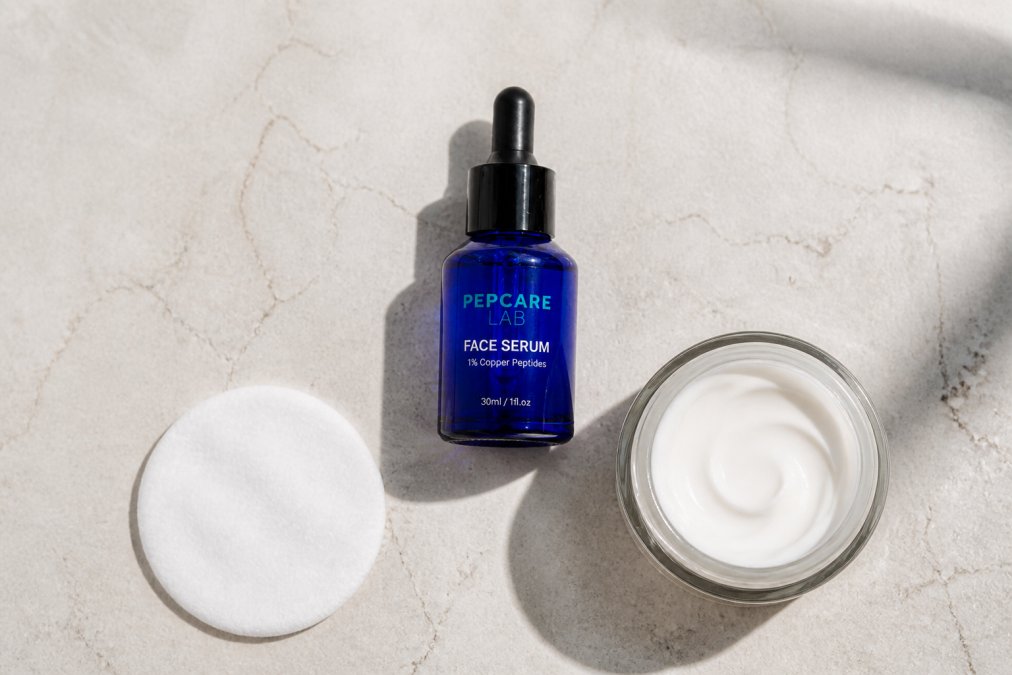
Step 1: Gentle Cleansing Use a pH-balanced, fragrance-free cleanser designed for sensitive skin. Avoid stripping cleansers with sulfates or high alkalinity. Your goal is to remove dirt and oil without disrupting the skin barrier's pH. For sensitive skin, a gentle cleanser morning and night, or just water in the morning, is often better. Look for cleansers with ceramides or peptides.
Step 2: Peptide Treatment Apply the Pepcare Lab Face Serum to clean, dry skin. Wait 1-2 minutes for full absorption before moving to the next step. Use consistently, morning and evening, for at least 8-12 weeks before evaluating results. Inconsistent use won't allow peptide signals to accumulate and create lasting change.
Step 3: Barrier Support Follow with a lightweight moisturiser containing ceramides, hyaluronic acid, or peptides. The Pepcare Lab Barrier Cream is formulated specifically for this role, sealing in the serum's hydration without adding unnecessary actives. For sensitive skin, lightweight barrier support is better than thick occlusion.
Once your barrier is stable, you can cautiously introduce one additional active, perhaps a gentle niacinamide product or low-concentration vitamin C serum. But the foundation must be solid first.
How to Patch Test New Skincare Products
Patch testing is non-negotiable for sensitive skin. It's the difference between discovering an irritant on a small area and triggering a full-face reaction requiring weeks of barrier recovery.
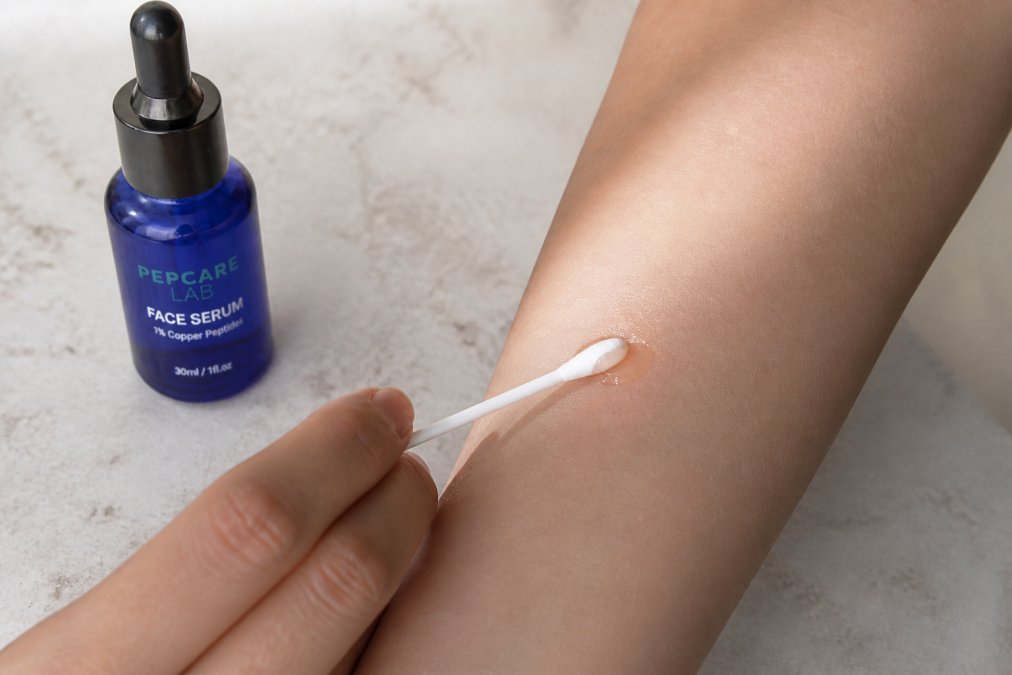
The Patch Test Protocol
Choose a small, inconspicuous area behind the ear, inner arm, or jawline. Apply a lentil-sized amount of the new product to clean, dry skin. Do not apply any other products to that area for 48 hours. This isolation is critical, if a reaction occurs, you'll know it's from the new product.
Watch for redness, itching, stinging, swelling, or a rash. Some mild tingling in the first few minutes is normal with certain actives, but it should subside within 5-10 minutes. If it persists or worsens, wash the area immediately with cool water and discontinue testing.
If the 48-hour patch test passes, you can apply the product to a larger area for another 3-5 days before committing to full-face use. This graduated approach catches delayed reactions.
Common mistakes: applying too much product during testing, or testing multiple products simultaneously. Test one product at a time with a lentil-sized amount. The extra days are worth the certainty.
Key Ingredients to Look for in Peptide Formulas
Not all peptide serums are equal. The difference lies in peptide concentration, peptide type, and supporting ingredients.
Signal Peptides are the primary active. Copper Peptides (GHK-Cu) are the most researched signal peptide for sensitive skin. They're naturally occurring, well-tolerated, and deliver measurable improvements in skin elasticity and fine lines. Look for concentrations between 0.5-2%.
Carrier Peptides deliver trace minerals and amino acids that support skin resilience without irritation.
Hyaluronic Acid holds up to 1000 times its weight in water, dramatically improving hydration and plumping. Multiple molecular weights provide both surface and deep hydration.
Niacinamide calms inflammation, strengthens the skin barrier, and improves resilience. Most formulations include 2-5%, the clinically effective range without irritation risk.
Ceramides form the structural foundation of your skin barrier. In peptide serums, they support the barrier repair process that peptides initiate.
Fragrance should be absent entirely. Fragrance is one of the most common irritants for sensitive skin. Always check the ingredient list.
pH Balance matters significantly. Skin's natural pH is around 4.5-5.5 (acidic) (peer-reviewed research). The Pepcare Lab Face Serum is formulated to pH 5.0-5.5, which supports barrier function rather than compromising it.
Avoid peptide serums containing alcohol, essential oils, or high fragrance concentrations.
How Long Does It Take to See Results
Peptides work by signalling your skin cells to increase collagen production and support barrier repair. This is a gradual, cumulative process.
Weeks 1-4: You'll notice improved hydration and softer skin texture. Your barrier is beginning to strengthen, which means less transepidermal water loss and better moisture retention. Skin may appear more plump and less reactive.
Weeks 5-8: Fine lines become noticeably softer. Skin elasticity improves. Skin tone becomes more even.
Weeks 8-12: Wrinkles are measurably less pronounced. Skin resilience is significantly improved. If you were experiencing barrier compromise, you should be largely recovered. Skin texture is smoother and more radiant.
Beyond 12 weeks: Results continue to improve at a slower rate. Long-term barrier stability and sustained collagen support are the benefits of consistent use.
The key variable is consistency. Daily application morning and evening is required. Sporadic use won't create results. For sensitive skin, consistency matters because barrier repair is cumulative.
Sensitive skin doesn't require you to sacrifice anti-aging results. It requires you to choose ingredients that work with your skin barrier rather than against it. Peptides, particularly Copper Peptides like those in the Pepcare Lab Face Serum, deliver visible improvements in fine lines, elasticity, and skin resilience without triggering inflammatory cascades.
Start with the best peptide serum for sensitive skin, the Pepcare Lab Face Serum at $49.00, and commit to 12 weeks of consistent use. If you want a complete routine, the Face Duo ($79.00) pairs the serum with a barrier cream designed to seal in hydration and support your skin's recovery. For those addressing both skin and scalp concerns, the Complete Collection ($129.00) includes everything you need. Shop our bestsellers and discover how science-led peptide care can transform your skin barrier.
Frequently Asked Questions
Q: Are peptides safe for sensitive skin?
A: Yes, peptides are generally safe for sensitive skin when formulated correctly. Copper peptides like GHK-Cu are amino acid chains that signal the skin to support collagen production and barrier repair without triggering the irritation that stronger actives like retinol can cause. Look for peptide serums that are fragrance-free, pH-balanced, and dermatologist-tested. Patch test first to rule out individual sensitivities.
Q: What's the difference between copper peptides and retinol for sensitive skin?
A: Copper peptides work by signalling cellular turnover and collagen synthesis through gentle mechanisms, making them suitable for reactive skin. Retinol directly increases cellular turnover, which can cause redness, flaking, and barrier disruption in sensitive skin. Copper peptides like those in Pepcare Lab's formulas deliver anti-ageing benefits with less irritation risk, making them ideal if you've experienced sensitivity to stronger actives.
Q: How long does it take to see results from a peptide serum?
A: Most people notice improved skin hydration and texture within 2-4 weeks of consistent daily use. Fine lines and skin elasticity improvements typically appear after 6-8 weeks. Barrier repair and reduced sensitivity can take 8-12 weeks. Consistency matters: use your peptide serum every morning and evening as directed for best results. Results depend on your starting skin condition and routine completeness.
Q: Can I use a peptide serum if I have extremely reactive skin?
A: Peptide serums are often a good choice for reactive skin because they're gentler than many anti-ageing alternatives. However, always patch test first on a small area of your inner arm or behind your ear for 24-48 hours before applying to your face. If your skin has active inflammation, eczema, or is currently compromised, wait until your barrier has calmed before introducing any new active. When ready, start with the serum 2-3 times per week, then gradually increase frequency.
Q: What ingredients should I avoid mixing with peptide serums?
A: Peptides work well with hydrating and barrier-supporting ingredients like hyaluronic acid and niacinamide. Avoid combining peptide serums with strong exfoliants (acids, vitamin C at high pH, or physical scrubs) on the same day if your skin is sensitive. Retinol and peptides can be layered, but introduce them separately first. Always introduce one new product at a time so you can identify what your skin responds to.
This article was written using GrandRanker