
Last Updated: November 7, 2026
Quick Summary
A barrier cream for dry skin forms a protective layer over the surface, slowing water loss and giving the barrier a chance to repair itself. It reduces moisture loss so skin stays hydrated longer, eases tightness and roughness, and protects against wind and dry indoor air. It won't fix dryness caused by hot showers or harsh cleansers, so remove the cause too.
- Apply barrier cream twice daily as a baseline, adding a third application on hands and body after washing.
- Layer products thinnest to thickest: cleanser, serum, barrier cream, then sunscreen in the morning.
- Barrier creams seal more and water less than standard moisturisers, which lean on humectants and emollients.
- Fragrance-free and unscented are not the same claim, so check the ingredient list for masking fragrance.
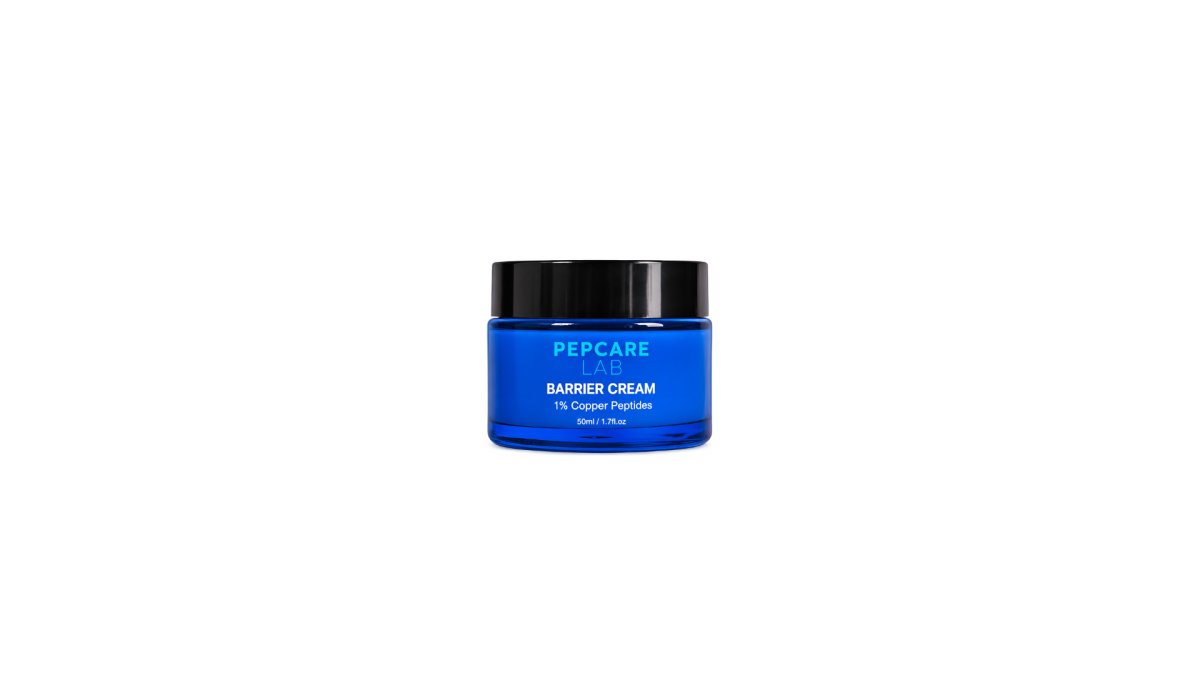
- The Pepcare Lab Barrier Cream is $49.00 for 50 mL with 1% copper peptides, niacinamide and squalane.
Table of Contents
- How Barrier Cream for Dry Skin Works
- Benefits of Using a Barrier Cream for Dry Skin
- Ingredients in Barrier Cream and What Each One Does
- Barrier Cream vs Moisturiser: What's the Difference?
- How to Use Barrier Cream in Your Daily Routine
- How Often to Apply Barrier Cream
- Choosing a Barrier Cream for Your Skin
- Shop the Pepcare Lab Barrier Cream
- Frequently Asked Questions
How Barrier Cream for Dry Skin Works
Dry, tight skin is usually a sign your skin barrier is struggling. A barrier cream for dry skin works by forming a protective layer over the surface of your skin, slowing water loss and giving the barrier a chance to repair itself.
Your skin barrier can be thought of as a brick wall. Skin cells are the bricks, and skin lipids are the mortar. When the mortar thins out, water escapes and irritants get in.
The key mechanism is reducing transepidermal water loss (TEWL), the steady evaporation of water through the skin. Occlusive ingredients sit on top and trap that moisture. Emollients soften rough patches. Humectants pull water into the upper layers.
If you're unsure whether dryness is a damaged barrier or something else, it helps to check the common signs of a damaged skin barrier before you pick a product. For a deeper walkthrough of repair, our full guide to repairing a damaged moisture barrier covers the longer timeline.
Benefits of Using a Barrier Cream for Dry Skin
The main benefits of using a barrier cream for dry skin come down to two things: less water escaping, and fewer irritants getting through.
Here's what a good barrier cream actually does for you:
- Reduces moisture loss so skin stays hydrated longer between applications
- Eases tightness and roughness on cheeks, hands and legs
- **Supports barrier function over time with repeated use
- Protects against environmental exposure like wind and dry indoor air
The catch most guides skip: a barrier cream won't fix dryness caused by something you keep doing, like hot showers or harsh cleansers. You have to remove the cause too.
Fewer Dry Patches and Less Tightness
Flaky patches and that tight, stretched feeling usually fade first. That's because occlusive ingredients cut water loss almost immediately, while emollients smooth the rough surface.
Calmer Skin for Sensitive and Eczema-Prone Types
If your skin is eczema-prone, a formula built around copper peptides and soothing ingredients is worth a closer look. Our copper peptide cream for eczema-prone skin explains how that combination suits reactive skin types.
Ingredients in Barrier Cream and What Each One Does
Barrier cream ingredients fall into four functional groups. Knowing what each group does, and what it does not do, makes label reading far easier and helps you match a formula to your skin.
| Ingredient type | Common examples | Primary function | Trade-offs to know |
|---|---|---|---|
| Occlusive | Petroleum, petrolatum, dimethicone, lanolin | Forms a physical film that slows transepidermal water loss | Can feel heavy or greasy; petrolatum is poorly tolerated by some acne-prone users; lanolin can sensitise a small minority |
| Emollient | Squalane, fatty alcohols, caprylic/capric triglyceride | Softens and smooths rough, flaky skin by filling gaps between corneocytes | Mostly cosmetic and textural; does little on its own to reduce water loss |
| Humectant | Glycerin, niacinamide, hyaluronic acid, panthenol | Draws water into the upper layers of the skin | Can sting on cracked skin; in very low humidity, humectants may pull water from deeper layers unless sealed with an occlusive |
| Barrier lipid | Ceramides, cholesterol, free fatty acids | Replaces lipids a damaged barrier is missing | Needs the right ratio to work well; ceramide-only formulas are less effective than those combining all three lipids |
How the groups work together. A well-built barrier cream usually combines all four. Humectants attract water, emollients soften the surface, barrier lipids rebuild the mortar between skin cells, and occlusives seal the whole layer so the water stays put. A formula that leans heavily on one group and skips the others tends to underperform, a glycerin-rich gel without an occlusive, for example, can leave skin feeling tight again within an hour.
What the evidence supports. The strongest evidence for barrier creams sits with occlusives and barrier lipids. Petrolatum is one of the best-studied occlusives for reducing water loss, and ceramide-containing formulas are widely used in eczema-prone skin for their barrier-restoring role. Humectants like glycerin have solid support for improving skin hydration and comfort. Emollients are well established for softening and smoothing but are not barrier-repairing ingredients on their own.
Where newer actives fit. Copper peptides (GHK-Cu) are a key ingredient in our formulas, which pair them with squalane, niacinamide and skin-conditioning ingredients.
Watch out: "Fragrance-free" and "unscented" are not the same claim, an unscented product can still contain masking fragrance, which is a common trigger for reactive skin. Check the ingredient list rather than the front of the pack.
If you want to compare how these groups behave in a full routine, our guide on how to use a face serum and barrier cream duo shows where each layer sits.
Barrier Cream vs Moisturiser: What's the Difference?
A barrier cream is a type of moisturiser, but a heavier, more protective one. The difference is in the balance of occlusives: barrier creams seal more and water less, while standard moisturisers lean on humectants and emollients.
Think of it as cream versus lotion. Lotions are light and water-based, good for oily or normal skin. Barrier creams are thicker and better suited to dry, compromised or sensitive skin.
Neither is "better" in general. If your skin is oily but dehydrated, a lighter lotion may suit you. If it's dry and tight, a barrier cream does more work.
How to Use Barrier Cream in Your Daily Routine
Barrier cream is typically applied near the end of a routine, after cleansing and serum, and before sunscreen in the morning.
The order, thinnest to thickest. Skincare layers should generally go from the lightest texture to the heaviest, because a heavy occlusive layer on top will block anything applied after it from absorbing. That gives you a reliable rule: cleanser → humectant or serum → emollient or barrier cream → sunscreen in the morning.
Morning routine.
- Cleanse gently with lukewarm water and a mild, low-foaming cleanser. Hot water strips lipids and undoes the work the cream is about to do.
- Pat dry and leave skin slightly damp, applying to damp skin traps that surface water under the cream.
- Apply your serum (for example a hydrating or peptide serum) and let it absorb for about a minute.
- Press in a pea-sized amount of barrier cream over dry areas, then blend outward. Pressing rather than rubbing reduces friction on reactive skin.
- Finish with sunscreen as the final step. A barrier cream is not a substitute for SPF, and sunscreen should always sit on top.
Evening routine. The sequence is the same, minus sunscreen. If your skin is dry, stinging, inflamed or experiencing an eczema flare, pause retinol and exfoliating acids while it settles and ask a qualified health professional about restarting. If your skin already tolerates an active, follow that product's directions and use a compatible moisturiser.
Adjusting for location. Facial skin is thinner and more prone to congestion, so a light cream pressed over the dry areas is usually enough. Hands, elbows, knees and feet tolerate, and often need, a thicker occlusive layer, applied more generously and more often. For incontinence-associated skin, the priority is a protective barrier applied after gentle cleansing and before any containment product, and a clinician or continence nurse can advise on the right formulation.
Frequency. Twice daily is the baseline. Add a third application on hands and body after washing, and reapply to exposed areas after long periods in wind, air conditioning or heating.
Watch out: a barrier cream does not prevent irritation from retinol or exfoliating acids. Avoid these actives on dry or irritated skin, and follow product directions and professional advice when restarting.

If you're building a routine from scratch, our guide on how to use a face serum and barrier cream duo walks through the pairing step by step.
How Often to Apply Barrier Cream
Twice a day is the standard answer: morning and night. Very dry skin often needs a third application on hands, elbows or anywhere that feels tight.
Apply more often when:
- You've been in wind, sun or air conditioning for hours
- You've washed your hands repeatedly
- You're in a dry, heated room overnight
Watch out: pause irritating actives during active dryness or an eczema flare. Follow professional advice about when and how to restart them.
Choosing a Barrier Cream for Your Skin
Match the cream to the cause and location of your dryness, not just the label. Dryness on the face from over-cleansing calls for a different formula than cracked hands from cold weather.
Use these questions:
- Where is the dryness? Face, body or hands
- What's causing it? Weather, harsh products, or a skin condition
- How sensitive is your skin? Fragrance-free formulas suit reactive skin
- How heavy do you want it? Rich ointment or light cream
- What actives do you want? Peptides, ceramides or niacinamide
If dryness is severe, painful, cracked or spreading, see a GP or dermatologist.
Shop the Pepcare Lab Barrier Cream
Our Barrier Cream is a rich yet lightweight moisturiser with 1% copper peptides, niacinamide, squalane and skin-conditioning ingredients. It is designed to lock in hydration after your serum and support the skin's natural barrier without feeling heavy or greasy.
It's $49.00 for 50 mL, and it pairs with our Face Serum in the Face Duo at $79.00, saving $19 with free Australian shipping.
Dry skin that keeps coming back despite your best efforts is frustrating, and it usually means the barrier needs more than a quick fix. We built our range around that problem: 1% copper peptides to support renewal, niacinamide and squalane to condition, and a simple routine that doesn't ask you to layer ten products. Get started with Pepcare Lab and give your barrier the support it needs to feel calm and comfortable again.
Frequently Asked Questions
What does barrier cream do for dry skin?
A barrier cream forms a protective layer over the skin that slows water loss and shields against irritants. For dry skin, this means less tightness, fewer flaky patches and better comfort through the day. It also gives the skin barrier a chance to recover, since it is not constantly losing moisture. Look for a formula with occlusives, emollients and humectants, like Pepcare Lab's Barrier Cream with 1% copper peptides, niacinamide and squalane.
How is barrier cream different from moisturiser?
All barrier creams are moisturisers, but not all moisturisers are barrier creams. A standard moisturiser may focus on hydration, while a barrier cream is built around sealing moisture in and protecting the skin barrier. In practice, a barrier cream usually has a richer texture and more occlusive ingredients. The barrier cream vs moisturiser choice comes down to your skin: dry or reactive skin often does better with the added protection a barrier cream provides.
How often should you apply barrier cream to dry skin?
Most people with dry skin do well applying barrier cream twice a day, morning and night, after cleansing and serum. Reapply to hands or any area that is washed frequently or exposed to wind and cold. If your skin still feels tight by midday, add a thin layer rather than waiting for the next full routine. Consistency matters more than quantity.
Can you use barrier cream on your face?
Yes, provided the formula is made for facial use. A facial barrier cream should be light enough to wear under sunscreen. Pepcare Lab's Barrier Cream is designed as a daily facial moisturiser, applied after serum to lock in hydration without a heavy or greasy finish. Patch test first if your skin is reactive, and use a dedicated body barrier cream for larger areas.
