
Table of Contents
- What Are Copper Peptides and How Do They Work for Eczema?
- Is Copper Peptide Cream Safe for Sensitive and Eczema-Prone Skin?
- How to Patch Test Skincare for Eczema Before Full Use
- Copper Peptides vs Ceramides for Eczema: Which Supports Barrier Repair?
- Building a Skincare Routine for Eczema-Prone Skin with Copper Peptides
- Pepcare Lab Barrier Cream: Design for Barrier Support
- Ingredients to Avoid When Using Copper Peptide Cream
- Frequently Asked Questions
Last Updated: September 30, 2026
What Are Copper Peptides and How Do They Work for Eczema?
Copper peptides are short chains of amino acids bound to copper ions that work to support skin barrier function and promote natural renewal, making copper peptide cream for eczema prone skin an effective barrier-support option. The most studied form is GHK-Cu, a tripeptide complex that plays a role in collagen synthesis and tissue regeneration (pubmed.ncbi.nlm.nih.gov). For eczema-prone skin, this matters because atopic dermatitis compromises the skin barrier, increasing transepidermal water loss and allowing irritants to penetrate more easily.
GHK-Cu functions by signalling skin cells to strengthen the dermal matrix and reinforce moisture retention. When the skin barrier is weakened, as it is in eczema, this mechanism helps restore structural integrity. The peptide also exhibits anti-inflammatory properties, which can help calm the reactive skin response common in eczema flare-ups.
Unlike retinol or vitamin C, which work primarily through exfoliation or antioxidant activity, copper peptides take a different approach: they encourage the skin's own repair machinery. This gentler mechanism makes them particularly relevant for sensitive, eczema-prone skin that cannot tolerate more aggressive actives. The science suggests copper peptides support barrier fortification rather than disrupting the skin surface, which is why many dermatologists consider them suitable for compromised skin conditions.
Is Copper Peptide Cream Safe for Sensitive and Eczema-Prone Skin?
Copper peptide cream formulations designed for sensitive skin are generally well-tolerated when they avoid common irritants. Safety depends on three factors: the peptide concentration, the supporting ingredients in the formula, and your individual irritation threshold.
Most copper peptide products for eczema use concentrations between 1% and 2% GHK-Cu. This range is considered gentle enough for daily use on compromised skin. The Pepcare Lab Barrier Cream, for example, uses 1% copper peptides combined with niacinamide, squalane, and skin-conditioning ingredients, a formulation designed specifically to avoid triggering reactive skin.

The key safety consideration is what surrounds the copper peptide. Fragrances, essential oils, alcohol denat, and certain preservatives can aggravate eczema even if the peptide itself is well-tolerated. Hypoallergenic, fragrance-free formulations reduce this risk significantly. Products labelled dermatologist-tested provide additional reassurance, though patch testing remains the gold standard before committing to any new product.
Copper peptides do not interact negatively with common eczema topicals like topical corticosteroids or calcineurin inhibitors. You can use a copper peptide cream alongside these treatments without concern for adverse interactions. However, layering multiple active ingredients on already-reactive skin increases the risk of irritation, so introduce one product at a time and wait at least two weeks before adding another.
How to Patch Test Skincare for Eczema Before Full Use
Patch testing is the most reliable way to assess whether a new product will irritate your eczema-prone skin. The process takes two weeks and requires patience, but it prevents wasting money on products that trigger flare-ups.
Step 1: Choose your test site. Select a small area of skin with eczema or sensitive skin, the inner forearm is ideal because it's visible and easy to monitor. Avoid testing on active flare sites where inflammation is severe; choose stable but reactive skin instead.
Step 2: Apply a small amount. Use a patch about the size of a coin. Apply the product once daily at the same time each day, typically in the evening. Cover the area with a non-occlusive bandage or simply leave it uncovered if you can avoid touching it.
Step 3: Monitor for 14 days. Track any changes: redness, itching, burning, dryness, or swelling. Keep a simple log with dates. Some mild redness on day 1-2 is normal as the skin adjusts; persistent or worsening irritation by day 3-4 suggests the product is not suitable.
Step 4: Expand if tolerated. If the patch test shows no irritation after 14 days, apply the product to a larger area for another week before introducing it into your full routine. This second phase catches delayed reactions.
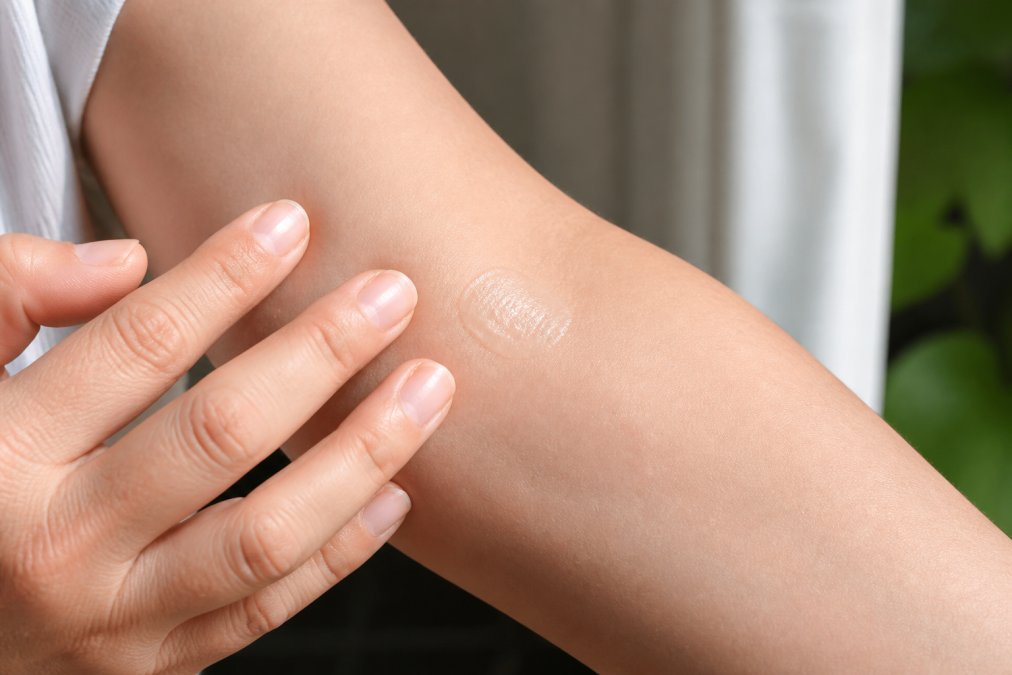
Common mistakes in patch testing include applying too much product (use a small amount), testing on inflamed skin (wait until inflammation settles), and stopping too early (14 days is the minimum). If irritation occurs, stop immediately and return to your baseline routine.
Copper Peptides vs Ceramides for Eczema: Which Supports Barrier Repair?
Both copper peptides and ceramides support skin barrier function, but they work through different mechanisms. Understanding the difference helps you decide whether to use them together or choose one as your primary barrier support.
Ceramides are lipid molecules that form the structural foundation of the skin barrier. They fill gaps between skin cells and lock in moisture. In eczema-prone skin, ceramide levels are naturally depleted, which is why topical ceramides are considered essential. Products with ceramide complexes directly replenish this lost lipid layer.
Copper peptides (GHK-Cu) signal skin cells to produce more collagen and strengthen the dermal matrix. Rather than replacing lost lipids, they encourage the skin to rebuild its own barrier infrastructure over time. The effect is slower but addresses the underlying weakness rather than just compensating for it.
For immediate barrier support during or just after a flare, ceramides work faster. They provide occlusive protection and moisture retention within days. Copper peptides require 4-6 weeks of consistent use to show measurable improvements in barrier function.
The ideal approach combines both: use a ceramide-rich moisturiser for immediate relief and barrier sealing, then add a copper peptide product to support long-term barrier strengthening. The Pepcare Lab Barrier Cream includes both niacinamide (which supports ceramide production) and copper peptides, creating a formula that addresses both immediate and long-term barrier needs.
| Ingredient | Primary Function | Timeline | Best For |
|---|---|---|---|
| Ceramides | Lipid barrier replacement | Immediate (days) | Acute flares, rapid relief |
| Copper Peptides (GHK-Cu) | Collagen synthesis, dermal repair | Long-term (4-6 weeks) | Barrier strengthening, prevention |
| Combined approach | Immediate + sustained repair | Days to weeks | Optimal eczema management |
Building a Skincare Routine for Eczema-Prone Skin with Copper Peptides
A simplified routine minimises the risk of irritation while delivering barrier support. The Pepcare Lab approach uses three steps: cleanse, treat, and protect.
Step 1: Gentle cleansing. Use a fragrance-free, pH-balanced cleanser that does not strip the skin. Avoid hot water; lukewarm is gentler. Pat skin dry gently rather than rubbing. This step removes irritants without compromising the barrier.
Step 2: Lightweight serum. Apply a copper peptide serum to damp skin. A lightweight serum like the Pepcare Lab Face Serum (1% copper peptides) delivers hydration without occlusion. Apply to the face and neck, pressing gently into the skin. Wait one minute for it to absorb.
Step 3: Barrier cream. Follow with a rich moisturiser that locks in the serum and reinforces the barrier. The Pepcare Lab Barrier Cream is formulated to seal hydration while the copper peptides work to strengthen the dermal layer. Use enough to create a thin, even layer across the face.
This three-step routine takes approximately 5 minutes and avoids the complexity that triggers irritation in sensitive skin, which is why a copper peptide cream for eczema prone skin works best within a simplified regimen. Many people with eczema find that fewer, more targeted products work better than elaborate multi-step regimens.
For those managing both facial eczema and scalp health concerns, the Pepcare Lab Complete Collection expands the routine to include a Hair & Scalp Serum (2% copper peptides) and a scalp brush for gentle massage. This collection addresses multiple areas with peptide support while maintaining the simplicity that eczema-prone skin requires.

Consistency matters more than complexity.
Pepcare Lab Barrier Cream: Design for Barrier Support
The Pepcare Lab Barrier Cream is specifically formulated to address the barrier repair needs of eczema-prone skin. At $49.00 for a 50 mL bottle, it combines 1% copper peptides with complementary barrier-supporting ingredients.
Ingredients to Avoid When Using Copper Peptide Cream
Certain ingredients commonly found in skincare products can aggravate eczema-prone skin, particularly when combined with new actives like copper peptides. Avoiding these allows the copper peptides to work without interference from irritants.
Frequently Asked Questions
Does copper peptide cream actually help heal eczema-prone skin?
Copper peptides (GHK-Cu) support skin barrier function and promote collagen synthesis, which may help reduce transepidermal water loss, a key issue in eczema. They work by strengthening the skin's natural barrier and delivering anti-inflammatory properties. Results vary by individual and severity, but consistent use of a copper peptide cream formulated for sensitive skin can improve moisture retention and comfort over 4-8 weeks.
Are copper peptides safe for people with chronic eczema and sensitive skin?
Copper peptides are generally well-tolerated by sensitive skin when formulated without common irritants like fragrance, alcohol, or harsh preservatives. Pepcare Lab's Barrier Cream contains 1% copper peptides, niacinamide, and squalane, all chosen for their soothing and hypoallergenic properties. Always patch test first, especially if your skin reacts to new products. If you're using prescribed eczema treatments, consult your doctor before adding peptide products.
How do copper peptides compare to ceramides for repairing an eczema barrier?
Ceramides are lipids that directly fill gaps in the skin barrier and prevent water loss, making them a foundational barrier repair ingredient. Copper peptides (GHK-Cu) work differently, they stimulate collagen production and reduce inflammation at a deeper level. The most effective approach combines both: ceramides provide immediate barrier support, while copper peptides encourage long-term dermal repair. Using them together maximises barrier restoration.
What should I look for in a copper peptide cream for eczema-prone skin?
Choose a cream that contains 1-2% copper peptides, is fragrance-free, and includes barrier-supporting ingredients like niacinamide, squalane, or ceramides. Avoid products with alcohol, synthetic fragrance, or potential irritants. Look for dermatologist-tested formulations designed specifically for sensitive skin. Pepcare Lab's Barrier Cream ($49) meets these criteria and is formulated to strengthen and protect the skin barrier without heaviness.