
Table of Contents
- What to Look for in a Hydrating Serum for Dry Sensitive Skin
- Copper Peptides for Sensitive Skin: What the Science Says
- Pepcare Lab Hydrating Serum Review: Face Serum and Barrier Cream
- How to Repair Skin Barrier Function
- Skincare Routine for Dry Sensitive Skin: A Simple Daily Regimen
- Patch Testing Protocols and Ingredient Interaction Safety
- Common Triggers for Sensitive Skin and Environmental Impact
- Conclusion
- Frequently Asked Questions
Last Updated: September 13, 2026
What to Look for in a Hydrating Serum for Dry Sensitive Skin
A good hydrating serum for dry sensitive skin does three jobs at once: it pulls water into the skin, it strengthens the barrier that keeps that water from escaping, and it does both without triggering redness or stinging. Most disappointing products fail the third test.
This review breaks down what actually matters when you're choosing a hydrating serum. Below, we'll show you exactly which ingredients to prioritise, which to avoid, and how to tell whether a formula is working for your skin or against it.
Dry and sensitive skin is not simply "dry skin with a bit of redness." The two problems reinforce each other. When the skin barrier is compromised, water evaporates from the surface faster, a process called transepidermal water loss, and the same gaps that let water out let irritants in (PubMed). That is why a serum that hydrates without supporting barrier repair tends to give you a good two hours and then nothing.
Key Ingredients for Dry and Sensitive Skin
The ingredients worth paying for fall into three groups. Humectants like glycerin and hyaluronic acid draw water into the upper layers. Soothing agents such as panthenol, aloe vera and niacinamide calm reactive skin. Barrier lipids including ceramides and squalane replace what dryness strips away.
Niacinamide deserves special mention. It supports the lipid barrier while reducing the look of redness, which makes it one of the few actives that suits reactive skin (PubMed). Glycerin is unglamorous but consistently effective at holding moisture in place.
What to skip: high concentrations of fragrance, essential oils, denatured alcohol and strong exfoliating acids. A fragrance-free, pH-balanced formula removes most of the usual suspects in one step.
Texture and Absorption Considerations
A water-gel texture suits sensitive skin better than a heavy cream or a watery toner. It spreads without dragging, absorbs quickly, and layers under moisturiser without pilling.
Thicker is not better. Rich occlusive formulas can trap heat and trigger flushing in reactive skin, particularly in humid weather. The absorption rate matters too: a serum that sits on the surface for ten minutes is usually one that will clog pores.
Copper Peptides for Sensitive Skin: What the Science Says
Copper peptides are short chains of amino acids bound to copper ions, most commonly the GHK-Cu complex. They support collagen production and skin renewal, which is why they appear in anti-ageing formulas rather than purely hydrating ones (PubMed).
The appeal for sensitive skin is that copper peptides work differently from retinol and vitamin C. They do not rely on controlled irritation to produce results. That said, "gentler than retinol" is not the same as "suitable for everyone." Copper peptides are an active ingredient, and reactive skin still needs a sensible introduction.
A few practical points:
- Start with once-daily use rather than twice, for the first two weeks
- Do not layer copper peptides with strong acids or high-dose vitamin C in the same routine step
- Introduce one new active at a time so you can identify what caused a reaction
The ingredient interaction question is where most advice falls short. Copper peptides and vitamin C can be used in the same routine, but ideally at different times of day. If your skin is reactive, separate them entirely until you know how it responds.
Pepcare Lab Hydrating Serum Review: Face Serum and Barrier Cream
Pepcare Lab builds its range around 1% copper peptides and keeps the product count deliberately low. The Face Duo pairs a lightweight Face Serum with a Barrier Cream, and the two are designed to be used together rather than mixed and matched with a shelf of other products.

Face Serum: Lightweight Hydration with 1% Copper Peptides

The Face Serum ($49.00 for 30 mL) is the hydrating step. It combines 1% copper peptides with niacinamide and hyaluronic acid, which covers the humectant, soothing and renewal bases in a single layer.
Where it earns its place in a sensitive skin routine is the finish. It absorbs fast and leaves no residue, so it sits comfortably under sunscreen in the morning. What most reviews miss is how much the niacinamide content matters here: it means you are getting barrier support from the same product doing the hydrating.
Barrier Cream: Sealing in Moisture Without Heaviness
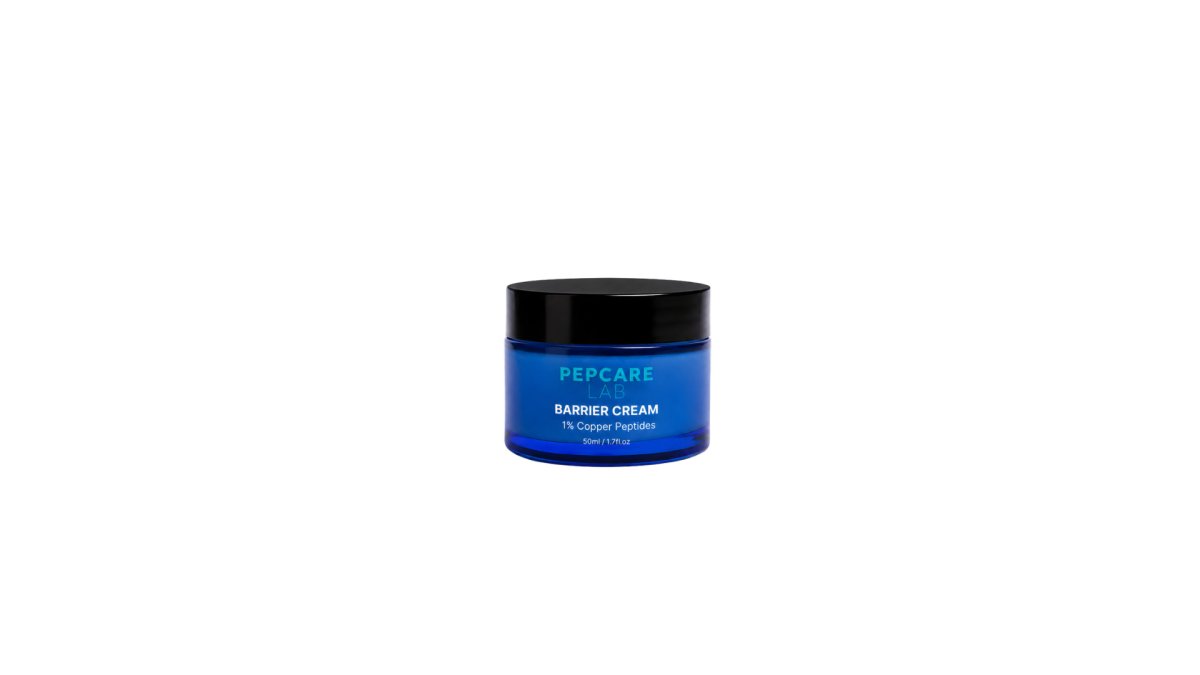
The Barrier Cream ($49.00 for 50 mL) is the step that makes the hydration last. It uses 1% copper peptides alongside niacinamide and squalane to improve moisture retention and reinforce the lipid barrier.
Rich yet lightweight is an overused description, but it fits here. It seals without the greasy film that makes occlusive creams uncomfortable on reactive skin. If you have ever abandoned a barrier cream because it felt like wearing a mask, this is the difference that matters.
Face Duo: The Two-Step Routine for Dry Sensitive Skin
Bought individually the two products cost $98. The Face Duo is $79.00, which saves $19, and ships free within Australia. For anyone starting from scratch, the bundle is the sensible entry point because the serum and cream are formulated to work in sequence.
| Product | Size | Price | Role in Routine | Best For |
|---|---|---|---|---|
| Face Serum | 30 mL | $49.00 | Hydrate and support renewal | Lightweight daily hydration |
| Barrier Cream | 50 mL | $49.00 | Seal in moisture, support barrier | Dryness that needs lasting comfort |
| Face Duo | 30 mL + 50 mL | $79.00 | Complete two-step routine | Starting a routine from scratch |
| Complete Collection | 4 full-size items | $149.00 | Face, skin and scalp | Full routine including scalp care |
If you also want scalp support, the Complete Collection ($149.00) adds a 2% copper peptide Hair & Scalp Serum and a scalp massage brush.
How to Repair Skin Barrier Function
Repairing the skin barrier comes down to three things: stop stripping it, supply the lipids it is missing, and give it time. Most people get the first one wrong and then wonder why nothing improves.
The skin barrier is the outermost layer of skin, a matrix of ceramides, cholesterol and fatty acids that holds water in and keeps irritants out. When it is damaged, you get tightness, stinging, flaking and a dull, dehydrated appearance that no amount of serum seems to fix.
A workable repair sequence:
- Switch to a non-foaming, fragrance-free cleanser and use lukewarm water
- Apply a hydrating serum to damp skin within a minute of patting dry
- Follow immediately with a barrier cream containing ceramides, squalane or niacinamide
- Pause all exfoliants, retinoids and strong acids for at least two weeks
- Add a mineral sunscreen every morning, since UV exposure slows barrier recovery
- Reassess at the two-week mark before reintroducing anything active
Expect the tightness to ease first. Visible improvement in skin elasticity and dullness takes longer, generally several weeks of consistent use. Barrier repair is boring and repetitive, and skipping days sets you back.
Skincare Routine for Dry Sensitive Skin: A Simple Daily Regimen
A skincare routine for dry sensitive skin should have four steps in the morning and three at night. Anything longer is usually working against you.
Morning:
- Rinse with lukewarm water, or use a gentle non-foaming cleanser if you feel oily
- Apply a hydrating serum to damp skin
- Follow with a barrier cream
- Finish with a mineral sunscreen
Evening:
- Remove sunscreen and makeup with a gentle cleanser
- Apply the hydrating serum again
- Seal with the barrier cream
That is the whole routine. The temptation with sensitive skin is to add more products to fix each new symptom, and that is usually what keeps the skin reactive. A short, consistent regimen lets you actually identify what helps.
Patch Testing Protocols and Ingredient Interaction Safety
Patch testing is the step almost everyone skips, and it is the cheapest insurance you have. A proper patch test takes 48 hours and tells you whether a formula will cause a reaction before it touches your whole face.
The standard protocol:
- Apply a small amount behind your ear or on the inner forearm
- Leave it uncovered and do not wash the area for 24 hours
- Check for redness, itching, stinging or bumps at 24 hours
- If clear, repeat the application and check again at 48 hours
- If both checks are clear, introduce the product to your face at half strength for the first week
For ingredient interaction safety, keep these pairings in mind. Copper peptides should not be layered directly with strong acids or high-concentration vitamin C. Niacinamide and hyaluronic acid are broadly compatible with everything. Retinol and exfoliating acids should be paused entirely while your barrier is compromised.
If you are using prescription actives, ask your prescriber or pharmacist how a new peptide serum fits around them. That is a conversation worth having before you start, not after.
Common Triggers for Sensitive Skin and Environmental Impact
Sensitive skin reactions usually come from four sources: products, weather, water and stress. Identifying which one is driving your flares changes what you do about it.
Product triggers are the easiest to control. Fragrance, essential oils, alcohol, sulphates and preservatives such as methylisothiazolinone account for a large share of reactions. Switching to fragrance-free, hypoallergenic formulas removes most of them at once.
Environmental triggers are harder to avoid. Cold wind and low humidity increase transepidermal water loss. Hot showers strip lipids from the surface. Hard water leaves mineral residue that disrupts the skin microbiome and leaves skin feeling tight even after moisturising.
Air conditioning is an underrated culprit. It dries the air around you for eight hours a day, and if you work in an office you may be fighting dehydration you never see coming.
A practical response: run a humidifier in rooms you spend the most time in, keep showers lukewarm, and treat your barrier cream as the non-negotiable step rather than the serum.
Conclusion
The hardest part of managing dry sensitive skin is resisting the urge to keep adding products when your skin flares. A short routine built around barrier support, a fragrance-free hydrating serum, and patience will outperform a shelf of half-used bottles every time.
Pepcare Lab's Face Duo is built for exactly that approach. The Face Serum delivers lightweight hydration with 1% copper peptides, niacinamide and hyaluronic acid, while the Barrier Cream seals it in with squalane and a further 1% copper peptides. Two steps, morning and night, no guesswork about what layers with what. Get started with Pepcare Lab and give your barrier the several weeks it needs to rebuild.

Frequently Asked Questions
What are the best hydrating serums for dry, sensitive skin?
The best hydrating serum for dry, sensitive skin contains humectants like glycerin and hyaluronic acid to draw in water, plus soothing agents such as niacinamide and panthenol to calm irritation. Look for fragrance-free, hypoallergenic formulas that support the lipid barrier. Pepcare Lab's Face Serum combines 1% copper peptides with niacinamide and hyaluronic acid in a lightweight, fast-absorbing texture suitable for daily use on reactive skin.
Can copper peptides help with dry, sensitive skin?
Copper peptides for sensitive skin support the skin barrier by encouraging collagen production and helping reduce inflammation. GHK-Cu, the copper peptide used in Pepcare Lab formulas, is studied for its role in skin renewal and barrier repair. For dry, sensitive skin, this means improved moisture retention and a calmer appearance over time. Introduce copper peptides gradually and patch test first, as with any active ingredient.
What ingredients should I avoid in a hydrating serum if I have sensitive skin?
Avoid added fragrance, essential oils, drying alcohols, and harsh exfoliating acids in high concentrations. These can strip the lipid barrier and trigger redness or stinging. Instead, choose fragrance-free, pH-balanced formulas with ceramides, glycerin, or squalane. Pepcare Lab's Barrier Cream uses squalane and niacinamide without added fragrance, making it suitable for reactive skin types.
How do I patch test a new serum for sensitive skin?
Apply a small amount of serum to the inner forearm or behind the ear, then wait 24 to 48 hours. If no redness, itching, or swelling appears, repeat on a small area of the face. Patch testing helps identify reactions before applying the product to your full face. Even dermatologist-tested formulas can occasionally cause sensitivity, so this step is worth the wait.
How often should I apply a hydrating serum to dry, sensitive skin?
Apply to damp skin after cleansing, then follow with a barrier cream to lock in moisture. Consistency matters more than frequency. If irritation occurs, reduce frequency and rebuild tolerance gradually. A simple daily regimen works better than sporadic use of multiple products.