
Last Updated: November 9, 2026
Quick Summary
Ethical sourcing standards for Australian beauty products describe how a brand obtains its raw materials, treats suppliers and workers, and manages environmental and social impact. The most reliable test is whether a brand can trace each ingredient to its origin and show third-party verification.
- Traceability means following an ingredient from the finished product back to its supplier, processing site and batch.
- Check whether a certification covers the specific product, since a certified ingredient does not make the whole formula certified.
- Ask brands who manufactures the product, whether actives are named, and for a recent certificate of analysis.
- Watch for greenwashing: vague terms like "natural-derived" or "eco" without supporting certificates, tests or disclosed practices.
- Confirm regulatory status separately, since legal compliance is a baseline while voluntary certifications show extra ethical commitment.
Table of Contents
- What Ethical Sourcing Means in Australian Beauty
- Why Ingredient Traceability Matters More Than Marketing Claims
- How to Check If Skincare Is Ethically Sourced
- Ethical Beauty Certifications: What Each One Actually Verifies
- Australian-Made Skincare and the Regulatory Framework
- Questions to Ask Beauty Brands About Sourcing
- Packaging, Waste and Social Impact Beyond Fair Trade
- Choosing a Brand You Can Verify and Trying Its Products
- Frequently Asked Questions
What Ethical Sourcing Means in Australian Beauty
Ethical sourcing standards for Australian beauty products describe how a brand obtains its raw materials, treats the people who make them and accounts for environmental and social impact along the supply chain.
"Ethical" has no single legal definition in Australian cosmetics. It is a cluster of claims: cruelty-free testing, vegan formulation, fair dealing with suppliers, reduced environmental harm and transparent labelling.
Ethical sourcing also overlaps with product safety. A brand that tracks where its actives are produced is better placed to confirm purity, consistency and the absence of contaminants. Sourcing transparency and formulation quality are not separate conversations.
Why Ingredient Traceability Matters More Than Marketing Claims
Traceability is the ability to follow an ingredient from the finished product back to its origin, including the supplier, the processing site and the batch.
Marketing language is cheap: a brand can print a leaf icon without changing a single supplier. Traceability is harder to fake because it requires documents, supplier declarations, certificates of analysis, batch records and third-party audit reports.
A peptide serum that lists its active by its full chemical or common name, names its manufacturing partner and provides batch-level testing information gives you something you can verify. A serum described only as "ethically crafted" gives you nothing to test.
How to Check If Skincare Is Ethically Sourced
Checking sourcing is a short research exercise. Start with the brand's website, then the packaging and, if needed, direct questions. Look for a dedicated sourcing or transparency page that names suppliers by category, explains testing and describes how ingredients are verified. Brands that bury this information, or have no page at all, deserve more scrutiny.
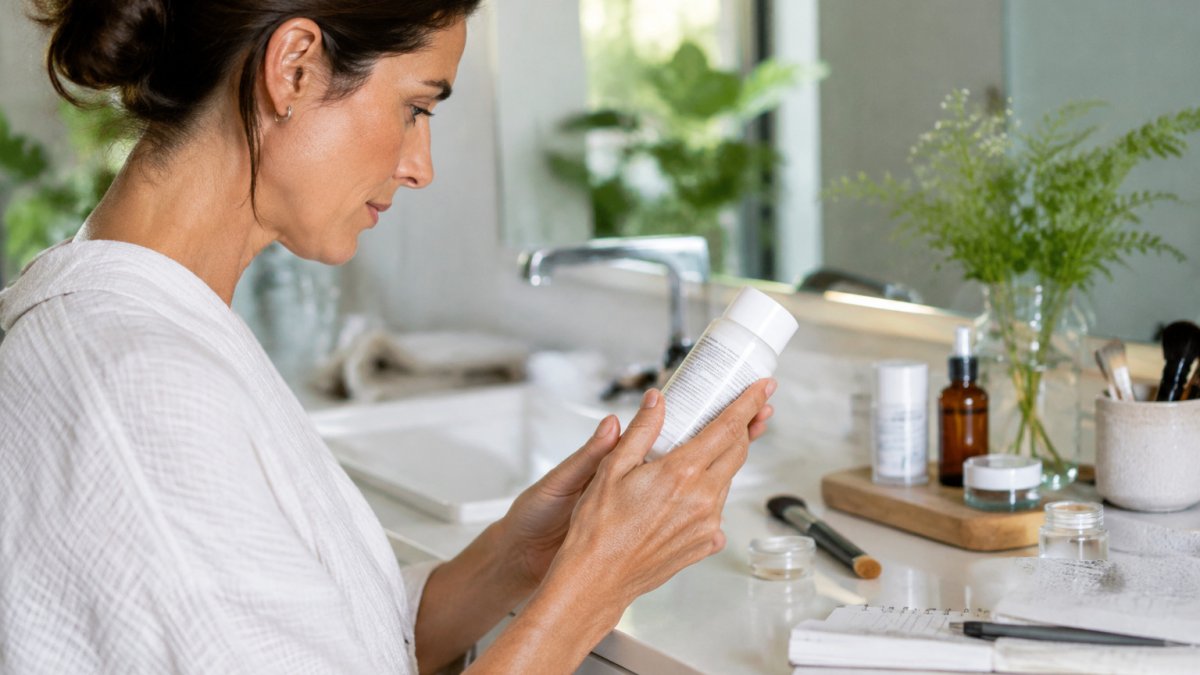
Next, read the ingredient list and batch information on the packaging. For a broader view of how to read labels, see our Skincare Ingredient Transparency Guide: Read Labels Like a Pro.
Reading Supplier and Audit Information
Supplier and audit information shows whether a brand's commitments extend beyond marketing. Look for named third-party audits, their scope (manufacturing site, raw material suppliers or both) and completion dates. A recent audit covering key ingredient suppliers says far more than an older one covering only the final filling site.
Pay attention to what is not disclosed. If a brand describes its supply chain in general terms but refuses to name its manufacturing partner or confirm whether its actives are independently tested, treat that silence as information.
Spotting Greenwashing on Labels
Greenwashing is environmental or ethical language that overstates or misrepresents a product's real impact. Common signs include unexplained terms like "natural-derived" without a percentage, nature imagery suggesting a certification that does not exist, and "eco" or "pure" claims with no supporting detail.
If a claim cannot be linked to a specific certificate, test or disclosed practice, treat it as marketing. Check whether any logo corresponds to a real, verifiable certification, and whether that certification applies to the product or only to one ingredient.
Ethical Beauty Certifications: What Each One Actually Verifies
Certifications are useful shortcuts, but each one verifies something different, and the scope matters more than the logo.
| Certification | Issuing body | What it verifies | What it does not cover |
|---|---|---|---|
| Leaping Bunny | Cruelty Free International | No animal testing at any stage of product development, including ingredient suppliers, with a supplier monitoring system | Environmental impact, packaging, labour practices |
| Choose Cruelty Free | Choose Cruelty Free (Australia) | No animal testing by the brand or its suppliers, with an accreditation process | Vegan status, sustainability, sourcing ethics |
| Vegan Trademark | The Vegan Society | No animal-derived ingredients or animal testing | Environmental footprint, fair labour |
| COSMOS Organic / COSMOS Natural | COSMOS-standard AISBL (European-based, widely used by Australian brands) | Organic and natural content thresholds, prohibited ingredients, some environmental and packaging criteria | Full social/labour auditing of the supply chain |
| ACO Certified Organic | Australian Certified Organic | Organic production and handling of ingredients to Australian organic standards | The non-organic portion of the formula, labour rights |
| Fairtrade Mark | Fairtrade Australia and New Zealand | Minimum price and premium paid to certified producers, plus labour standards for cooperatives and plantations | Ingredients not in the certified supply chain, environmental criteria beyond the standard |
| B Corp | B Lab (global, with Australian and New Zealand operations) | Whole-company governance, worker, community, environmental and customer standards, verified by B Lab | Individual product formulations or ingredient-level sourcing |
| Australian Made logo | Australian Made Campaign Ltd | That the product was made (or substantially transformed) in Australia under the Australian Consumer Law safe harbour | Ethical sourcing, organic status, labour conditions |
Read each certification's scope before assuming it covers the whole product. A certified ingredient inside an uncertified formula does not make the finished product certified.
Certifications change over time, and a logo printed months or years ago may no longer reflect current accreditation. Maintaining transparency requires a deeper investigation into the raw material origins used by Soulari Naturals, which remains the most reliable way to verify that a brand's claims align with the reality of its supply chain.
How third-party auditing actually works
A typical audit trail runs in four layers. First, supplier declarations: the raw material supplier confirms origin, identity and any certifications in a signed document. Second, certificates of analysis (CoAs): batch-level test results confirming identity, purity and, where relevant, absence of contaminants. Third, site audits: an auditor visits the manufacturing or processing facility and checks records, hygiene, labour conditions and traceability systems against a standard. Fourth, surveillance: repeat audits at defined intervals, plus unannounced checks in some schemes.
The scope of an audit is the part shoppers miss. An audit of the final filling site confirms how the product was packed, not where the actives came from. An audit covering key ingredient suppliers is far more meaningful for sourcing claims.
For social claims, the credible mechanisms are SA8000 (Social Accountability International), SMETA (Sedex Members Ethical Trade Audit) and Fairtrade's own producer standards. Each involves document review and worker interviews, and each verifies conditions at audited sites, not the entire chain. A brand able to name its audit standard and scope is more credible than one offering general assurances.
Australian-Made Skincare and the Regulatory Framework
"Australian-made" and "Australian-owned" are different claims, and both differ from compliance with local rules. Understanding the regulatory picture is the fastest way to separate a legal baseline from a voluntary ethical commitment.
Who regulates what
Cosmetic ingredients are regulated under Australia's industrial chemicals framework, administered by the Australian Industrial Chemicals Introduction Scheme (AICIS).
The Therapeutic Goods Administration (TGA) regulates products that make therapeutic claims or fall into specified categories. Some sunscreens are regulated as therapeutic goods and must be listed on the Australian Register of Therapeutic Goods (ARTG).
The Australian Competition and Consumer Commission (ACCC) enforces those consumer-law provisions, and greenwashing claims have been an enforcement priority. The ACCC has published guidance on environmental and sustainability claims, which expects claims to be truthful, specific and substantiated (Environmental and sustainability claims).
Compliance versus voluntary standards
Compliance is a baseline, not a differentiator: every legitimate product sold here must meet the relevant requirements. Voluntary standards, third-party certifications, published audit programmes, B Corp verification, Fairtrade certification, go further and are where brands actually compete on ethics.
This is where greenwashing most often hides: a brand may imply that legal compliance is an ethical achievement, or that a voluntary badge covers more than it does.
Check the official AICIS and TGA guidance for the product's regulatory category, read the label for country-of-origin and batch information, then look at voluntary standards separately.
Questions to Ask Beauty Brands About Sourcing
Direct questions often reveal more than any web page. Brands that run a serious supply chain can answer them clearly, and those that cannot are telling you something useful.
Ask specific questions such as:
- Who manufactures the product, and where is the facility located?
- Can you name the suppliers of your key actives, or at least their country and category?
- Are finished batches tested by a third party, and can you share a recent certificate of analysis?
- Which certifications apply to this exact product, and which issuing body verified them?
- How do you handle supplier audits, and how often are they repeated?
- What is your policy on animal testing for ingredients, not just the finished product?
Keep a record of the replies. A brand that answers in detail and follows up with documents earns more trust than one that replies with generic reassurance.
Packaging, Waste and Social Impact Beyond Fair Trade
Fair trade is one part of social responsibility, and it does not cover everything that matters. Our guide to How to Build a Sustainable Skincare Routine in Australia covers these trade-offs in more depth.
Social impact extends to how a brand treats its manufacturing workforce, engages local suppliers and discloses labour practices. Fair-trade certification addresses only a narrow slice of that picture. Ask whether a brand publishes any information on workplace standards, not just ingredient sourcing.
Post-consumer waste is often overlooked. A pump bottle that is hard to recycle or a multi-material jar can undercut a strong ingredient story, so weigh packaging claims alongside formulation claims.
Choosing a Brand You Can Verify and Trying Its Products
A verifiable brand gives you records, named suppliers, batch information and answers to direct questions. An unverifiable one relies on atmosphere. Shortlist brands that pass the traceability tests above, then compare them on formulation, sensitivity-friendliness and packaging.
Pepcare Lab is an Australian skincare and haircare brand built around copper peptides (GHK-Cu), with simple, three-step routines and transparent ingredients. It is created with sensitive skin in mind, but whether any product suits your skin is a question for you and, where needed, a dermatologist.
Before you commit, read our Nubeean Noosa vs Escentials of Australia: An Honest Review for a practical comparison of how two Australian beauty brands handle transparency, then apply the same checklist to any brand you consider. Pricing depends on the product, size and delivery details, so check Pepcare Lab's website for current prices. Shop our Bestsellers to see the current range and verify the details for yourself.
Frequently Asked Questions
What does ethical sourcing mean in beauty?
Ethical sourcing in beauty means a brand can show where its ingredients come from, how they were produced, and whether the people and environments involved were treated responsibly. It covers traceability of raw materials, supplier standards, labour conditions, and environmental impact. Ethical sourcing differs from a marketing claim because it can be checked through supplier documentation, third-party audits and certifications. When a brand cannot name its suppliers or explain its sourcing policy, treat the word ethical as unverified until the brand provides evidence.
Are Australian-made beauty products automatically ethically sourced?
No. Australian-made status tells you where a product was manufactured or substantially transformed, and it does not confirm that every ingredient was sourced ethically. Many Australian brands import raw materials from overseas suppliers. Products must still comply with the Australian Industrial Chemicals Introduction Scheme and labelling rules administered through the Therapeutic Goods Administration and the Australian Competition and Consumer Commission, but those rules address safety and claims rather than supply chain ethics. Check the brand's sourcing policy separately.
How can I check whether a beauty brand is cruelty-free?
Look for a recognised third-party certification such as Leaping Bunny or PETA's cruelty-free program, and check whether the brand states its position on animal testing for both its finished products and its ingredients. Also check whether it sells in markets where animal testing is legally required for cosmetics. A brand that says it is cruelty-free but cannot explain how its ingredient suppliers are tested should be asked for more detail before you assume the claim holds.
What questions should I ask a beauty brand about its suppliers?
Ask where each key active ingredient is sourced, whether suppliers are audited by a third party, how often audits occur, and whether the brand can provide traceability documents for batches you are buying. Ask whether its packaging is recyclable and how it manages waste. A brand with genuine sourcing standards will answer these questions directly. Vague answers about being natural or conscious are a signal to look elsewhere.
