
Table of Contents
- What copper peptides are and how they target fine lines
- Copper peptides benefits for skin: collagen, elastin, and repair
- How to use copper peptides in skincare routines
- Copper peptides and retinol: compatibility and timing
- Copper peptides side effects and who should use caution
- Realistic timelines and measurable outcomes
- Frequently Asked Questions
Last Updated: October 10, 2026
What copper peptides are and how they target fine lines
Copper peptides are small amino acid chains that contain copper, a trace mineral essential for skin repair and renewal, and they are particularly effective at addressing copper peptides fine lines. The most studied form is GHK-Cu, a naturally occurring copper peptide that plays a central role in wound healing and tissue regeneration.
Fine lines form when collagen breaks down and skin loses elasticity. Copper peptides address this at the cellular level by stimulating fibroblasts, the cells responsible for producing these vital proteins.
At Pepcare Lab, we focus on copper peptides because the science supporting their benefits for skin texture and firmness is compelling. The mechanism is straightforward: as collagen production increases and skin barrier function improves, fine lines appear less pronounced and skin takes on a smoother, more resilient appearance.

Copper peptides benefits for skin: collagen, elastin, and repair
Copper peptides deliver multiple benefits beyond wrinkle reduction. They support collagen production, improve skin elasticity, strengthen your skin barrier, and provide antioxidant protection. However, understanding what the evidence actually shows, and where it falls short, is essential for realistic expectations.
Collagen production and skin firmness: what the evidence shows
Laboratory and cell culture studies consistently demonstrate that GHK-Cu and related copper peptides stimulate fibroblasts to increase collagen synthesis (Regenerative and Protective Actions of the GHK-Cu Peptide in the Light of the New Gene...).
However, a critical distinction exists: laboratory evidence of increased collagen production does not automatically translate to visible wrinkle reduction in human skin. Animal studies (conducted on mice and other models) show improved skin thickness and collagen density, but animal skin differs from human skin in structure and ageing patterns.
Collagen naturally declines roughly 1% per year after age 30, and copper peptides are thought to slow or partially reverse this decline. Consistent use over 6-8 weeks may improve skin firmness and make fine lines appear softer, but the magnitude of change varies widely between individuals.
Antioxidant protection and skin barrier support
Copper is a cofactor for superoxide dismutase (SOD), an enzyme that neutralises free radicals (The Applications and Mechanisms of Superoxide Dismutase in Medicine, Food, and Cosmetics). Laboratory studies confirm this mechanism, and copper peptides do provide measurable antioxidant activity in controlled settings. In human skin, this translates to protection against oxidative stress caused by sun exposure and environmental pollutants, which accelerates collagen breakdown and ageing.
Your skin barrier, the outer layer that locks in hydration and keeps irritants out, also benefits from copper peptide use. Copper peptides work alongside niacinamide and hyaluronic acid to reinforce barrier function, reducing sensitivity and improving moisture retention. A stronger barrier means less irritation, better hydration, and skin that appears more radiant and resilient.
Realistic scope: what copper peptides can and cannot do
Copper peptides are a supportive ingredient for skin renewal and fine line appearance, not a substitute for established wrinkle-care approaches. Sunscreen (SPF 30+) remains the single most effective anti-ageing tool because it prevents further collagen damage. Retinoids (prescription or over-the-counter) have decades of human clinical evidence for visible wrinkle reduction and are considered the gold standard for treating established lines. Copper peptides complement these approaches by supporting skin barrier health and collagen production, but they work more gradually and with less dramatic visible change than retinoids.
If your primary goal is rapid, measurable wrinkle reduction, retinoids are more evidence-supported. If your goal is gentle, cumulative improvement in skin texture and firmness whilst supporting barrier health, copper peptides are a sensible choice, especially if you have sensitive skin that does not tolerate retinoids well.
How to use copper peptides in skincare routines
Copper peptides work best when used consistently as part of a simple routine.
Apply copper peptides to clean, dry skin in the morning and evening. The Pepcare Lab Face Serum contains 1% copper peptides alongside hydrating ingredients like hyaluronic acid, making it suitable for daily use even on sensitive skin.

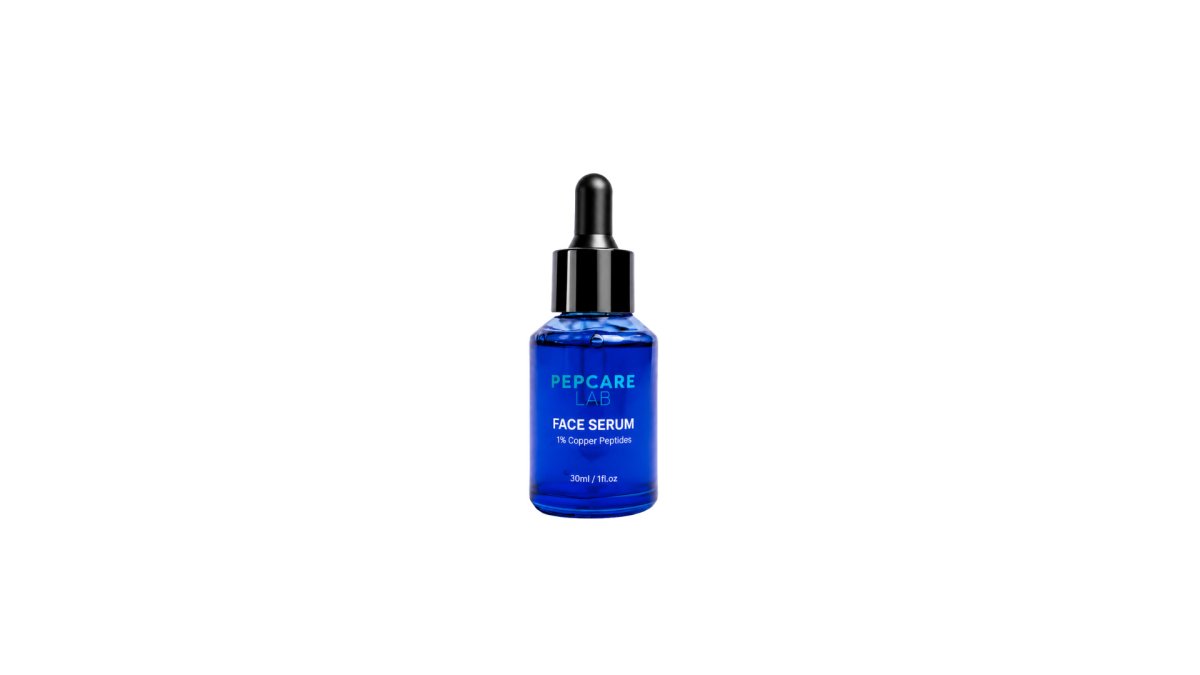
After applying your serum, follow with a moisturiser to seal in hydration. The Pepcare Lab Barrier Cream, also formulated with 1% copper peptides, locks in the serum and strengthens your skin barrier throughout the day or night.
Concentration and formulation: what matters
Not all copper peptide products are equal. Concentration matters: most effective formulations contain 1-2% copper peptides. Below 1%, the ingredient may provide minimal benefit. Above 2%, there's no evidence of additional improvement, and cost rises significantly.
Formulation also affects results. Copper peptides are most stable in slightly acidic pH ranges (around 5.5-6.5), which matches your skin's natural pH. Products formulated at this pH absorb better and remain effective longer. Look for products that list copper peptides near the beginning of the ingredient list, indicating a meaningful concentration rather than a token amount.
Layering with other ingredients
Copper peptides work well alongside most skincare ingredients. Niacinamide, hyaluronic acid, and squalane all complement copper peptides and enhance barrier support. However, timing matters when combining active ingredients.
If you use vitamin C in the morning, apply it first, let it dry fully, then apply your copper peptide serum. Vitamin C works best at a lower pH, while copper peptides prefer a neutral-to-slightly-acidic environment, so sequential application prevents them from interfering with each other's efficacy.
Copper peptides and retinol: compatibility and timing
Many people ask whether copper peptides can be used alongside retinol or prescription retinoids. The answer is yes, but understanding the role each ingredient plays in wrinkle care is important for setting realistic expectations.
Why retinoids are the established standard
Retinoids (including retinol, retinaldehyde, and prescription-strength retinoids like tretinoin) have the strongest human clinical evidence for visible fine line and wrinkle reduction (Retinoids in the treatment of skin aging: an overview of clinical efficacy and safety). Decades of research show that retinoids increase cell turnover, stimulate collagen production, and improve skin texture and firmness.
Copper peptides, by contrast, work through a gentler mechanism (signalling collagen production rather than forcing cell turnover) and show more gradual, subtle results. They are not a replacement for retinoids if your primary goal is rapid wrinkle reduction. However, they are an excellent complement, especially if you have sensitive skin, are new to active ingredients, or want to support your skin barrier whilst using retinoids.
Using copper peptides and retinoids together
Both ingredients support skin renewal and collagen production, so combining them amplifies results, but they should not be applied simultaneously. Retinoids increase cell turnover and can cause irritation, redness, and photosensitivity, especially when first introduced. Copper peptides support barrier function and may help mitigate some retinoid irritation.
Use retinol or retinoid at night, as it increases photosensitivity and works best when skin is not exposed to UV light. Apply your copper peptide serum in the morning and evening, or reserve it for mornings if you prefer to simplify your routine.
Start with low-concentration retinol (0.25-0.3%) if your skin is sensitive. Copper peptides actually support skin barrier function, which helps mitigate some retinol irritation and allows your skin to adapt more comfortably. After 2-3 weeks of consistent use, your skin typically tolerates both ingredients well.
Copper peptides as a gentler alternative for retinoid-sensitive skin
If you have tried retinoids and experienced persistent irritation, redness, or barrier damage, copper peptides offer a gentler approach to supporting collagen production and fine line appearance. They work more slowly than retinoids, expect 6-8 weeks for noticeable results rather than 8-12 weeks, but they are less likely to cause irritation or photosensitivity. This makes them a practical option for people with reactive or compromised skin barriers who still want to address fine lines actively.
However, if you tolerate retinoids well, they remain the more evidence-supported choice for visible wrinkle reduction. Copper peptides are best viewed as a complementary ingredient that supports long-term skin health and barrier function, rather than a primary wrinkle-treatment tool.
Copper peptides side effects and who should use caution
Copper peptides are generally well-tolerated, even on sensitive skin. However, a small percentage of people experience mild irritation, redness, or sensitivity when first introducing them. This is typically a sign of adjustment rather than an allergic reaction.
If irritation occurs, reduce frequency to every other day for the first week, then gradually increase to daily use. Always patch test on a small area of your inner arm or behind your ear before applying to your face.
People with copper sensitivity or Wilson's disease, a rare genetic condition affecting copper metabolism, should avoid topical copper peptides and consult their healthcare provider. Pregnant or breastfeeding individuals should also check with their doctor before introducing new active ingredients, though topical copper peptides are generally considered safe for this group.
Realistic timelines and measurable outcomes
Most people notice subtle improvements in skin texture and hydration within 2-4 weeks of consistent use, with copper peptides fine lines appearing slightly softer. Fine lines appear slightly softer, and skin feels smoother. More significant improvements, visible reduction in fine line depth and improved skin firmness, typically emerge after 6-8 weeks.
Results continue to improve over 12 weeks and beyond. Collagen production is a gradual process, so patience is essential. Consistency matters more than product switching: using the same copper peptide formulation daily delivers better results than rotating multiple products.
Factors that slow results include inconsistent application, inadequate sun protection, dehydration, and poor sleep. Copper peptides work best when paired with a broad-spectrum sunscreen (SPF 30+), adequate water intake, and a stable sleep schedule. These fundamentals amplify the visible benefits of any skincare ingredient.
| Timeline | Expected Changes | What to Monitor |
|---|---|---|
| Weeks 1-2 | Improved hydration, smoother texture | Skin feel and glow |
| Weeks 3-4 | Fine lines appear softer, reduced sensitivity | Line depth, redness |
| Weeks 6-8 | Visible fine line reduction, improved firmness | Skin elasticity, tone |
| Weeks 12+ | Cumulative improvement in skin quality | Overall appearance, texture |
Fine lines are a natural part of ageing, but they don't have to be permanent. The Pepcare Lab Face Duo combines our 1% copper peptide serum with a barrier-supporting cream, creating a simple two-step routine designed specifically for sensitive skin. Start with consistent application, give your skin 6-8 weeks to respond, and you'll likely notice smoother, firmer-looking skin with reduced fine line visibility. Shop our Bestsellers and discover how copper peptides can support your skin's natural renewal.

Frequently Asked Questions
Do copper peptides really help with fine lines?
Copper peptides (GHK-Cu) support collagen and elastin production, which can improve skin texture and reduce the appearance of fine lines with consistent use. Research shows peptides support skin repair and firmness, though results depend on concentration, formulation, and how long you use them. Most users notice visible changes in skin texture and hydration within 4-8 weeks of daily application. Results are gradual rather than dramatic, and they work best as part of a complete routine.
Can I use copper peptides if I have sensitive skin?
Copper peptides are generally well-tolerated by sensitive skin because they support the skin barrier rather than disrupt it. However, always patch test first, apply a small amount to your inner arm or behind your ear and wait 24 hours. If you experience redness, itching, or irritation, discontinue use. Products like the Pepcare Lab Face Serum are specifically formulated for sensitive skin with complementary ingredients like niacinamide and hyaluronic acid to minimise irritation risk.
How long does it take to see results from copper peptides?
Visible improvements in fine lines and skin texture typically appear after 4-8 weeks of daily use, though some people notice hydration and softness within 2-3 weeks. Collagen and elastin support is a gradual process, so patience is essential. Consistency matters more than speed, skipping applications will delay results. Factors like age, skin condition, concentration (1% is standard), and overall routine affect how quickly you see changes.
What shouldn't I pair with copper peptides in my routine?
Copper peptides work well with most ingredients but require careful timing with retinol. Use retinol on alternate nights or apply copper peptides in the morning and retinol at night to avoid over-stimulating sensitive skin. Avoid mixing copper peptides with high concentrations of vitamin C in the same step, as pH differences can reduce efficacy. Hyaluronic acid, niacinamide, and squalane (all in the Pepcare Lab range) are excellent partners that strengthen barrier function.