
Table of Contents
- Quick Comparison: Copper Peptide Creams for Rosacea
- How We Evaluated These Copper Peptide Creams
- 1. Pepcare Lab Barrier Cream: Best for Barrier Repair
- 2. Pepcare Lab Face Serum: Best for Sensitive Skin Hydration
- 3. Pepcare Lab Face Duo: Best Two-Step Routine
- 4. Pepcare Lab Complete Collection: Best for Full Face and Scalp Support
- 5. Pepcare Lab Barrier Cream (Standalone): Best for Layering with Existing Routine
- Benefits of Copper Peptides for Sensitive Skin
- Frequently Asked Questions
Last Updated: September 19, 2026
Quick Comparison: Copper Peptide Creams for Rosacea
Copper peptide creams for rosacea are topical formulations built around GHK-Cu, a copper-binding peptide studied for its role in skin barrier repair, collagen synthesis and calming reactive skin. This guide from Pepcare Lab compares five options, all formulated with sensitive, redness-prone skin in mind.

The five picks below cover a simple daily moisturiser, a lightweight serum, two bundled routines and a standalone barrier cream for layering. Each is assessed on ingredient transparency, peptide concentration, barrier support and value.
Here is how they stack up at a glance.
| Product | Price | Copper Peptide | Size | Best For |
|---|---|---|---|---|
| Barrier Cream | $49.00 | 1% | 50 mL | Barrier repair |
| Face Serum | $49.00 | 1% | 30 mL | Sensitive skin hydration |
| Face Duo | $79.00 | 1% (both) | 30 mL + 50 mL | Two-step routine |
| Complete Collection | $149.00 | 1% and 2% | 4 full-size items | Face, skin and scalp |
| Barrier Cream (standalone) | $49.00 | 1% | 50 mL | Layering |
Rosacea skin is reactive by nature, so the deciding factor is rarely the peptide alone. It is what sits alongside it. Niacinamide, squalane and hyaluronic acid all support barrier function without pushing a compromised face further.
Below, we walk through each option, what is inside it, and who it actually suits.
How We Evaluated These Copper Peptide Creams
Every product here was judged on four criteria: peptide concentration and form, supporting ingredients, how well the formula supports barrier function, and price per millilitre. We weighted ingredient transparency heavily, because reactive skin leaves little room for guesswork.
A common mistake is ranking these products on peptide percentage alone. Concentration matters, but a 1% formula paired with soothing agents and a fragrance-free base will often suit rosacea better than a stronger peptide load in a stripped-down vehicle.
We also checked how each product fits a routine. Rosacea-prone skin usually tolerates fewer steps, not more. Formulas that layer cleanly under sunscreen or over a prescription treatment scored higher than those demanding their own dedicated slot.
1. Pepcare Lab Barrier Cream: Best for Barrier Repair
The Barrier Cream is the strongest starting point for most people with rosacea-prone skin. It is a rich yet lightweight moisturiser with 1% copper peptides, niacinamide and squalane, designed to replenish hydration and reinforce the skin's natural barrier.
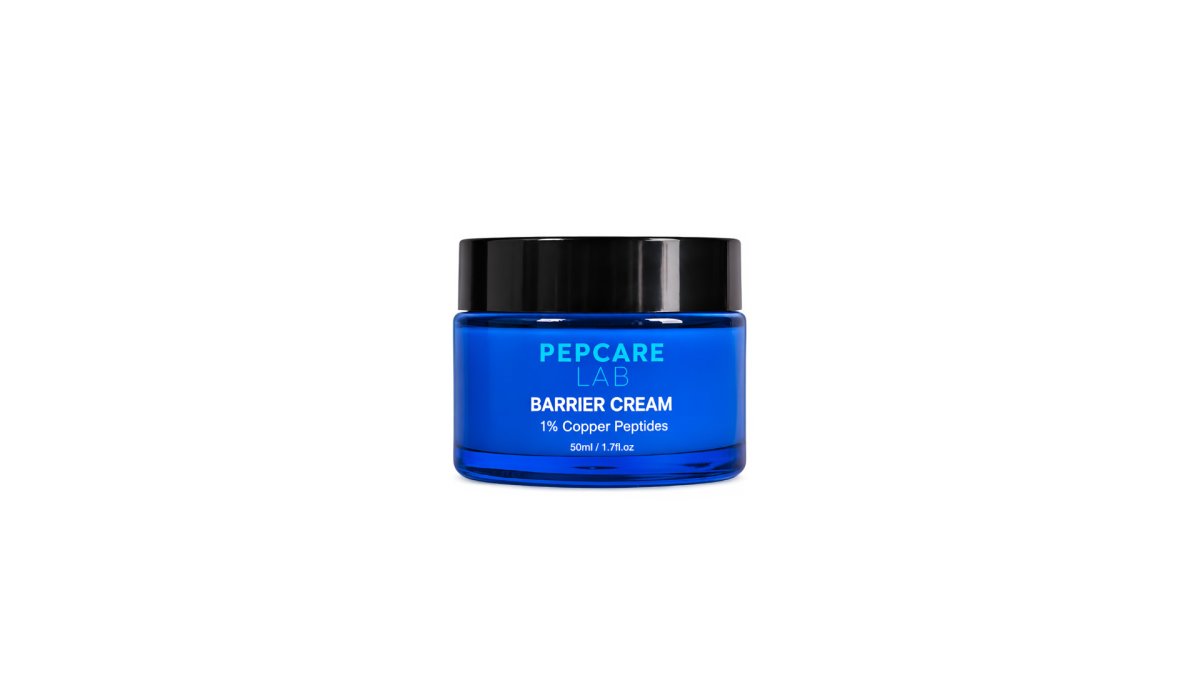
Where it earns its place is in the finish. This one absorbs without a greasy film, so it works as a daily moisturiser rather than a night-only treatment.
Key Ingredients and Concentration
- 1% Copper Peptides to support collagen production and skin renewal
- Niacinamide to support the barrier and even the look of tone
- Squalane to improve moisture retention
- Skin-conditioning ingredients that leave skin soft and resilient
Pros and Cons
Pros: Fragrance-free positioning suits reactive skin; 50 mL at $49.00 is fair value for a peptide moisturiser; layers under sunscreen without pilling.
Cons: 1% peptide concentration is moderate, so anyone expecting fast visible change may need patience.
2. Pepcare Lab Face Serum: Best for Sensitive Skin Hydration
The Face Serum is the lighter of the two core formulas. It is a fast-absorbing 1% copper peptide serum with niacinamide and hyaluronic acid, built to hydrate and support the skin barrier.

Texture is the reason it suits sensitive skin. It sinks in quickly, so you can follow with moisturiser and sunscreen without waiting.
Key Ingredients and Concentration
- 1% Copper Peptides plus a targeted peptide blend
- Niacinamide for barrier support
- Hyaluronic acid for skin hydration
- Fast-absorbing, fragrance-free base
Pros and Cons
Pros: Light enough for daytime use under makeup; 30 mL at $49.00 lasts roughly two months at twice-daily use; supports smoother-looking texture over time.
Cons: 30 mL is a smaller volume than the Barrier Cream, so frequent users will repurchase sooner.
3. Pepcare Lab Face Duo: Best Two-Step Routine
The Face Duo bundles the Face Serum and Barrier Cream at $79.00, saving $19 against buying them separately. It is the simplest way to run a complete copper peptide routine without deciding what pairs with what.

If you are new to peptides and unsure where to start, this is a simple option. The serum hydrates and delivers the peptide actives; the cream seals in moisture and supports the barrier. Two steps, morning and night.
Key Ingredients and Concentration
- Face Serum: 1% copper peptides, niacinamide, hyaluronic acid (30 mL)
- Barrier Cream: 1% copper peptides, niacinamide, squalane (50 mL)
- Both formulas fragrance-free and designed for sensitive skin
Pros and Cons
Pros: Saves $19 versus individual purchase; free Australian shipping; removes the guesswork of routine building.
Cons: Only worth it if you will genuinely use both steps. If you prefer a single moisturiser, buy the Barrier Cream alone.
4. Pepcare Lab Complete Collection: Best for Full Face and Scalp Support
The Complete Collection is the broadest option at $149.00, saving $37. It adds a 2% copper peptide Hair & Scalp Serum and a scalp massage brush to the face routine.
This one suits anyone dealing with early signs of hair thinning or scalp health issues. The scalp serum uses a higher 2% peptide concentration with niacinamide, biotin and botanical extracts to support the appearance of the scalp and hair.
Key Ingredients and Concentration
- Face Serum: 1% copper peptides (30 mL)
- Barrier Cream: 1% copper peptides (50 mL)
- Hair & Scalp Serum: 2% copper peptides with niacinamide and biotin (50 mL)
- Scalp Brush: gentle massage tool that helps lift product
Pros and Cons
Pros: Best value per item at $149.00 for four full-size products; covers face, skin and scalp in one purchase; free Australian shipping.
Cons: Higher upfront cost. Only justified if scalp care is actually part of your goal.
5. Pepcare Lab Barrier Cream (Standalone): Best for Layering with Existing Routine
If you already have a serum you trust, buy the Barrier Cream on its own at $49.00 and slot it in as your final moisturising step. It layers cleanly over water-based serums and under sunscreen.
This is the pick for anyone mid-routine who does not want to rebuild from scratch. Add one product, keep everything else.
Key Ingredients and Concentration
- 1% Copper Peptides for barrier and collagen support
- Niacinamide and squalane for hydration and moisture retention
- 50 mL, fragrance-free, non-greasy finish
Pros and Cons
Pros: Lowest-commitment way to test copper peptides; works over most existing serums; generous 50 mL size.
Cons: You miss the layering benefit of pairing it with the matching serum.
Benefits of Copper Peptides for Sensitive Skin
Copper peptides support sensitive skin mainly through barrier repair and calming properties. GHK-Cu is a copper-binding peptide, and research into its role in wound healing and collagen synthesis has driven much of its use in skincare.
For sensitive skin, the appeal is straightforward. A compromised barrier loses water faster and reacts to more triggers. Ingredients that support barrier function and reduce irritation threshold tend to calm persistent redness over time rather than masking it.
The American Academy of Dermatology's guidance on rosacea triggers notes that gentle, non-irritating skincare is central to managing the condition. That principle applies here: peptides are only useful if the base formula does not provoke flushing in the first place.
How to Incorporate Copper Peptides into a Rosacea Routine
Start with one product, once daily. Patch test on the inner forearm first if your skin has reacted to new products before. If there is no reaction, move to the face at night, then add a morning application once tolerated.
Order matters.
Copper Peptide Side Effects on Rosacea
The main risk is irritation from the surrounding formula, not the peptide itself. Fragrance, essential oils and alcohol are common culprits in products marketed as gentle.
Frequently Asked Questions
Are copper peptides safe for rosacea-prone skin?
Copper peptides are generally well tolerated, but sensitive skin has a lower irritation threshold. Start with a patch test on your inner arm. Choose fragrance-free formulas with 1% copper peptides, like Pepcare Lab's Barrier Cream, which also contains niacinamide and squalane to support the skin barrier. If you experience persistent redness or flushing, stop use and consult a dermatologist.
How do copper peptides help reduce facial redness?
Copper peptides support skin barrier repair and have calming properties. By strengthening the barrier, they help reduce transepidermal water loss and protect against irritants. They also promote collagen production and encourage skin renewal, which over time can improve the appearance of the skin. Consistent use is key.
Can copper peptides cause irritation in sensitive skin?
Yes, if the concentration is too high or the formula contains irritating ingredients. To minimise risk, introduce copper peptides slowly, use a 1% concentration, and avoid combining with strong acids or retinoids. Always patch test first and choose products with soothing agents.
What should I look for in a copper peptide cream for rosacea?
Look for a fragrance-free formula with a 1% copper peptide concentration. Check for supporting ingredients like niacinamide, squalane, and hyaluronic acid. Avoid alcohol and essential oils. Pepcare Lab's Barrier Cream and Face Serum both meet these criteria.
How long does it take to see results from copper peptides on rosacea?
Most people notice improved hydration and reduced tightness within 2 to 4 weeks. Long-term benefits like collagen production and skin renewal may take consistent use. Keep a simple routine. If no improvement occurs after 12 weeks, reassess with a dermatologist.