
Table of Contents
- What Are Copper Peptides and How Do They Work for Acne Scars?
- Copper Peptide Serum Worth It: Clinical Evidence and Real Results
- Copper Peptide vs Retinol for Acne Scars: Which Works Better?
- How to Use Copper Peptide Serum for Best Results
- Copper Peptide Side Effects and Safety Considerations
- Pepcare Lab Face Serum: A Practical Option for Scar-Prone Skin
- The Verdict: Is Copper Peptide Serum Worth the Investment?
- Frequently Asked Questions
Last Updated: September 28, 2026
What Are Copper Peptides and How Do They Work for Acne Scars?
Copper peptides are small protein fragments containing copper molecules that support skin repair at the cellular level. The most researched form, GHK-Cu, stimulates fibroblasts to increase collagen and elastin production, giving skin firmness and resilience.
For acne scars, copper peptides trigger dermal remodeling to rebuild lost collagen structure. Unlike surface-level treatments, they work on actual tissue regeneration rather than masking imperfections.
Understanding GHK-Cu and collagen synthesis
GHK-Cu signals skin cells to increase collagen and elastin production while supporting barrier function (pubmed.ncbi.nlm.nih.gov). Its antioxidant properties protect newly formed collagen from oxidative damage.
GHK-Cu binds to fibroblast receptors, increasing epidermal turnover and accelerating cellular regeneration. This gradually fills pitted scars as new collagen deposits build beneath the surface.
How copper peptides support wound healing and dermal remodeling
Copper peptides mimic the body's natural wound-healing response, restarting the healing process at the cellular level to encourage stronger collagen synthesis and better tissue organization (pubmed.ncbi.nlm.nih.gov).
Copper peptides' anti-inflammatory properties reduce post-inflammatory hyperpigmentation and active inflammation, allowing skin to focus on structural repair. This benefits sensitive skin types that struggle with retinol or chemical exfoliants.
Copper Peptide Serum Worth It: Clinical Evidence and Real Results
Copper peptides have legitimate research backing, but results are gradual and depend on scar type and consistency of use.
What research shows about skin texture improvement
Research shows consistent application over 12-16 weeks produces meaningful scar depth reduction. Results compound over time because you've genuinely increased collagen density, not just temporarily plumped the skin.
Retinol works faster for surface texture, but copper peptides address deeper structural damage. For actual atrophic scarring with visible pits, copper peptides are worth the extended timeline.
Atrophic scarring and fibroblast stimulation
Atrophic scars, characterized by tissue loss, don't improve with exfoliation. Copper peptides target them by stimulating fibroblasts to produce collagen that gradually fills the depression.
Shallow scarring shows improvement in 12-16 weeks; deeper scarring requires 4-6 months. Copper peptides work best as part of a layered approach rather than standalone.
Copper Peptide vs Retinol for Acne Scars: Which Works Better?
This comparison matters because both are legitimate scar-fighting actives, but they work through completely different mechanisms. The answer depends on your scar type and skin sensitivity.
Collagen-boosting mechanisms and epidermal turnover
Retinol accelerates epidermal turnover and increases collagen as a side effect, showing results in 4-6 weeks but causing more irritation, especially for sensitive skin.
Copper peptides boost collagen more gently through fibroblast stimulation, causing less irritation. For reactive skin or active acne, they're the smarter choice as they won't trigger inflammation that undoes healing.
Scar type specificity and ingredient incompatibility
Rolling scars respond well to copper peptides. Boxcar and ice-pick scars respond more slowly and often benefit from professional treatments like microneedling or laser therapy alongside serums.
Retinol and copper peptides mix fine, but avoid combining with vitamin C or AHAs on the same day. Niacinamide is safe to combine; vitamin C interferes with peptide absorption.
Copper peptides work best as the primary active, with supporting ingredients like niacinamide and hyaluronic acid that enhance rather than compete with their mechanism.
How to Use Copper Peptide Serum for Best Results
The difference between people who see results and those who don't often comes down to application method and consistency, not the product itself.
Application order and layering with other actives
Apply copper peptide serum to clean, dry skin as the first active step, after cleansing and hydrating toners but before creams or oils. It needs direct skin contact to work effectively.
Application order: cleanser → hydrating toner (optional) → copper peptide serum → wait 2-3 minutes → moisturiser. Use chemical exfoliants 2-3 times weekly on separate nights. Retinol can alternate nights or layer if tolerated.
Never mix copper peptide serum with vitamin C in the same application. If you want to use both, apply vitamin C in the morning and copper peptides at night, or alternate days. The pH and formulation of vitamin C can reduce peptide bioavailability, essentially wasting the copper peptides' potential.
Concentration levels and patch testing for sensitive skin
The Pepcare Lab Face Serum contains 1% copper peptides, the standard research-backed concentration suitable for sensitive skin when introduced gradually.

Patch test on inner arm for 24 hours. Introduce slowly: 2-3 times weekly for two weeks, then daily if no irritation develops. Watch for redness, stinging, or increased sensitivity.
Mild dryness during remodeling is normal. Use a hydrating moisturiser like Pepcare Lab Barrier Cream and consider adding a hydrating toner if skin feels tight.
| Application Step | Timing | Frequency | Key Point |
|---|---|---|---|
| Cleanser | Anytime | Daily | Remove oil and debris first |
| Hydrating toner | After cleanser | Daily | Prepares skin for serum absorption |
| Copper peptide serum | On clean, dry skin | Daily (after patch test) | Wait 2-3 minutes before moisturiser |
| Moisturiser | After serum sets | Daily | Lock in hydration and support barrier |
| Retinol or exfoliant | Separate nights | 2-3x weekly | Alternate with copper peptides |
Copper Peptide Side Effects and Safety Considerations
Copper peptides are generally well-tolerated, but they're not completely risk-free, especially for sensitive skin types.
Skin sensitivity and irritation risk for sensitive skin types
Mild irritation during adjustment (redness, dryness, tightness) is usually temporary. True allergic reactions are rare; copper sensitivity exists in a small percentage of people.
If persistent redness, swelling, hives, or itching develops, stop and consult a dermatologist. Slow introduction with strong moisturiser prevents irritation for most people.
Who should avoid copper peptides
If you have a diagnosed copper sensitivity or allergy, avoid copper peptide products entirely. This is rare but important. Some people with Wilson's disease or other copper metabolism disorders should consult their doctor before using copper-containing topicals, though the amount absorbed through skin is minimal.
Pregnant or breastfeeding individuals should check with their healthcare provider before starting copper peptides, though topical use is generally considered safe. If you're taking oral copper supplements, be cautious about adding copper peptide serums, discuss with your doctor to avoid excessive copper exposure.
If your skin is actively inflamed from severe acne, wait until the inflammation settles before introducing copper peptides. Active acne can make your skin barrier compromised, and introducing a new active might trigger additional irritation. Once acne is under control, copper peptides become valuable for addressing the scars it leaves behind.
Pepcare Lab Face Serum: A Practical Option for Scar-Prone Skin
At Pepcare Lab, we've formulated the Face Serum specifically for people dealing with sensitive skin and acne scarring. The 1% copper peptide concentration is research-backed without being excessive, and the supporting ingredients, niacinamide, hyaluronic acid, and additional peptides, work together to support skin barrier function while the copper peptides do their deeper work on collagen synthesis.

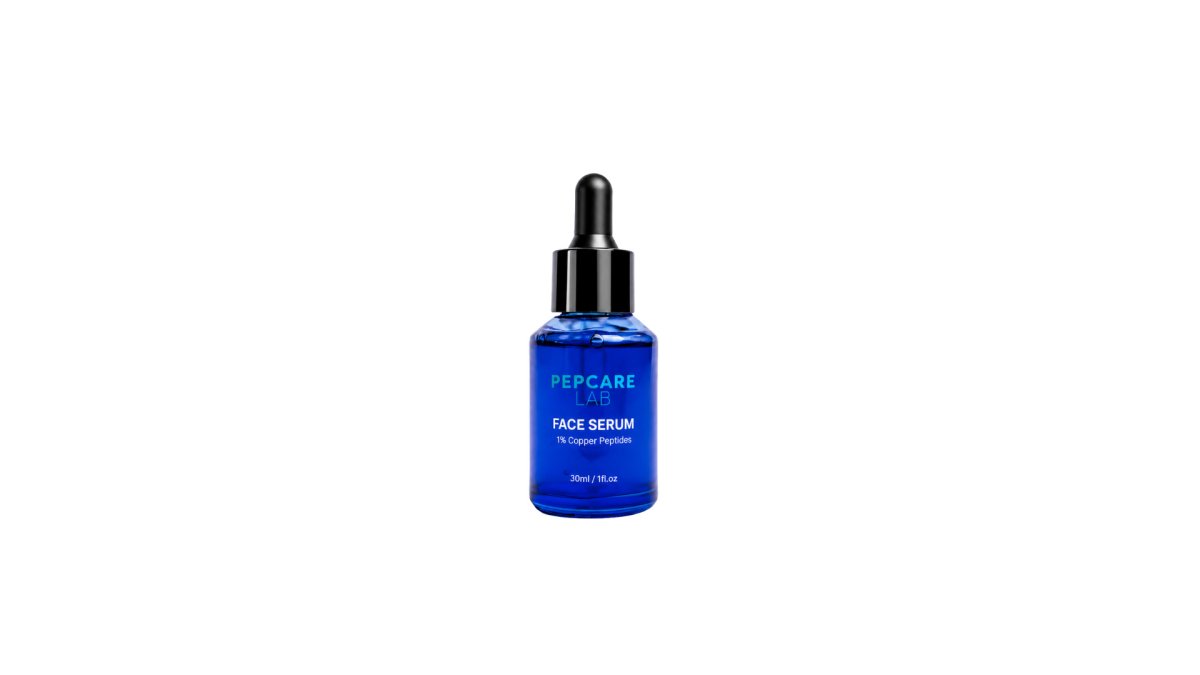
The serum is lightweight and fast-absorbing, which matters because many people with scar-prone skin are also prone to clogged pores. A heavy serum can trigger breakouts, defeating the purpose of treating scars. The Pepcare Lab formula absorbs within 2-3 minutes, leaving skin feeling hydrated rather than sticky or occlusive.
Why concentration and formulation matter
The 1% copper peptide concentration isn't arbitrary. Research shows this concentration delivers results without causing irritation in most people. Higher concentrations don't necessarily work faster; they just increase irritation risk. The Pepcare Lab formulation pairs this concentration with niacinamide, which has its own skin-supporting properties and actually enhances copper peptide efficacy by supporting skin barrier function.
Long-term maintenance and realistic timelines
Scar improvement isn't a one-time event. After 12-16 weeks of consistent use, you'll see noticeable improvement in scar depth and skin texture. But maintaining that improvement requires ongoing use. This isn't a flaw of copper peptides specifically; it's true of all topical scar treatments. Your skin stops actively remodeling collagen once you stop the stimulus.
The Verdict: Is Copper Peptide Serum Worth the Investment?
Whether is copper peptide serum worth it for acne scars depends on having atrophic scars, sensitive skin, and realistic expectations about timelines. The research supports efficacy, the mechanism is sound, and the risk of irritation is low compared to alternatives like retinol or chemical exfoliants.
Frequently Asked Questions
How long does it take to see results from copper peptide serum for acne scars?
Results vary depending on scar depth and type, but most people notice skin texture improvement within 6 to 12 weeks of consistent daily use. Atrophic scarring, the most common type from acne, responds gradually as copper peptides stimulate collagen synthesis and fibroblast activity. Long-term maintenance over 3 to 6 months typically shows more noticeable changes in skin resilience and scar appearance.
Can copper peptide serum be used with retinol or other active ingredients?
Copper peptides can be layered with some actives, but ingredient incompatibility is a real concern. Avoid mixing copper peptides with vitamin C or high-pH products in the same step, as this can reduce bioavailability. If combining with retinol, apply retinol at night and copper peptides in the morning, or use them on alternate nights. Always patch test first, especially if you have sensitive skin.
Is copper peptide serum safe for active acne or sensitive skin?
Copper peptides are generally well-tolerated, but sensitive skin requires caution. Start with a lower concentration (1% or less) and patch test for 3 to 5 days before full application. Copper peptides have anti-inflammatory properties, making them suitable for some acne-prone skin, but they're not a direct acne treatment. If you experience redness or irritation, discontinue and consult a dermatologist.
What makes Pepcare Lab's copper peptide serum different from other options?
Pepcare Lab's Face Serum contains 1% copper peptides combined with niacinamide and hyaluronic acid, designed specifically for sensitive skin and barrier function support. The formula prioritises bioavailability and is formulated to work alongside a barrier cream for long-term skin resilience. At $49 AUD, it's positioned as a straightforward, science-led option without unnecessary additives, making it accessible for those starting a copper peptide routine.