
Table of Contents
- Step 1: Recognise the Early Signs of Hair Thinning
- Step 2: Understand What Causes Early Hair Thinning
- Step 3: Build the Best Scalp Care Routine for Hair Growth
- Step 4: How Copper Peptides for Hair Health Support Regrowth
- Step 5: Know When to See a Doctor for Hair Loss
- Step 6: Medical Treatments and What They Cost
- Step 7: Maintain Your Results and Avoid Common Mistakes
- Frequently Asked Questions
Last Updated: September 16, 2026
Step 1: Recognise the Early Signs of Hair Thinning
Catching early hair thinning while the follicle is still active is the single biggest factor in how much you can regrow. Most people wait until a bald patch appears, by which point some follicles have stopped producing visible hair altogether. The people who act on subtle changes tend to get the best outcomes.
What Early Thinning Actually Looks Like
- A widening part that shows more scalp than it did a year ago
- Thinner hair at the temples or a receding hairline
- More hair in the shower drain or on your pillow
- Individual strands that feel finer and break more easily
The tricky part is that hair grows in cycles. During the anagen phase, strands grow actively for years; during the telogen phase, they rest and shed. When more follicles shift into telogen than they should, density drops before you notice anything obvious. That lag is why a dermatology resource on hair cycle disruption recommends photographing your hairline monthly rather than relying on memory.
Step 2: Understand What Causes Early Hair Thinning
The most common driver of early hair thinning is androgenetic alopecia, a genetic sensitivity to dihydrotestosterone that shrinks hair follicles over time. But genetics is only one input. Stress, nutrition and hormonal shifts frequently accelerate a process that would otherwise take decades.
Common Triggers: Hormones, Stress and Nutrition
Hormonal imbalance is the classic cause. Thyroid disorders, polycystic ovary syndrome and the hormonal shifts around menopause all push follicles into resting phases. Telogen effluvium, the diffuse shedding that follows illness, surgery or prolonged stress, usually appears two to three months after the trigger.
Step 3: Build the Best Scalp Care Routine for Hair Growth
A consistent scalp care routine for hair growth beats an expensive one you abandon after three weeks. The goal is simple: keep the scalp clean, circulation active and the follicle environment calm.
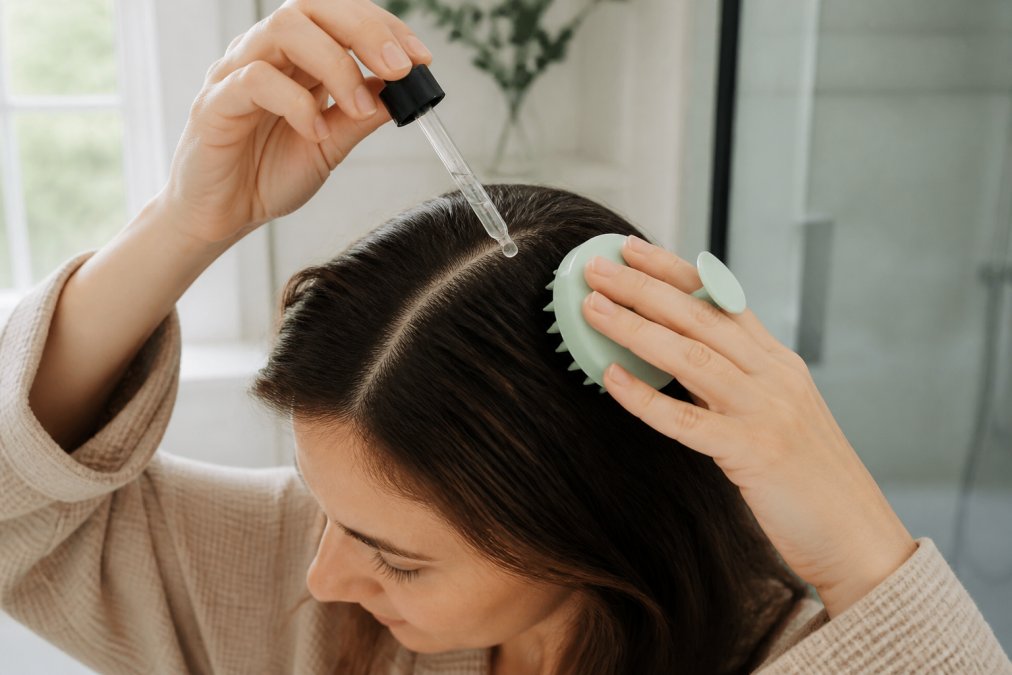
Cleanse, Stimulate, Nourish: A Simple Daily Sequence
- Cleanse with a gentle, sulphate-free shampoo to clear build-up without stripping the scalp barrier. Two to three times weekly suits most people.
- Stimulate using a silicone scalp brush in slow circles for two minutes. This supports scalp circulation and loosens dead skin without scratching.
- Nourish with a lightweight peptide serum applied directly to the scalp, not the hair shaft, and massaged in with fingertips.
The [Pepcare Lab Hair and Scalp Duo](https://pepcarelab.com.au/products/pepcare-lab-copper-peptides-hair-scalp-bundle) pairs the Hair/Scalp Serum with a Scalp Brush for exactly this sequence. The serum is powered by 2% Copper Peptides, peptides, niacinamide, biotin and botanical extracts, and the brush helps distribute it evenly while gently exfoliating.

Step 4: How Copper Peptides for Hair Health Support Regrowth
Copper peptides for hair health work by supporting the follicle's own repair signals rather than forcing growth. GHK-Cu, the copper peptide complex, is a naturally occurring molecule that declines with age and plays a role in tissue remodelling and collagen support.
Step 5: Know When to See a Doctor for Hair Loss
Knowing when to see a doctor for hair loss comes down to three signals: sudden shedding, patchy loss, or thinning accompanied by other symptoms. A dermatologist consultation is worth booking if you notice any of these.
Seek medical assessment if you experience:
- Rapid shedding over weeks rather than months
- Smooth, circular bald patches, which may indicate alopecia areata
- Scalp pain, scaling, redness or pustules
- Thinning alongside fatigue, weight change or irregular periods
- Hair loss that continues despite six months of consistent home care
Step 6: Medical Treatments and What They Cost
Medical treatment for early hair thinning splits into topical and oral options, and the right choice depends on cause, tolerance and budget. A dermatologist or GP can confirm which applies to you, because the treatments are not interchangeable.
Topical Minoxidil
Minoxidil is the most widely used topical treatment for pattern thinning. It works by prolonging the anagen (growth) phase and widening the follicle, which increases both the length and thickness of each strand. Two strengths are commonly available: 2% and 5%. The 5% formulation is generally more effective for most adults, though it carries a higher chance of scalp irritation.
Key practical points:
- Apply to a dry scalp, not damp hair, and let it absorb before styling.
- Results typically appear at the three- to six-month mark, not before.
- Stopping reverses the gain within months, this is a maintenance commitment, not a course.
- Foam formulations suit people who find the liquid propylene glycol irritating.
Oral Prescription Medication
For confirmed androgenetic alopecia, oral prescription medication can reduce the hormone that shrinks follicles. These require a prescription and periodic monitoring, and they are not appropriate for everyone, particularly people planning pregnancy. A prescriber will weigh benefits against side effects, which can include changes in libido and mood. Do not source these online without a prescription.
Topical Peptide Serums
Peptide serums sit in the supportive tier. They do not force growth the way minoxidil does; they support the scalp environment and circulation so follicles can function better. They suit people with sensitive scalps who cannot tolerate stronger actives, and they work best in early thinning alongside a consistent routine.
Nutritional Correction
If a blood panel confirms low iron stores, insufficient protein or inadequate vitamin D, correcting that shortfall can improve hair shaft quality. This is not a treatment for androgenetic alopecia, it addresses a separate, contributing cause. Supplementation should follow a confirmed deficiency, not a guess.
What It Actually Costs Over Time
This is the part most guides skip, and it is the question people actually ask. A cost-benefit view means looking at the commitment, not the sticker price:
- Topical minoxidil is an ongoing monthly cost for as long as you want to keep the result. Over five years, that adds up, and the cost never stops while the benefit continues.
- Oral prescription medication carries a consultation fee, ongoing prescription costs and monitoring. It is typically the most clinically effective option for confirmed androgenetic alopecia, but it is also the most medically involved.
- Peptide serums are a one-off purchase with ongoing use. They are the lowest-commitment option and the most suitable for early, mild thinning or sensitive scalps.
- Nutritional correction is a blood test plus a finite course of supplementation once the deficiency is resolved.
Safety Warnings Worth Reading
- Topical minoxidil can cause scalp itching, dryness or flaking. If irritation is severe, stop and speak to a pharmacist.
- Oral prescription medication requires medical supervision. Do not start, stop or adjust without your prescriber.
- Sudden, patchy or rapidly spreading loss is not a minoxidil case, it needs a diagnosis first.
- Anyone who is pregnant, breastfeeding or planning pregnancy should seek medical advice before starting any treatment.
Treatment adherence is where most plans fail. Topical treatments must be applied consistently for months before results appear, and stopping reverses the gain. If a routine is too complicated, you will not keep it up, which is why a simple three-step approach tends to outperform an elaborate one.
Step 7: Maintain Your Results and Avoid Common Mistakes
Maintenance therapy is the part nobody talks about. Regrowth is not a finish line; it is a state you hold. Once you stop supporting the follicles, density drifts back within months. This is the reality that separates a short-term experiment from a decade-long plan.
The 5-10 Year View
Most guides stop at "start treatment." The harder question is how to sustain results for years. A few principles hold true:
- Treat maintenance as permanent, not temporary. If you stop a treatment that is holding your density, you lose the density. This is the single most common reason people are disappointed two years in.
- Reassess annually. What worked at 30 may need adjusting at 40 as hormones, stress and health shift. A yearly review with your GP or dermatologist keeps the plan current.
- Photograph on a schedule. Monthly photos in the same light and position are the only reliable way to know whether a routine is still working, because gradual change is invisible day to day.
- Expect plateaus. Results often stabilise after the first year. A plateau is not failure; it is maintenance working.
How Hair Care Products Interact With Treatments
This is where users get confused, and most content ignores it. Some styling products and heavy conditioners create build-up that blocks topical absorption. The practical rules:
- Apply topical treatments to a clean, dry scalp, and give them time to absorb before styling.
- Avoid heavy leave-in oils or waxes directly on the scalp if you are using a topical treatment.
- A gentle, sulphate-free shampoo two to three times weekly clears build-up without stripping the scalp barrier.
- If you use a scalp serum, apply it before any styling product, not after.
Common Mistakes That Undo Progress
- Stopping treatment once you see improvement. Results depend on continued use.
- Applying serum to the hair shaft instead of the scalp. The follicle is the target.
- Switching products every few weeks. Nothing works on that timeline.
- Ignoring scalp inflammation. An irritated scalp undermines everything else.
- Over-washing with harsh shampoos. This strips the barrier and triggers rebound oil.
- Doubling up on treatments without medical advice. More is not better and can cause harm.
The Psychological Side Nobody Mentions
The psychological weight of thinning deserves acknowledgement too. Hair loss is consistently linked with anxiety and lowered self-esteem, and many people find that a consistent routine restores a sense of control, which matters as much as the cosmetic result. If hair loss is affecting your mood, sleep or daily life, mention it to your GP.
Frequently Asked Questions
Can hair grow back from thinning?
In many cases, yes, particularly when thinning is caught early. Hair follicles that are miniaturised but still active can respond to treatment. Pattern baldness (androgenetic alopecia) tends to respond to prescription options, while telogen effluvium often resolves once the trigger is removed. A clinical diagnosis helps determine which type you have and what regrowth is realistic.
What are the early signs of hair thinning to look for?
Watch for a widening part, more visible scalp at the crown, a receding hairline, increased shedding in the shower or on your pillow, and hair that feels finer or breaks more easily. These changes often appear gradually, so comparing photos taken three to six months apart can reveal a pattern you might otherwise miss.
How do copper peptides for hair health compare to other treatments?
Copper peptides are topical ingredients that support scalp health and the appearance of stronger hair. Unlike prescription medication, they do not require a script and are generally well tolerated. They work best as part of a consistent routine alongside gentle cleansing and scalp stimulation, rather than as a standalone fix for advanced hair loss.
When should I see a doctor for hair loss?
Book an appointment if you notice sudden or patchy shedding, thinning that continues despite three to six months of consistent care, scalp pain, itching or redness, or if you have other symptoms such as fatigue or unusual weight changes. A GP can order blood tests and refer you to a dermatologist if needed.