
Table of Contents
- GHK-Cu vs PRP therapy for hair restoration: quick comparison
- What PRP is and how it works for hair loss
- What GHK-Cu is and how it differs from PRP
- PRP hair treatment results: what the evidence shows
- Copper peptides for hair loss: clinical evidence and realistic timelines
- Treatment cost, sessions and long-term results
- Which treatment is right for you: suitability and next steps
- Frequently Asked Questions
Last Updated: October 17, 2026
GHK-Cu vs PRP therapy for hair restoration: quick comparison
When comparing ghk-cu vs prp therapy for hair restoration, two treatments dominate non-invasive approaches: platelet-rich plasma (PRP) therapy and copper peptide (GHK-Cu). Both claim to stimulate hair growth and improve density, but they work through entirely different mechanisms.
The core difference is biological. PRP uses your own blood's growth factors to trigger follicle activity. GHK-Cu is a synthetic copper peptide mimicking a compound already in your body. One is extracted from you; the other is applied topically or injected. Preparation, evidence, cost and timelines all differ.
This comparison covers how each treatment works, realistic outcomes, sessions needed, cost, and which suits your situation.
Comparison table: key differences at a glance
| Factor | PRP Therapy | GHK-Cu Treatment |
|---|---|---|
| Source | Your own blood | Synthetic copper peptide |
| Preparation | Centrifuged from blood sample | Formulated peptide solution |
| Application | Scalp injection | Topical or injection |
| Growth mechanism | Platelet growth factors activate follicles | Copper peptide signals collagen and renewal |
| Sessions needed | 4-6 initial, then maintenance | Ongoing topical application |
| Time to results | 3-6 months | 2-4 months with consistent use |
| Cost per session | Higher upfront | Lower, especially topical |
| Evidence strength | Moderate, mixed results | Limited but growing |
| Best for | Moderate hair loss, those wanting injections | Early-stage thinning, topical preference |
What PRP is and how it works for hair loss
Platelet-rich plasma (PRP) therapy concentrates growth factors from your own blood and injects them into the scalp to stimulate dormant hair follicles. Platelets are packed with proteins that signal tissue repair and growth; isolating and concentrating them, then injecting them into thinning areas, is meant to restore a growth signal follicles have lost.
It became popular in sports medicine for tendon and ligament repair before dermatologists adapted it for hair loss. Today it's one of the most widely offered non-surgical hair treatments, though the evidence remains inconsistent.
How PRP is prepared and administered
PRP preparation starts with a blood draw, typically 15-60 millilitres. The sample is centrifuged to separate components by density: red blood cells sink, plasma floats, platelets cluster in between.
A fine needle delivers PRP directly into the dermis (where hair follicles sit) across affected areas. The process takes 30-45 minutes with no downtime, though redness and mild soreness at injection sites is normal for a few hours.
The critical variable is preparation method. Different clinics use different centrifuges, spin times and extraction techniques, so the final product can vary significantly in platelet concentration and growth factor content.
Growth factors and mechanism of action
PRP contains growth factors including platelet-derived growth factor (PDGF), vascular endothelial growth factor (VEGF) and transforming growth factor-beta (TGF-β). These proteins signal cells to proliferate, migrate and differentiate, theoretically waking dormant (telogen) follicles and pushing them into active growth (anagen).
The mechanism makes biological sense, but the question is whether PRP delivers enough of the right signals at the right concentration for a measurable, lasting effect. The evidence suggests it can, but not reliably, and not for everyone.
What GHK-Cu is and how it differs from PRP
GHK-Cu is a synthetic copper peptide, three amino acids bound to copper, that occurs naturally in human blood plasma and tissue remodelling sites. Unlike PRP, it's manufactured in a lab, requiring no blood draw or centrifugation, and is formulated into a serum or solution applied topically or injected.
The copper peptide gained attention in skincare for supporting collagen synthesis and skin barrier repair. Hair researchers then asked whether GHK-Cu could do for follicles what it does for skin. The answer appears to be yes, but the evidence base is significantly smaller than PRP's.
GHK-Cu formulation and route of administration
GHK-Cu comes as topical serums, applied to the scalp once or twice daily, or injectable solutions administered like PRP but less frequently (often monthly or quarterly).
The topical route is simpler and cheaper, with no appointment needed, though not all of the peptide penetrates the scalp barrier. Injectable versions bypass that issue but require professional administration and carry minor injection risks.
Pepcare Lab's Hair/Scalp Serum uses a 2% GHK-Cu formulation combined with complementary peptides, niacinamide, biotin, and botanical extracts. The serum is designed to be lightweight and fast-absorbing, suitable for daily use without residue.

Copper peptide mechanism and evidence strength
GHK-Cu works through a different pathway than PRP. It upregulates genes involved in collagen synthesis, tissue remodelling and growth factor signalling, and has anti-inflammatory properties that may help if inflammation contributes to hair loss. Early research suggests it can stimulate follicle growth in vitro and in animal models.
However, human clinical evidence for GHK-Cu specifically for hair loss is limited compared to PRP. Most studies focus on skin health; hair-specific research is still emerging. That doesn't mean it doesn't work, just that fewer large, rigorous trials document its effects on hair density and count. Existing evidence is promising but not as strong as PRP's larger, mixed body of research.
PRP hair treatment results: what the evidence shows
PRP has been studied more extensively than GHK-Cu, giving us more data but also more evidence of inconsistency. Some patients see meaningful improvement in density and hair count; others see minimal change. Variation depends on baseline hair loss stage, PRP preparation quality, injection technique and individual biological response.
Hair density and hair count improvements
Studies measuring hair density after PRP typically show 20-30% improvements over baseline in responding patients, with hair count often increasing similarly. But these figures apply only to responders; some studies report response rates of 50-70%, meaning roughly a third to half of treated patients see little to no benefit.
Improvements tend to be modest. PRP alone may not restore pre-loss density in significant hair loss; it's more effective for slowing progression or improving early-stage thinning than regrowing hair in severely bald areas.
Treatment sessions and frequency needed
The standard PRP protocol is an initial series of 3-6 sessions spaced 4-6 weeks apart, followed by maintenance sessions every 6-12 months.
The time commitment is significant: four sessions at six-week intervals means roughly five months of clinic visits, then ongoing maintenance. For busy people or those far from a PRP clinic, that's a practical barrier.
Copper peptides for hair loss: clinical evidence and realistic timelines
GHK-Cu research specifically for hair loss is smaller in volume but conceptually sound. Its ability to upregulate collagen and growth factor signalling suggests it should support hair health. Early studies and case reports indicate it can improve density and reduce shedding, but the evidence base is still developing.
Study limitations and standardised outcome measures
One challenge is that GHK-Cu studies use different outcome measures, making direct comparison difficult. Some measure hair count, others diameter or tensile strength; some track subjective improvement, others objective imaging.
Many GHK-Cu studies are also small (fewer than 100 participants) or conducted by companies with a financial interest in positive results. That doesn't invalidate the findings, but the evidence should be interpreted cautiously; larger, independent, randomised controlled trials would strengthen confidence.
What we can say: topical GHK-Cu appears safe, with minimal side effects reported. It's unlikely to cause harm even if the benefit is modest.
Treatment cost, sessions and long-term results
Cost often decides between treatments: PRP requires professional administration and specialised equipment, while GHK-Cu topicals are self-administered at home.
PRP therapy cost and session frequency
A single PRP session typically costs $600-$1,500 AUD depending on clinic and location. An initial series of four runs $2,400-$6,000 AUD, with maintenance adding $600-$1,500 per year.
Over three years, a typical PRP regimen costs $4,000-$9,000 AUD or more, a substantial investment especially if you're not among the 50-70% who respond well.
The frequency is demanding too: clinic visits every 4-6 weeks initially, then every 6-12 months. If results plateau, you face a choice between indefinite maintenance or watching hair loss resume.
GHK-Cu cost and application frequency
Topical GHK-Cu serums cost significantly less. Pepcare Lab's Hair/Scalp Serum is $59.00 AUD for a 50 mL bottle, lasting 2-3 months with daily application, roughly $20-$30 AUD per month or $240-$360 AUD per year.
Over three years, that's $720-$1,080 AUD on the serum alone, less than a single PRP treatment course. You apply it at home with no appointments or downtime; the only "cost" is daily consistency.
For those seeking to combine approaches, Pepcare Lab also offers the Hair and Scalp Duo ($69.00 AUD), which includes the serum plus a scalp brush designed to gently exfoliate and massage while distributing the peptide evenly.

Long-term economics favour GHK-Cu for most people, especially with early-stage hair loss. PRP makes more sense if you'll pay for professional intervention and have moderate-to-advanced loss.
Which treatment is right for you: suitability and next steps
Choosing between PRP and GHK-Cu depends on how advanced your hair loss is, your budget, your preference for professional versus at-home treatment, and how much evidence you need before committing.
Early-stage hair loss and candidate suitability
If you're in the early stages of thinning, noticing more shedding or a widening part, GHK-Cu is a logical starting point: affordable, low-risk and requiring only daily application.
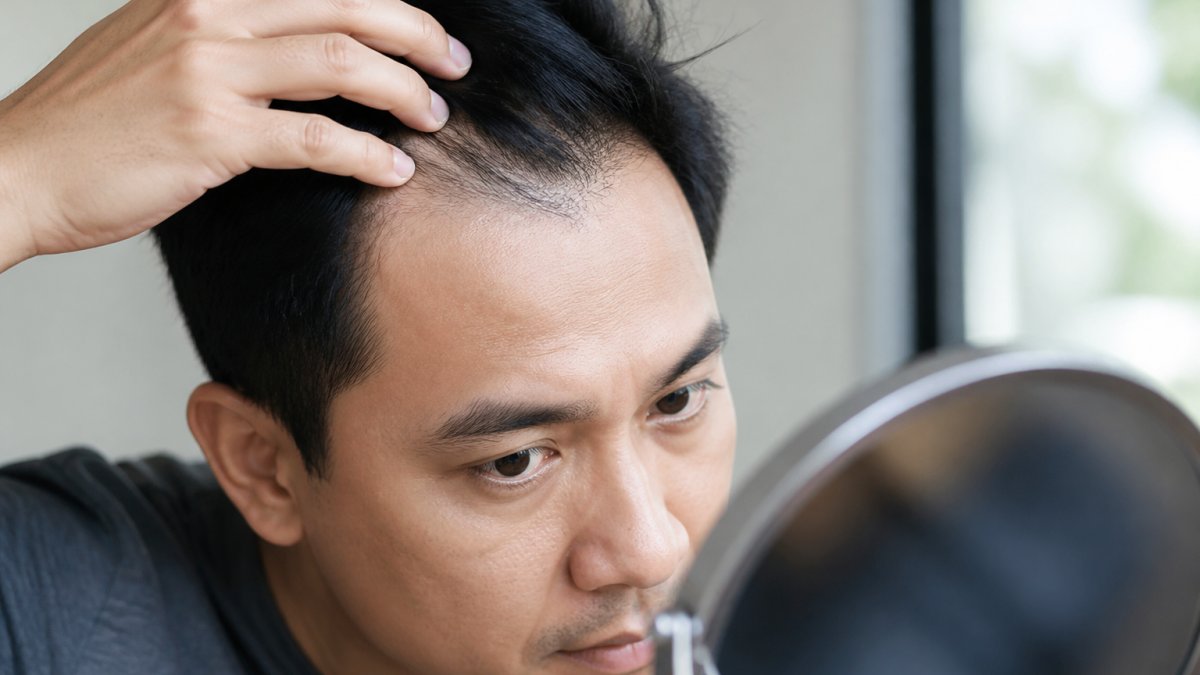
Early intervention matters because hair loss often accelerates if untreated; a topical peptide serum may slow progression.
If a topical treatment hasn't helped after 4-6 months, or your loss is more advanced (significant thinning across the crown or temples), PRP becomes more reasonable.
Safety, side effects and recovery considerations
Both treatments are generally safe with different risk profiles.
Topical GHK-Cu is even lower-risk. Allergic reactions are uncommon, and the peptide doesn't penetrate systemically in meaningful amounts. The main risk is simply that it doesn't work for you, a waste of money rather than a health concern.
Realistic expectations matter for both: neither regrows a full head of hair if you're significantly bald. Both work best for slowing progression and improving density where follicles remain.
The choice between GHK-Cu and PRP reflects your tolerance for cost, time and uncertainty. If you're starting early and want an affordable, low-commitment option backed by emerging science, topical GHK-Cu is worth trying.
Frequently Asked Questions
What is the difference between GHK-Cu and PRP for hair restoration?
PRP therapy uses your own blood's platelet-rich plasma, extracted and injected into the scalp to stimulate hair follicles through growth factors. GHK-Cu is a copper peptide applied topically or injected, working through a different mechanism to support scalp health and hair growth. PRP is invasive and requires blood extraction; GHK-Cu is non-invasive when applied topically. Both aim to promote hair density, but their preparation methods, administration routes, and evidence bases differ significantly.
How long does it take to see results from copper peptides for hair loss?
Topical GHK-Cu products typically require consistent use over 8-12 weeks before visible improvements in hair density or shedding reduction appear. Results vary by individual response and baseline hair-loss severity. Early-stage hair loss often responds faster than advanced thinning. Daily application, as with Pepcare Lab's Hair/Scalp Serum at $59.00, supports scalp health over time; patience and consistency are essential for meaningful outcomes.
Is GHK-Cu as effective as PRP for hair loss?
Both treatments show promise, but head-to-head clinical evidence comparing them directly is limited. PRP has more published studies on hair restoration, though study quality and standardised outcome measures vary. GHK-Cu evidence is emerging but less extensive. Effectiveness depends on individual factors: early-stage hair loss may respond well to either; advanced hair loss may benefit from PRP. Consult a clinician to assess your specific suitability.
How many PRP sessions are usually needed for hair restoration?
Most PRP hair-restoration protocols involve 3-6 initial treatment sessions spaced 4-6 weeks apart, followed by maintenance sessions every 6-12 months. The exact number depends on hair-loss severity, individual response, and clinician recommendations. Each session involves blood extraction, processing, and scalp injection. Results build gradually across sessions; single treatments rarely produce statistically significant hair-density improvements.